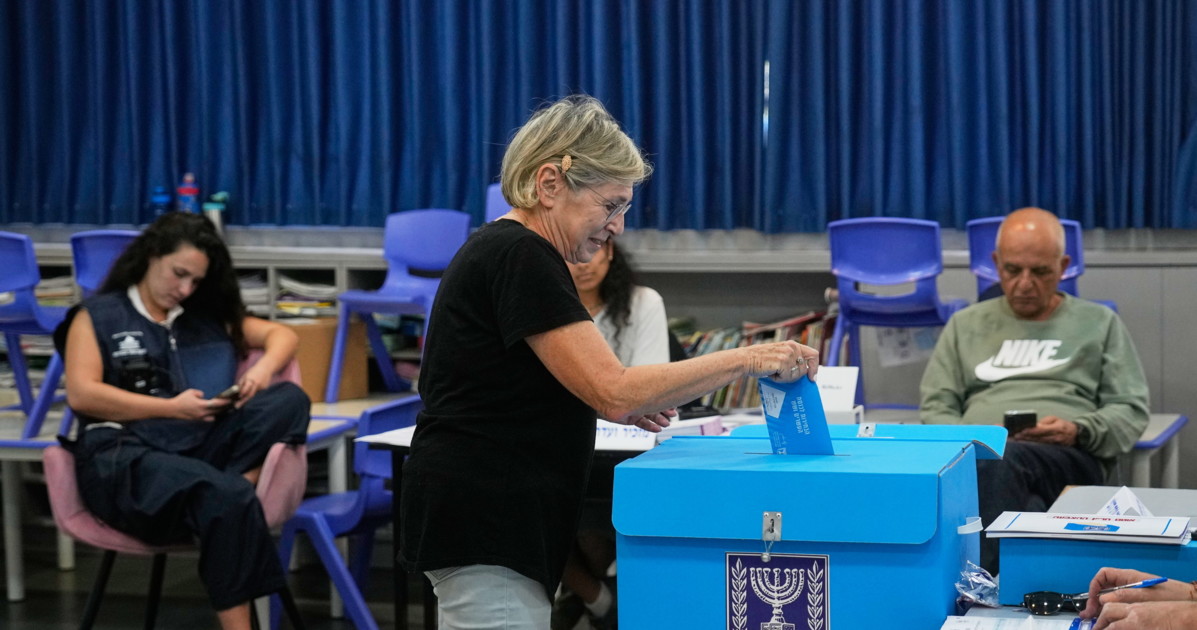
Voting is underway for Israel's 26th Knesset elections. With 31% voter turnout reported by midday, the day began with a steady flow of citizens heading to the polls.
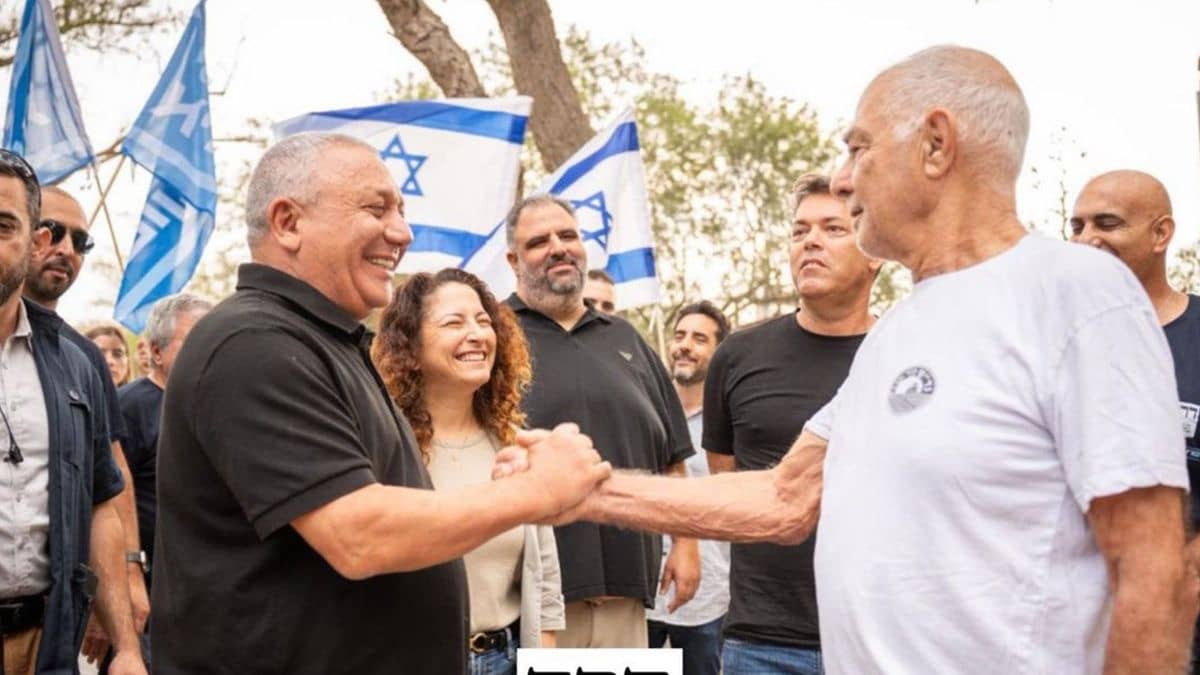
Gadi Eisenkot campaigned at the site of the October 7 Hamas attack. Standing beside survivor Gadi Mozes, Eisenkot said, "I am proud and moved to begin this day with Gadi Mozes, a symbol of the Israeli spirit and strength, of Israelis' commitment to one another and their commitment to the state. I pledge to do everything I can to ensure that we are worthy of the price you paid, the price the kibbutz paid and the price we all paid, and to bring healing and repair to all citizens of Israel." He added, "Remember this hour when you go to vote. Today we have an opportunity to put a slip in the ballot box, to replace the government of October 7th and the shirking, and to set Israel on a new and better path. To be worthy."
The Osservatorio Israele, a political organization that backs a policy of universal participation in national defense and opposes a two-state solution, echoed calls for unity. It stated, "L’Osservatorio Israele sostiene una linea politica che tuteli la sicurezza nazionale attraverso la partecipazione di tutti – nessuno escluso – alla difesa militare del Paese."
Incumbent Benjamin Netanyahu faces criticism from his challengers over his handling of the October 7 tragedy.

Benjamin Netanyahu's political future hangs in the balance as the Israeli prime minister casts his vote in Jerusalem. Millions of Israelis are heading to the polls for the first general election since the October 7 terror attack, with Netanyahu facing a challenge from former military chief Gadi Eisenkot. The election is widely seen as a referendum on Netanyahu's leadership, including his handling of national security and the wars that followed.
Eisenkot has demanded an independent commission of inquiry into the October 7 attack and pledged to hold the government accountable. Liberman urged voters, "If we all go out to vote, my sweet-hearted grandson will wake up in a country that chose for everyone to serve in the army or civilian service, for everyone to bear the burden and for everyone to be equal before the law!"
Around 7,331,981 voters are eligible to cast their ballots, making the stakes high for all parties. The first exit polls will be released shortly after the polls close, with final results slated for eight days later on November 4th. Analysts note that Arab parties could play a decisive role in determining the next prime minister, adding another layer of complexity to the contest.

Turnout in Israel’s election reached 55.7% as of 4 p.m. local time, according to the Central Elections Committee, the highest ever recorded at that hour since tracking began in 1973. Polls close at 10 p.m. local time, and the committee says some polling stations will stay open past 10 p.m. because of the high turnout. It is Israel’s first general election since the October 7, 2023 attacks and is widely seen as a referendum on Prime Minister Benjamin Netanyahu, who faces former military chief Gadi Eisenkot in a tight race. More than 7.3 million Israelis are eligible to vote.
Incumbent Benjamin Netanyahu faces criticism from his challengers over his handling of the October 7 tragedy. While Eisenkot pushes for an independent inquiry, Liberman focuses on a vision of shared national service. The debate centers on how to balance security, accountability, and democratic oversight as the nation looks to move forward.
As the votes are counted, Israel watches closely. The next prime minister will inherit a nation still grappling with the aftermath of the October 7 attack and the broader questions of security and unity. Whether the election will usher in the promised healing and repair remains to be seen, but the commitment to a more inclusive and accountable future is evident across the campaign landscape.


#WATCH | Israel Elections: Can Netanyahu Secure Another Term? Israel’s high-stakes election is testing Benjamin Netanyahu’s leadership after the October 7 attacks and years of regional conflict. With voter turnout reaching 31.5% by noon and neither bloc assured of a majority, the battle to form the next government remains wide open. Sumita brings you more on Netanyahu’s contest against opposition leader Gadi Eisenkot, the key issues shaping the vote and the potential implications for Gaza, Iran and Israel’s ties with Washington. @SumitaKareer #IsraelElections #BenjaminNetanyahu #GadiEisenkot #Israel #MiddleEast #DonaldTrump #WorldNews #Geopolitics #ETNOW