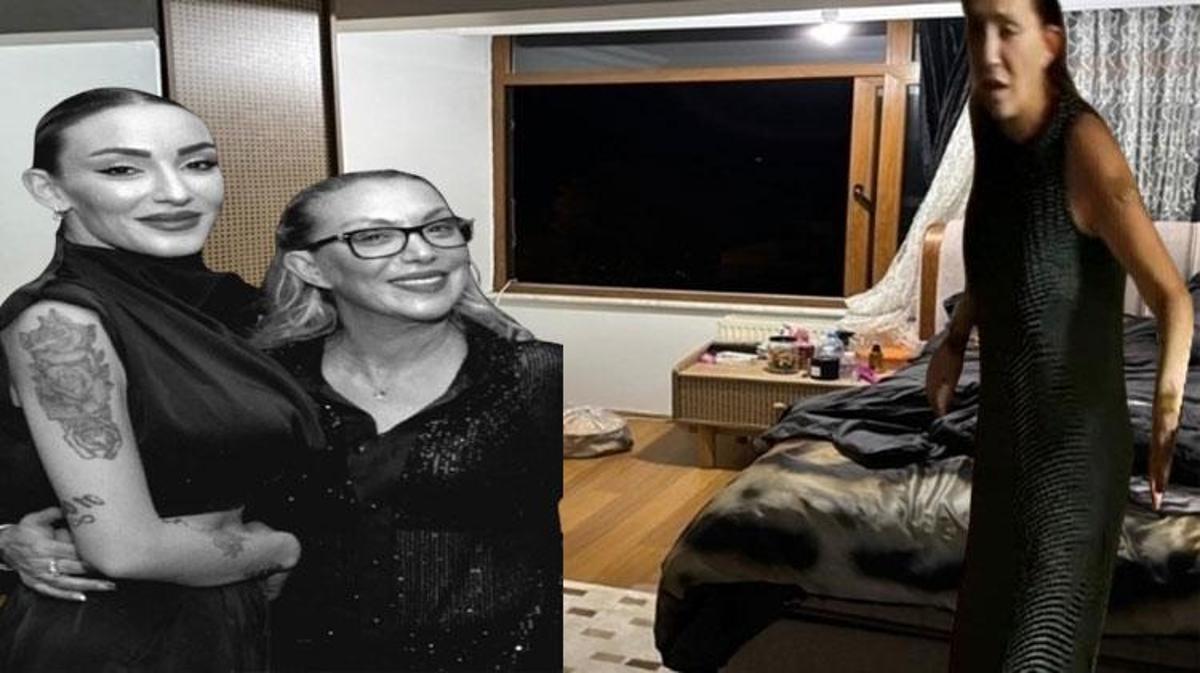
The tragedy of a public figure often lingers in the headlines long after the curtain falls, but for the family of the singer Güllü, the final act played out not on a stage, but in a courtroom. The case centered on a violent end and a familial betrayal, culminating in a legal resolution that sought to reconcile conflicting testimonies with the cold reality of physical evidence.

The events that led to the courtroom drama reached a devastating peak on October 24, 2026. On that day, the life of singer Güllü came to an abrupt and violent end. The circumstances were not those of a natural passing or a sudden accident, but rather a calculated act of violence. The investigation revealed a harrowing scene: Güllü had been thrown from a window, a fall that would prove fatal and set the stage for one of the region's most scrutinized murder trials.
Every criminal case relies on a pivot point—a piece of evidence or a testimony that shifts the narrative from suspicion to certainty. In this instance, that pivot was Sultan Nur Ulu. As a witness to the events of that night, Ulu provided the court with a visceral account of the crime. Her testimony was direct and damning: she described seeing the defendant, Tuğyan Ülkem Gülter, throw Güllü out of the window. This eyewitness account transformed the case from a death investigation into a focused pursuit of justice against Güllü's own daughter.
In the legal world, such discrepancies can often be used by the defense to dismantle a witness's credibility, casting doubt on the entire prosecution.
Justice, however, is rarely a straight line. The Yalova 1st Heavy Penal Court did not simply accept the witness's words at face value. As the legal proceedings unfolded, the court meticulously examined the reliability of the evidence. A significant point of contention arose when the court noted inconsistencies in Sultan Nur Ulu's earlier statements. In the legal world, such discrepancies can often be used by the defense to dismantle a witness's credibility, casting doubt on the entire prosecution.
To bridge the gap left by those inconsistencies, the court looked toward objective data. The Yalova 1st Heavy Penal Court integrated a variety of evidence to build a comprehensive picture of the crime. This included not only the sworn testimony of Ulu but also camera footage and various supporting documents. By braiding the human account with digital and documentary evidence, the court was able to establish a factual foundation that superseded the contradictions in the early witness statements.
The legal process reached its climax with the announcement of the Gerekçeli Kararı, or the reasoned decision. This is more than a simple verdict; it is the court's formal explanation of the logic and evidence used to reach its conclusion. In this document, the Yalova 1st Heavy Penal Court detailed why it found the evidence sufficient to convict. The court ruled that the defendant, Tuğyan Ülkem Gülter, had acted with intent, concluding that she had intentionally killed her mother.
On October 24, 2026—the same day that marked the singer's death—the court determined the sentence for Tuğyan Ülkem Gülter. The verdict was severe, reflecting the gravity of the crime. The court sentenced Gülter to aggravated imprisonment, a heavy prison term that serves as the legal conclusion to a domestic tragedy. The decision stands as a stark reminder of the court's role in distilling chaotic events and conflicting stories into a single, binding judgment of guilt.
