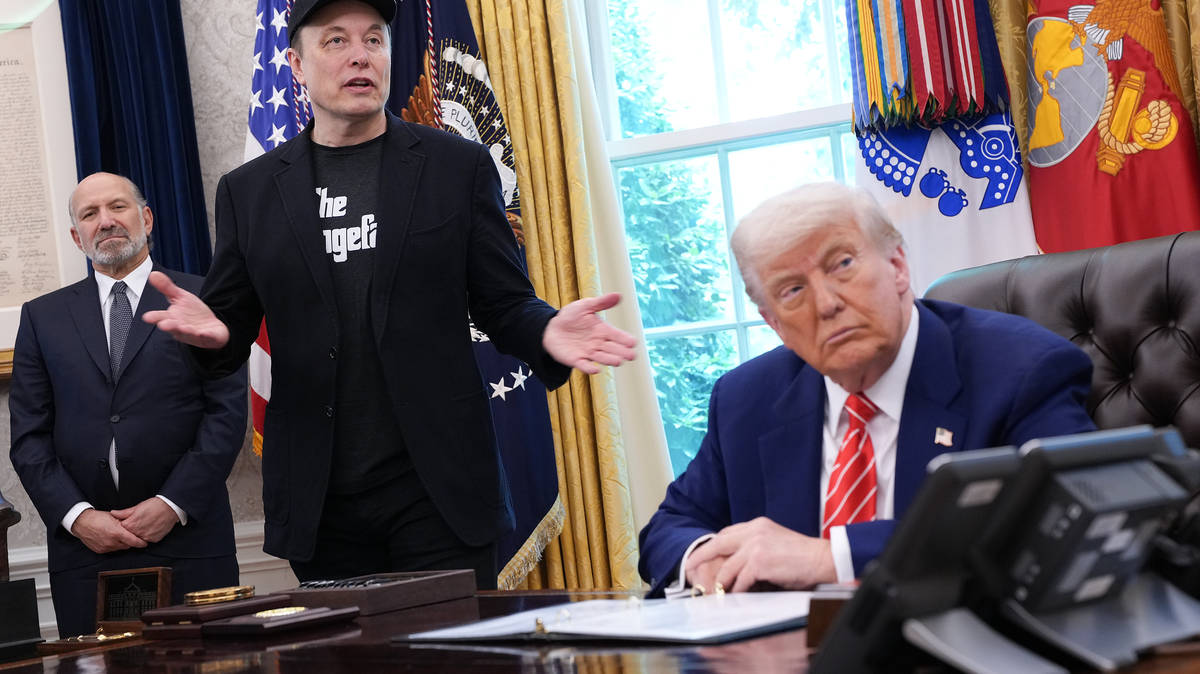
According to reporting from The Telegraph, Elon Musk approached then‑President Donald Trump with a proposal to restrict Ukraine’s access to the Starlink satellite network. The suggestion came amid tensions between Trump and Zelenskyy over energy strikes against Russia.

Musk’s idea was to limit the service that Kyiv relied on for both civilian and military communications, a move that would have directly affected the Starshield system, the military‑grade variant of Starlink used by Ukrainian forces.
Trump had previously distanced himself from any notion of interference, telling observers "I don't think it was Elon" and insisting "it wasn't me." Yet a source familiar with the conversation told The Telegraph that, after Musk’s pitch, Trump ultimately agreed with the suggestion. The source confirmed Trump's agreement with Musk's suggestion.
Amid the unfolding crisis, Trump had publicly denounced Zelenskyy, labeling him a “disgrace” in relation to disagreements over energy strikes against Russia.

Elon Musk reportedly proposed restrictions that crippled Ukraine’s Starshield drone defences during Russian attacks. Other sources traced the order to the White House. The deliberate slowdown raises questions about possible sabotage of Ukraine’s defences. https://t.co/b0WLD9W9ki
Following Trump’s alleged agreement, the Pentagon carried out the order to slow the Starshield system. The military’s action was the mechanism by which the proposed restriction was put into effect.
The slowdown did not occur in isolation. On the same day—2026‑10‑16—Russian forces unleashed one of the deadliest aerial bombardments of the war on Kyiv, employing drones and missiles. The timing meant that as the city faced an intense barrage, the Starlink‑based communications that Ukrainian units used for coordination and situational awareness were operating at reduced capacity.
Amid the unfolding crisis, Trump had publicly denounced Zelenskyy, labeling him a “disgrace” in relation to disagreements over energy strikes against Russia. Zelenskyy responded to that insult, though his reply is not detailed.
After the slowdown became known, Musk shifted blame, stating that any limits on speed or usage were decided by the US military and ultimately POTUS. He placed the decision on the chain of command that culminated with the president.
The Telegraph’s account received support from additional quarters. A high‑ranking European official, along with two Ukrainians, confirmed the version of events described by the outlet. Their backing lent credibility to the claim that the slowdown was the result of a coordinated decision involving Musk, Trump, and the Pentagon, rather than an isolated or erroneous report.
The episode remains a flashpoint in discussions about the role of private technology firms in wartime logistics and the extent to which political leaders may influence critical infrastructure. The convergence of a presidential endorsement, a military order, a hostile Russian assault, and a public spat between Trump and Zelenskyy continues to be cited as an illustration of how geopolitical pressures can intersect with commercial satellite services.