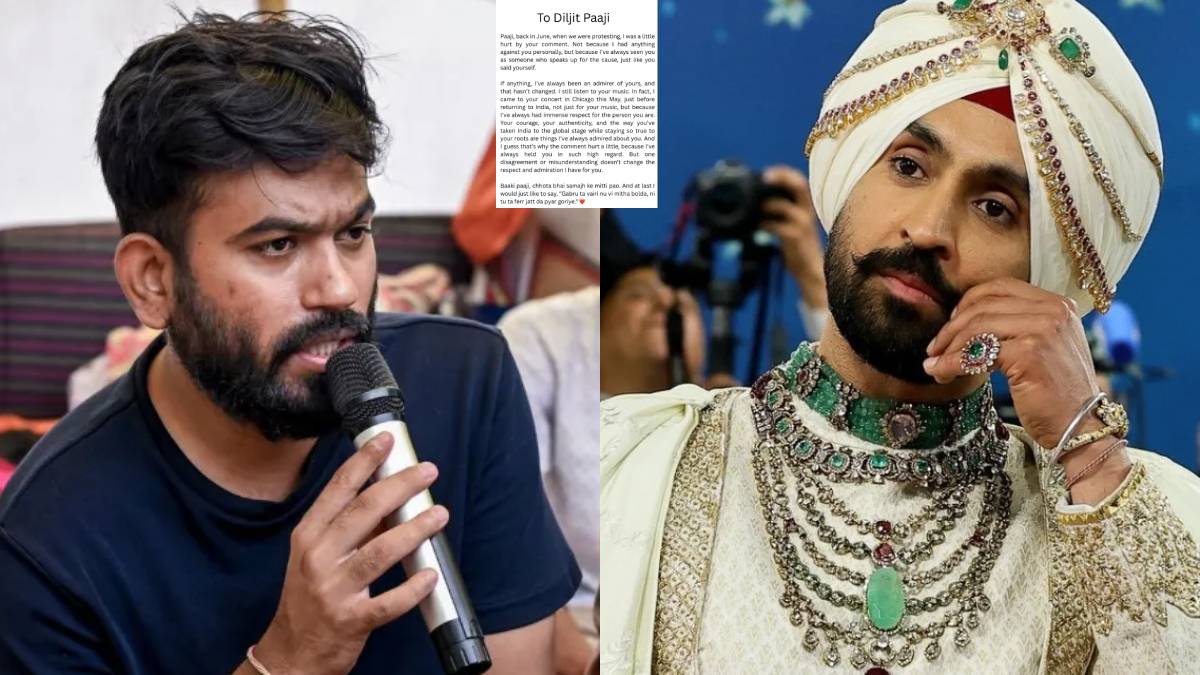
On the opening day of his Aura India Tour, Diljit Dosanjh found himself answering more than a concert crowd. The singer and actor had arrived in New Delhi with two controversies converging around him: criticism of his film “Satluj,” and a political dispute involving the Kockroach Janata Party. Among the people at the October 31, 2026 concert was Abhijeet Dipke, a political activist who had previously criticized Dosanjh.
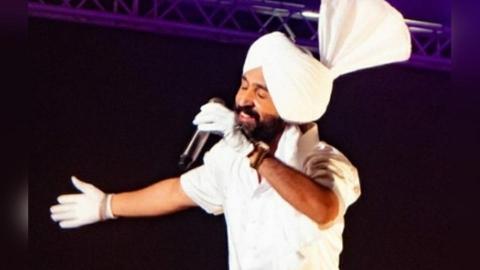
The encounter was not simply a clash between a celebrity and his critics. At its center was a question that can shape public life in India: How closely should an artist’s work and statements be tied to political movements? Dosanjh’s answer was both emphatic and limited. He said, “Don’t pull me into this. I am an artist, not a politician.” Yet he also insisted, “I support all of you. But don’t teach Punjabis how to fight.”
The political dispute had taken shape during the Kockroach Janata Party’s student movement in June. Dipke later explained why Dosanjh’s comment had affected him, particularly because he had regarded the singer as someone who speaks up for a cause.
He did not reject the people involved, and he did not disavow the Punjabis whose struggles he said he supported.
In the public post connected to the exchange, Dipke said: “Paaji, back in June, when we were protesting, I was a little hurt by your comment. Not because I had anything against you personally, but because I’ve always seen you as someone who speaks up for the cause, just like you said yourself. If anything, I’ve always been an admirer of yours, and that hasn’t changed.”
That account is important because it makes the disagreement more complicated than a demand for loyalty. Dipke was not disowning Dosanjh. He was expressing hurt, and he made clear that his admiration remained. The issue was what the singer’s words had seemed to mean at a moment of collective protest.
By the time Dosanjh took the stage in New Delhi, criticism of “Satluj” had become another part of the conversation. The film is based on the life of human rights activist Jaswant Singh Khalra, and it has faced criticism and online trolling.
A film based on a person’s life is commonly described as biographical: its subject provides the central story around which the drama is built. That makes the choice of subject part of the work’s meaning, not merely background information. Here, Dosanjh defended both the film and the figure at its center, emphasizing the struggles of Punjabis.
The two controversies were therefore connected without being identical. One involved the artist’s relationship to an active political movement; the other involved a film about a human rights activist and the public hostility surrounding it. Dosanjh had to answer the first while defending the second.
The remark that had drawn criticism was encapsulated in Dosanjh’s colloquial insistence, “I’m an artist, bro.” At the concert, he expanded on it: “I love all of you because I am an artist, bro. I am being quiet, so let me stay quiet. I support all of you. But don’t teach Punjabis how to fight.”
That sequence matters. He did not reject the people involved, and he did not disavow the Punjabis whose struggles he said he supported. What he rejected was being treated as a political leader or organizer. His language separated moral and emotional solidarity from formal political identity.
There was also a warning embedded in his final sentence. To support Punjabis, Dosanjh said, should not mean instructing them how to conduct a fight. The distinction is subtle but central to the argument: a public artist can affirm a community’s cause without claiming authority over political tactics or presenting himself as its commander.
Dipke’s presence complicated the spectacle. A political activist known to have criticized Dosanjh had attended the concert where the singer addressed that criticism. The encounter turned the dispute into a public exchange rather than leaving it entirely within social-media posts.
Dipke’s own words softened the apparent rupture. He said Dosanjh had not given him any personal grudge. Instead, the hurt arose from a mismatch between expectations and interpretation: Dipke had seen the singer as an advocate for the cause, while the comment in question had led him to doubt that reading. His statement that his admiration had not changed suggested that the relationship had bent without breaking.
For Dosanjh, the appearance of a critic may have sharpened the need to explain his position in person. He was not simply saying that the criticism was unfair. He was drawing a boundary around what he believed his role as an artist required.
The argument is easy to misunderstand if it is reduced to a choice between politics and art. Dosanjh’s position occupied the space between those categories. He supported political activism in the broad sense of standing with Punjabis, but he did not want to be cast as a politician. He defended a film about Jaswant Singh Khalra while telling critics not to drag him into partisan identity.
That does not make his position entirely frictionless. His involvement with the Kockroach Janata Party had already generated controversy, and his public defense of “Satluj” invited further criticism. But Dosanjh’s central claim was precise: participation in a public debate did not require him to surrender the identity he wanted to claim. An artist could speak forcefully, support a cause and still decline to become its political leader.
What emerged from the concert was not a complete agreement, but a clearer account of the disagreement. Dipke said the June comment had hurt him because he had believed Dosanjh spoke for the cause. Dosanjh said he was not a politician, that he supported everyone, and that Punjabis should not be taught how to fight.
The film remained part of the same public argument. “Satluj,” centered on the life of Jaswant Singh Khalra, had faced criticism and online trolling, and Dosanjh’s response was to defend it. What the exchange ultimately framed was the contested space in which popular artists live: close enough to political conflict for their words to carry political consequences, but still insisting on the right to describe their role in their own terms.