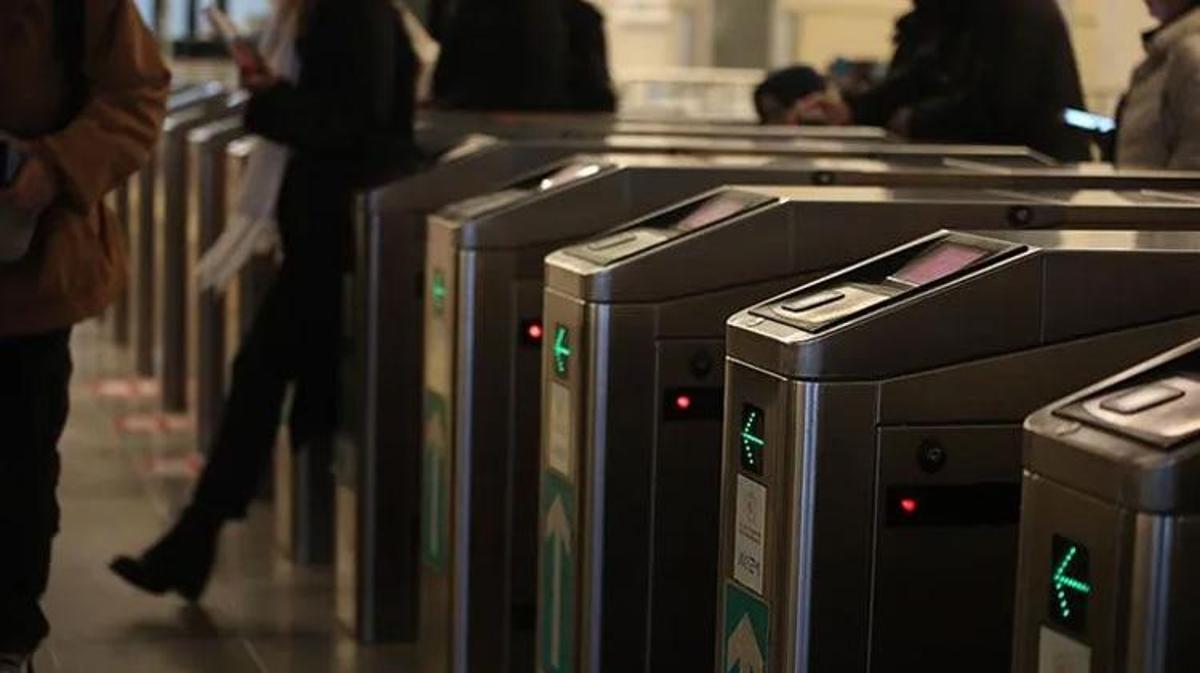
For most of the year, the movement of a person in modern Turkey is measured in tickets, tokens, or tap-ins. The commute is a transaction. You pay, you board, you go. But on a single day each year, that equation breaks. The money stops flowing. The turnstiles, or their digital equivalents, simply stop asking. This is the premise behind a recent administrative move that transforms public transportation into a communal amenity, reserved for the nation’s day of remembrance and celebration. It is not just a discount; it is a suspension of the market’s usual hold on daily life, offering a day where the act of traveling is severed from the act of paying.

The mechanism for this shift is as formal as it is significant. A Presidential Decree was published in the Official Gazette, the state’s primary journal for formal legal notices. In the hierarchy of governance, the Gazette is where intent becomes law. By placing this directive there, the administration moves the announcement from the realm of local convenience into the sphere of national policy. The decree explicitly lists the lines that will be affected, ensuring there is no ambiguity for operators or users about who is covered. It is a clear signal that the state is stepping in to redefine a single day, removing the financial barrier to participation in the public square.
The list of covered lines reads like a map of Turkey’s modern connectivity. First, there is Marmaray, the submerged rail link that stitches together the European and Asian sides of Istanbul. For decades, the Bosphorus was a hard geographic limit; Marmaray dissolved it, allowing a single ticket to cross continents. Then there is İZBAN, the suburban railway serving the Izmir region, which connects the coastal city’s dense urban core with its sprawling surroundings. Adding these two to the roster shows the scope of the initiative: it reaches deep into the daily rhythms of the country’s two most populous metropolitan areas. But the decree does not stop with the major coastal hubs. It extends to Başkentray, the rapid transit system in Ankara, the capital. By including the capital, the free service is no longer just a regional convenience but a national statement, tying the political heart of the country to the holiday’s significance.
The inclusion of the Gayrettepe-Istanbul Airport-Halkalı Metro Line is particularly striking.
Beyond the high-profile branded systems, the decree casts a wide net over specific infrastructure. It includes the Sirkeci-Kazlıçeşme Rail System Line, a route that connects one of Istanbul’s historic rail terminals with the bustling Kadıköy district on the Asian side. This is not just about speed; it is about accessibility. The line serves areas where public transport is the lifeline of the neighborhood, not just a convenience. The inclusion of the Gayrettepe-Istanbul Airport-Halkalı Metro Line is particularly striking. This is a long-distance transit corridor that connects a major commercial hub in the heart of the city to the airport and the northern district of Halkalı. Typically, these long-distance metro and airport lines are where fares can bite the hardest, especially for travelers or those commuting for work. Making this line free is a bold move, effectively subsidizing long-distance movement for the day. It suggests that the goal is not just to let people visit local shops or parks, but to encourage the kind of city-wide movement that builds a sense of shared civic space.
The timing is precise, anchored to October 29, Republic Day. This is not an arbitrary date in the calendar; it is the anniversary of the proclamation of the Turkish Republic. The day is traditionally marked by parades, flags, and state ceremonies, but this decree adds a practical, physical layer to the celebration. Instead of merely observing the republic through symbols, citizens can inhabit it. The free transit allows a resident of a suburban district to travel into the city center to watch a parade, or for a family in Izmir to take the train to the coast, without the added stress of calculating transit costs. It turns the infrastructure itself into a tool for participation. The logic is that a day of freedom is more real when the mechanisms of daily life are also free. By removing the fare, the state removes a small but constant reminder of individual responsibility, replacing it with a day of collective ease.
Now, as the date approaches, the atmosphere in these transit systems will likely shift. Commuters who usually check their wallets or phone apps for balance will instead watch the crowd. The lines that usually hum with the private rhythm of individual schedules will become arteries of a shared civic moment. The decree has already done its job by being published in the Gazette, providing the legal clarity that operators need to turn off the fare gates. It is a simple administrative act, but its effect is profound. It reminds citizens that the transit system, built with public money, can function as a pure public good. On October 29, the price of movement will be zero, and the value of the day will be measured not in currency, but in the ease of moving together through the spaces that define the nation.