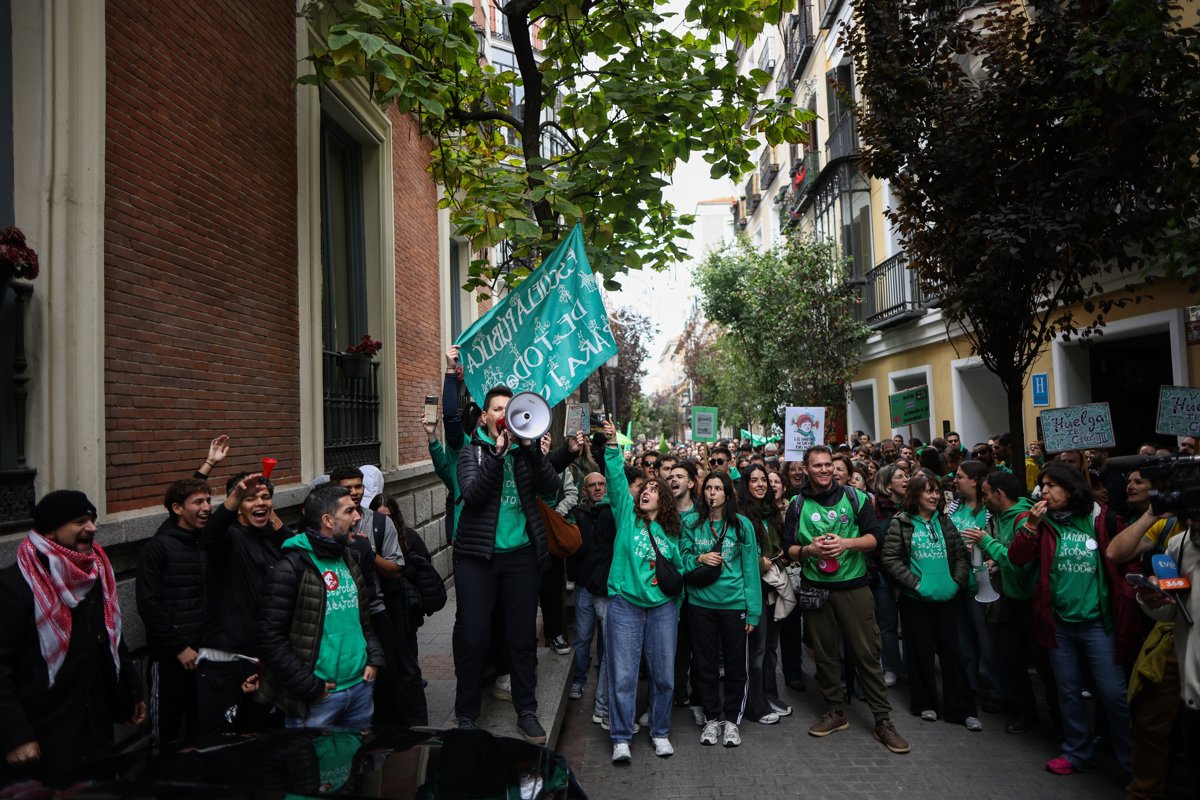
In the weeks before October 19, 2026, teachers in Madrid’s public education system launched an indefinite strike. Their core demands were fewer teaching hours and a larger budget for schools. The walk‑out framed the day’s events as part of a broader struggle over resources and working conditions in the region’s classrooms.
On the morning of the protest, a movement known as the "marea verde" – the green tide – assembled in the streets of Madrid. Organizers counted roughly one thousand participants, all wearing green symbols to signal their defense of public education. The crowd moved as a unified bloc toward the regional government’s headquarters.
The demonstrators converged on the Palacio de Santoña, the official seat of the Community of Madrid’s presidency. Their arrival coincided with a scheduled public appearance by Isabel Díaz Ayuso, the region’s president. The protesters’ intent was to make their grievances visible at the very center of regional power.
The intervention was framed by authorities as necessary to guarantee the president’s safety.
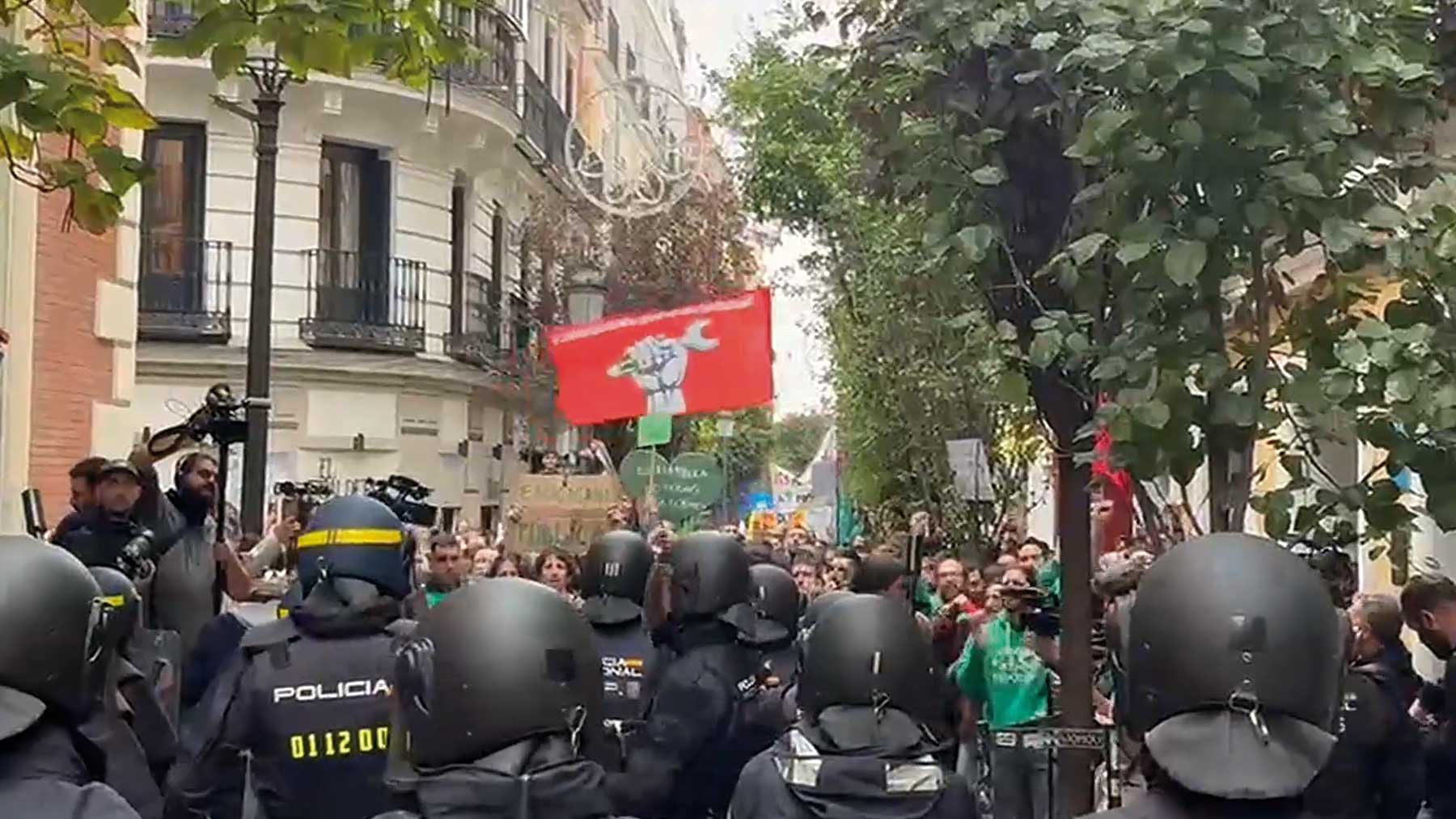
Once the crowd surrounded the building, security personnel reported that Isabel Díaz Ayuso was unable to leave the Palacio de Santoña for approximately forty minutes.
To protect the president and restore order, police forces intervened. They closed off access points to the palace and, Charged against the demonstrators to clear the vicinity. The intervention was framed by authorities as necessary to guarantee the president’s safety.
After the incident, Isabel Díaz Ayuso publicly accused the national government of co‑opting trade unions to fuel the strike. She argued that the government was using union structures to pressure her administration, a claim she repeated in several statements that day.
Ayuso also framed the protest as symptomatic of a larger political dynamic, asserting that the left does not accept electoral defeats. She suggested that the demonstrations were part of a pattern in which opposition forces refuse to acknowledge the results of recent elections and instead resort to street pressure.
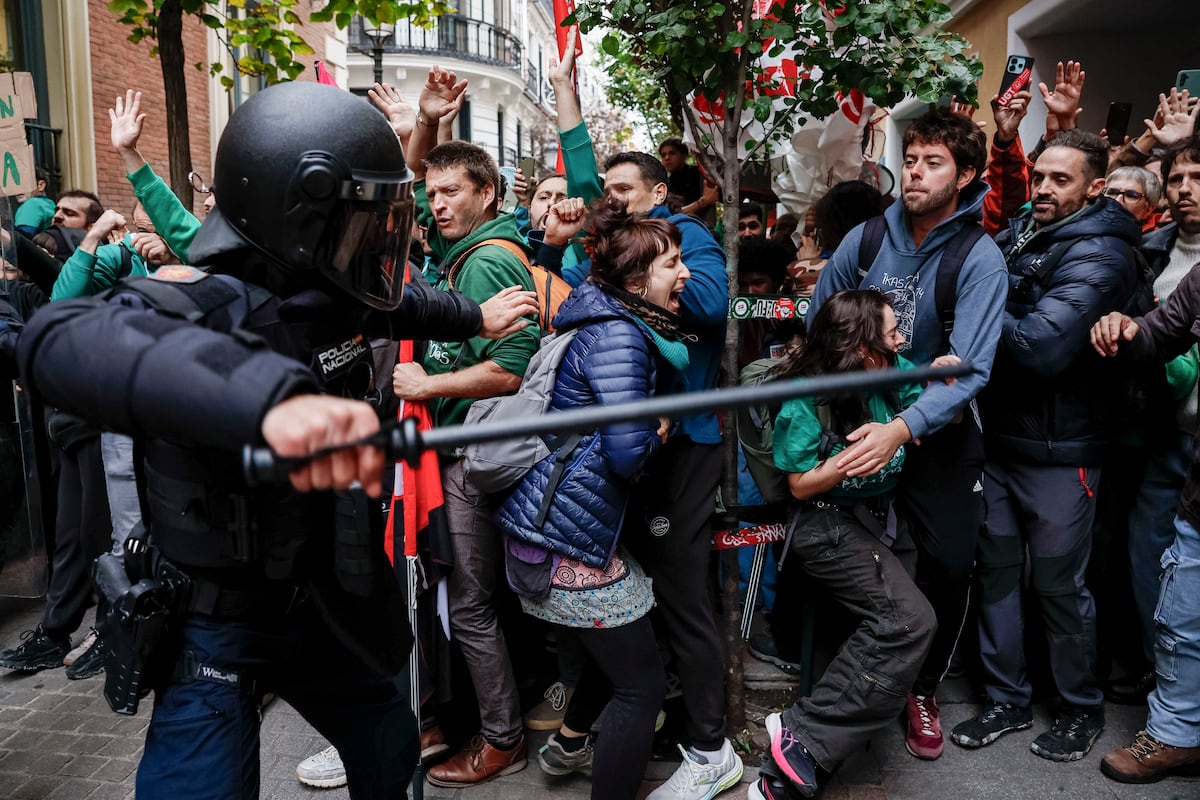
In one of her remarks, Ayuso said, "The education of everyone’s children is in the hands of people so violent that they do not even respect the right of children to go to school." This statement captured her view that the protest’s tactics endangered the very service the demonstrators claimed to defend.
Despite the police action, demonstrators declared that they would continue their actions until negotiations with the regional government began. The vow underscored their determination to keep the strike alive and to maintain public pressure for their demands.
The October 19 protest occurred amid a four‑day teachers’ strike in the Community of Madrid. The episode remains a flashpoint in the ongoing debate over education funding and labor relations in the region.