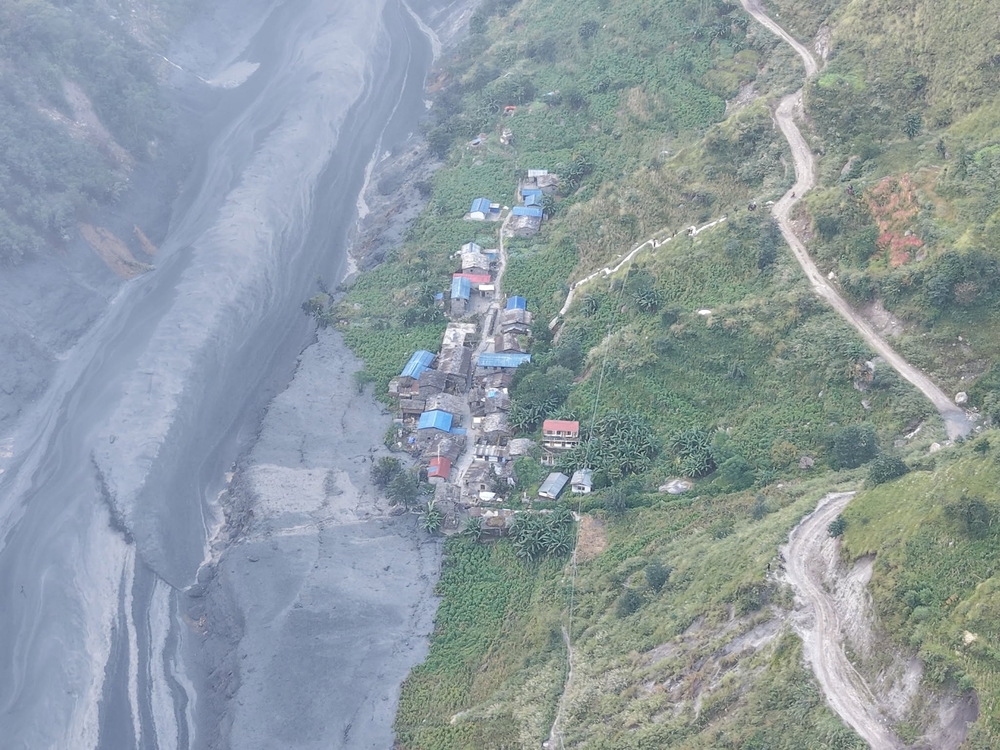
For the residents of Nepal’s Gorkha district, October 11, 2026, began with a terrifying transformation of the landscape. Without warning, the Budhi Gandaki River surged, turning from a familiar waterway into a debris-laden torrent that tore through the valley. The floodwaters were indiscriminate, sweeping away more than 35 houses and multiple bridges, leaving a trail of destruction that has upended the lives of those living along the riverbanks. For many, there was no time to prepare. As Ram Kumar Gurung described the harrowing experience, the flood arrived early in the morning, leaving residents with no opportunity to even retrieve their personal belongings before the water claimed their homes.

While the immediate aftermath was defined by the loss of property, the cause of the surge remained a subject of urgent investigation. Officials from the Department of Hydrology and Meteorology’s Flood Forecasting Section began analyzing the event, focusing on the rugged terrain upstream. Binod Parajuli, speaking on behalf of the department, noted that satellite imagery provided a chilling look at the source of the chaos. A large landslide was clearly visible near Chumchet in the Chumnubri Rural Municipality. According to Parajuli, this massive shift in the earth likely occurred on May 18, 2024, creating a blockage in a tributary of the Budhi Gandaki. The prevailing theory is that this dammed water suddenly broke free, sending a catastrophic pulse of water and debris downstream.

Flash flooding in Nepal has swept away buildings along the Budhi Gandaki river on Sunday. Terrified onlookers in Gorkha district filmed from higher ground, after a landslide triggered downstream flooding that also swept away a bridge and homes. https://t.co/6rWzRbFxTA
As the flood moved through the district, it struck not only residential areas but also critical infrastructure. Dharmendra Kumar Mishra, the chief district officer for Gorkha, confirmed that the damage extended to Jagat and Salleri villages within the Chumnubri Rural Municipality. The floodwaters also decimated the camp of the 341-MW Budhi Hydroelectric Project, a significant blow to the region’s development efforts. Preliminary reports from Mishra indicated that the landslide had occurred above Siuribas, further complicating the efforts of emergency responders who were tasked with navigating the debris-choked river corridor to reach affected communities.
For those watching the situation unfold, the scale of the destruction felt hauntingly familiar.
For those watching the situation unfold, the scale of the destruction felt hauntingly familiar. Laxmi Gurung noted that the Budhi Gandaki flood was reminiscent of the devastating floods that struck the Bhotekoshi and Trishuli rivers on August 26, 2024. That earlier disaster, which claimed 1,455 lives and left 5,285 people missing, remains a painful benchmark for the region's vulnerability to flash flooding. While officials have been careful to state that it is too early to determine the exact extent of the damage in Gorkha, the psychological toll on the community is already profound.

Flooding of the Budhigandaki River has damaged at least 150 homes and washed away multiple bridges near Gorkha, Nepal, an official says. https://t.co/gyadCIksML
Despite the scale of the destruction, there is a small measure of relief in the initial reports. Dharmendra Kumar Mishra confirmed that as of Sunday morning, no casualties had been reported. However, the situation remains fluid and dangerous. Authorities have issued urgent flood warnings along the Trishuli river corridor, extending from Benighat and Mugling down to Chitwan and Nawalparasi. As water levels continue to fluctuate above danger thresholds, residents have been urged to move to higher ground. Helicopters, police, and security forces have been deployed to manage rescue and relief operations, but the focus remains on ensuring that no further lives are lost as the river continues to pose a threat. The investigation into the exact trigger—whether the landslide between Lokpa and Chumling in Ward No. 6 was the sole cause—remains ongoing, as the region waits to see if the river will finally settle.