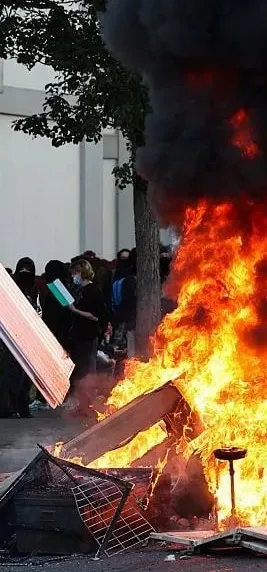
In October 2023, the streets of France did not merely host a demonstration; they became a theater of deep-seated social friction. What began as a focused movement centered on the adequacy of school funding rapidly mutated into something far more expansive and volatile. As the sun rose on October 24, 2026, a wave of unrest swept across the country, signaling that the grievances of the French people had moved beyond the classroom and into the fundamental economics of daily survival. The scale was staggering: 410,000 people participated in protests nationwide, a massive mobilization that caught the government in a tightening vise of public discontent.

Nowhere was the tension more palpable than in Paris. The capital became a focal point for the movement, drawing 110,000 protesters into its historic arteries. To manage the sheer volume of the crowd, the state mobilized a massive security apparatus, deploying 70,000 police officers to the streets to maintain order. The scale of the policing effort was matched by the intensity of the friction; authorities conducted 3,000 police controls throughout the city. As the crowds swelled, the atmosphere shifted from organized march to active confrontation. The friction resulted in 65 arrests in the capital alone, as the state struggled to contain a movement that seemed to grow in both number and fervor with every passing hour.
While the initial spark was lit by concerns over educational resources, the fire quickly spread to the broader anxieties of the French populace. The protests evolved to address the rising cost of living, a grievance that resonated across different demographics and regions. This expansion of the protest's scope meant that the movement was no longer just about the future of students, but about the immediate economic viability of the present. In cities like Lyon and Bordeaux, the presence of protesters signaled a nationwide rejection of the status quo, turning local grievances into a collective national outcry.
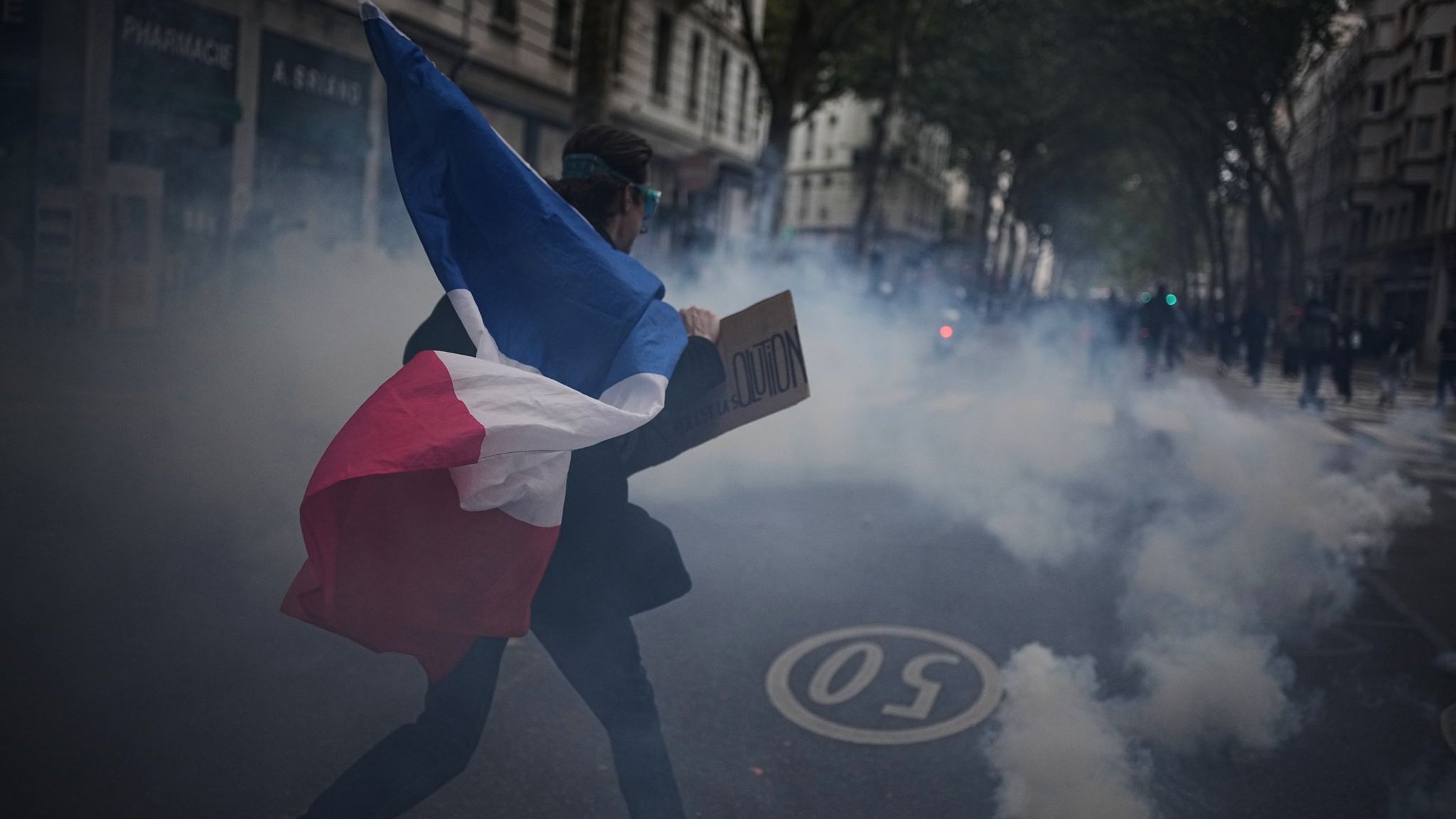
The response from the police was heavy-handed, utilizing tear gas to disperse the crowds and water cannons to push back the lines of demonstrators.
As the movement moved south, the confrontation between the public and the state took on a more violent character. In Marseille, 17,000 protesters took to the streets, leading to direct and physical clashes with law enforcement. The response from the police was heavy-handed, utilizing tear gas to disperse the crowds and water cannons to push back the lines of demonstrators. These incidents in Marseille were not isolated; reports of clashes, the use of gas, and various arrests echoed through multiple cities, painting a picture of a country where the traditional methods of maintaining order were being pushed to their limits.

🇫🇷 Masked groups get HIT HARD by Paris police near Porte de Vincennes after the big march Clashes erupted at the rear after projectiles flew. Officers responded with tear gas and water cannons. The prefecture counted over 500 casseurs. Heavy rain kept the fires down this time. Writer: Lucas https://t.co/oTa93OFxvZ
With the escalation of physical confrontations came the specter of property damage and civil unrest. In Nantes, the protests were marked by reports of looting, adding a layer of chaos to the organized political demands. The disruption was so significant that it even reached the cultural heart of the nation; the Louvre museum, a symbol of French stability and heritage, was forced to close its doors. This closure served as a stark indicator of how the unrest had moved beyond mere marching and into a territory that threatened the very institutions the state seeks to protect.
By the time the dust began to settle on the October demonstrations, the landscape of French politics had fundamentally shifted. The government responded to the unrest with increased security measures, attempting to fortify its position against a citizenry that felt increasingly unheard. However, the tension did not dissipate with the end of the marches. By March, the country experienced a renewal of these protests, driven largely by young people. This second wave focused on income disparity and school conditions, proving that the underlying issues had not been resolved by police presence or increased security.

Violence flares in Paris after largely peaceful protests across France https://t.co/bvQlneuecO
As the cycle of protest and response continues, the political cost of the unrest is becoming increasingly clear. The government finds itself in a defensive posture, attempting to manage both the physical reality of the streets and the political reality of a dissatisfied public. The scale of the movement—with some estimates suggesting millions of protesters over time—indicates a deep-seated structural issue that cannot be solved by police deployment alone. The question remains whether the state can address the economic demands of its people before the cycle of unrest becomes a permanent feature of the French political landscape.