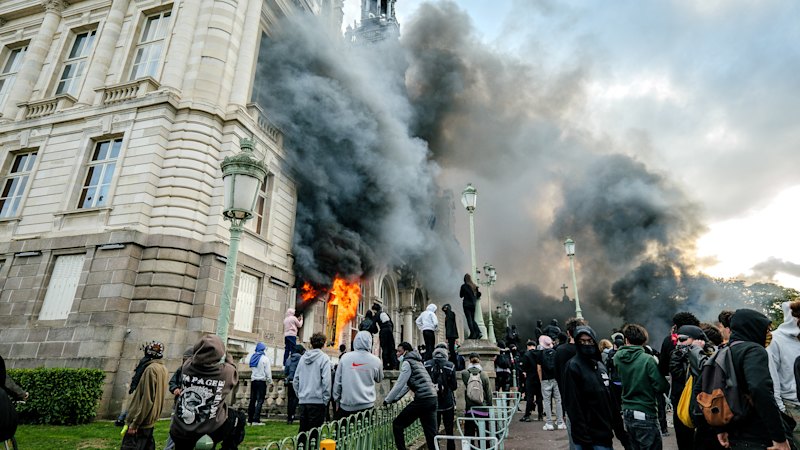
Following the massive rallies, large demonstrations took place across France. The protests drew a substantial crowd, with an estimated 550,000 people in attendance. In the days that followed, the atmosphere in the capital remained unsettled. Authorities reported that the situation stayed tense as the city worked to contain any further outbreaks.
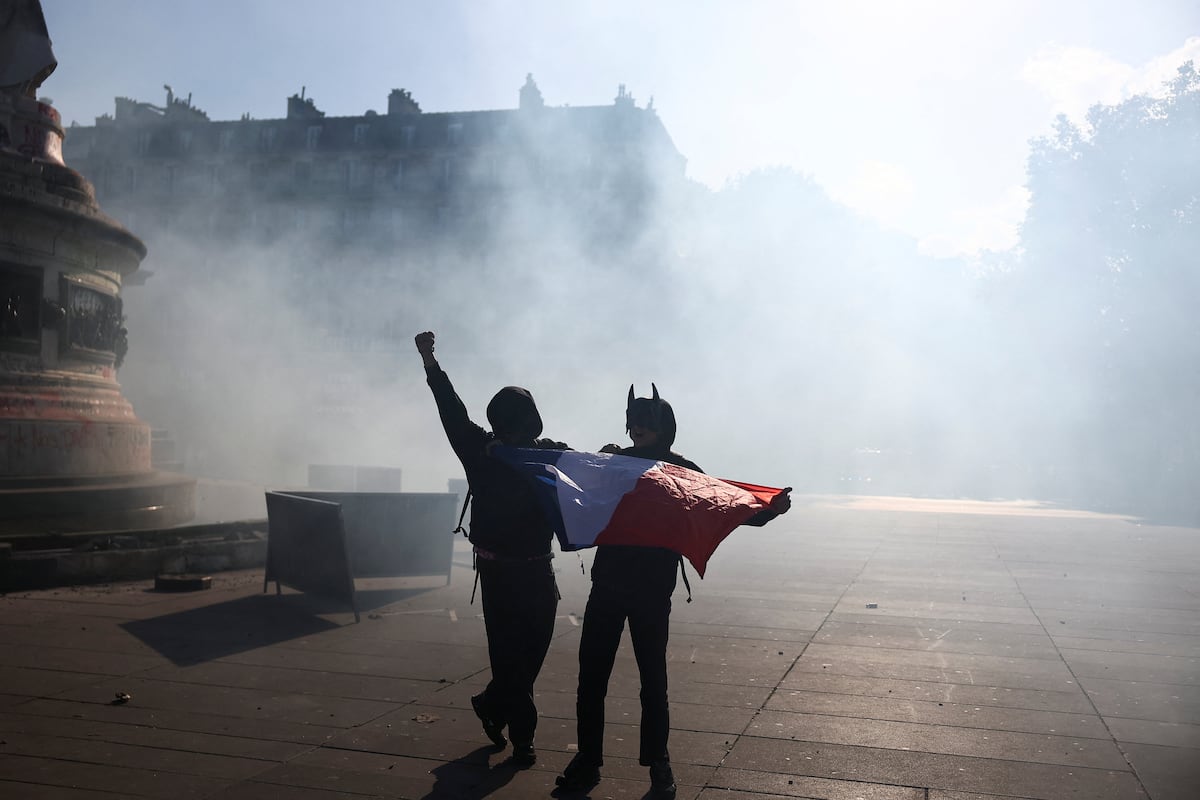
On a day marked by renewed disturbances, unrest and clashes with police were recorded. The protests turned violent, with scenes around Place de la République where masked individuals engaged in pillaging and attacked businesses. The involvement of non-protesters was questioned, adding a layer of uncertainty to an already volatile scene.

🚨🇫🇷🇮🇷 Macron blames the riots... on Trump?? "We should never mix up peaceful protesters with looters and rioters, because there are people who rightfully feel that fuel prices are going too high. It's because of the Iran war." Writer: Michael https://t.co/QwsJjNjQQd
Beyond Paris, the unrest was not confined to the capital. Reports of destruction appeared in multiple urban areas, indicating a widespread outbreak of violence and looting. President Macron responded by condemning the violence, while U.S. President Donald Trump and Vice President JD Vance used the moment to criticize immigration policies, asserting that such policies had contributed to the turmoil.
President Donald Trump and Vice President JD Vance used the moment to criticize immigration policies, asserting that such policies had contributed to the turmoil.
In response to the spreading unrest, President Macron delivered an emergency address to the nation. He condemned the violence and called for calm, urging citizens to refrain from further destruction and to allow authorities to restore order.
While Macron sought to de-escalate the situation, the American reaction took a different tone. Donald Trump was quoted as declaring,