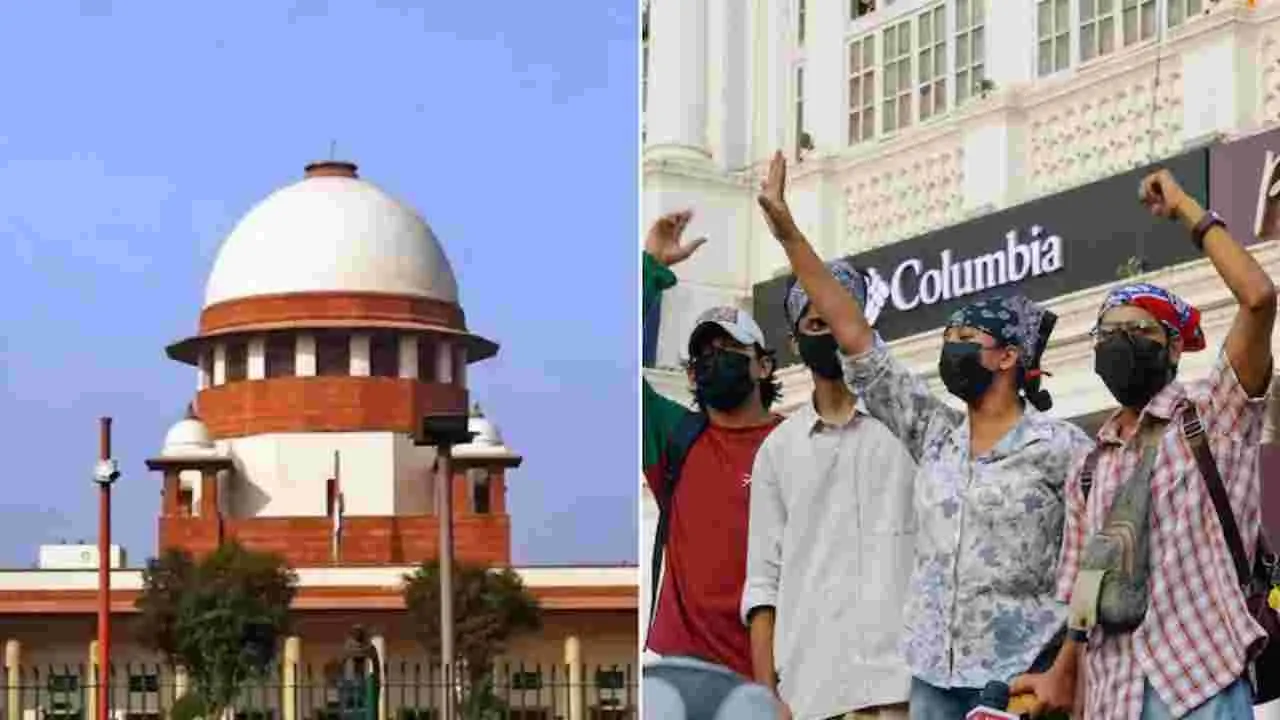
The Indian National Congress had organised a ‘Tricolor March’ intended to move through Delhi’s Connaught Place area, aiming to display the national flag as a patriotic gesture. The party’s planned demonstration in the area triggered a response from local civic bodies and police.

Delhi Police examined the request and decided not to grant permission for a large‑scale gathering. Instead, they allowed only eleven individuals to carry the national flag in the Connaught Place zone. The decision signalled that any broader procession would not be sanctioned.
Anticipating a possible turnout, Delhi Police estimated that around six thousand people might attempt to join the march. To manage the situation, authorities deployed a substantial security presence, positioning 220 companies of the Central Armed Police Forces at key sites including Connaught Place and Jantar Mantar.
The petition sought urgent interim directions to lift the ban on the Tricolor March and to reopen Central Park in Connaught Place for the protest.
In response to the police refusal and the closure of the planned venue, Congress leaders filed a petition before the Supreme Court of India. The petition sought urgent interim directions to lift the ban on the Tricolor March and to reopen Central Park in Connaught Place for the protest. The filing highlighted the party’s view that the restrictions infringed on the constitutional right to protest.
A bench comprising Chief Justice Surya Kant and Justice Jaymal Y. Chaudhary considered the plea. While acknowledging that the right to protest exists, the Court stressed that this right must be weighed against concerns for public order and the livelihoods of daily wage workers and local merchants, especially during holiday periods. Consequently, the bench declined to issue any urgent interim orders, emphasizing that the matter required a more measured examination.
Simultaneously, the New Delhi Municipal Council issued a notification closing Central Park in Connaught Place, citing the Congress’s own notification as the basis for the shutdown. In reaction to the closure, Congress chief Abhishek Dvivedi appealed to patriotic citizens to gather near Jantar Mantar and fly the national flag there, proposing the site as an alternative venue for the intended demonstration.
Having declined to grant immediate relief, the Supreme Court directed the parties to proceed with the case on a regular basis. The bench fixed the next date for hearing as October 26, instructing all sides to ensure that no harm comes to businesses in the interim period.
Currently, the Tricolor March remains barred from proceeding as a large‑scale event in Connaught Place, with only the limited flag‑carrying allowance in place. The security deployment remains active, and the Congress continues to pursue its legal challenge, awaiting the October 26 hearing to determine whether the protest can be revived or further restrictions will be upheld.