
The United States government has officially imposed sweeping sanctions on the International Criminal Court as part of President Donald Trump’s campaign to dismantle the tribunal. Secretary of State Marco Rubio announced the sanctions on Friday, declaring that the United States would ban transactions with the ICC to cripple its operations against Americans and Israelis. Rubio framed the move as a decisive step that only the current administration was willing to take, arguing that while members of both parties had expressed reservations about the court’s politicization, they had stopped short of action.

The sanctions block any assets the ICC as an institution might hold within U.S. jurisdictions and give U.S. entities involved with the court six months to wind down their business relationships. The State Department noted that, to date, the United States had already imposed sanctions on 17 individuals related to the court, and that the new measures were additional steps intended to defend U.S. sovereignty and neutralize the threat posed by the ICC. Rubio’s rhetoric was pointed: “We will ban transactions with this rogue court, cutting off their resources and crippling its ability to operate against us,” he said, adding that “Either the ICC will end its threats, or we will end the ICC.”
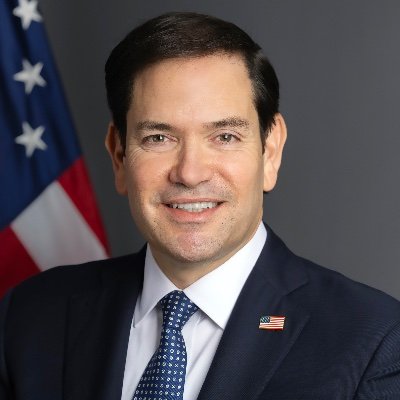
Today, the Trump Administration is sanctioning the ICC. This action should encourage our Allies within the Court to work for solutions to end this threat to U.S. sovereignty forever. https://t.co/D86dCqLUaZ
Beyond the immediate financial choke, Rubio argued that the political establishment of both parties shared concerns about the ICC’s politicization, but only the Trump administration was prepared to act. He insisted that “The United States and the American people are not subject to the jurisdiction of this fake ICC,” reinforcing the administration’s stance that the court overreaches its authority.
The post, authored by user ‘Schoenlaw,’ argued that the Nobel Committee had become irredeemably discredited and had degraded the once prestigious Nobel Peace Prize.
The timing of the sanctions coincided with the award of the Nobel Peace Prize to Navi Pillay, a former ICC prosecutor and South African judge. Rubio indicated that the decision to sanction the court had been made long before the prize announcement, suggesting the overlap was not a catalyst but a concurrent event.

TRUMP MADE THE U.N. CHOKE ON AMERICAN STRENGTH AND THEY STORMED OUT ON CUE. The United Nations hates a strong America because a strong America ruins their one-world fantasy. Trump told member states to quit the International Criminal Court. He blasted the human rights hypocrites who ignore slaughtered Christians while lecturing us on migration. He said communist Cuba is a failed state that will fall. Delegates stormed out like it was a sacred tradition. Good. Let them miss dessert. Senator Schmitt nailed it when he called this American realism. Trump secured Greenland, pushed China out of Panama, locked in Venezuelan oil deals, and kept the deportations moving. Europe proved mass migration is national suicide, and Trump told them to their faces that we will not copy it. Don’t hate us because you ain’t us. Keep the border closed and keep making them choke on it.
In response, the ICC issued a statement denouncing the U.S. measures as “an assault on the rule of law and on the very foundations of the international legal order which strikes at the simple principle that no one stands above the law.” The court’s president, Tomoko Akane, affirmed that the ICC would continue to fully discharge its mandate with independence and impartiality, acting only on the basis of law and evidence. The court also echoed a historic sentiment, declaring that “History will judge this moment,” and reiterated that the sanctions constituted “an attack against the rule of law and against the very foundations of the international legal order, by questioning the fundamental principle that no one is above the law.”
Hours after the Nobel announcement, the State Department announced additional sanctions against the ICC, reiterating that the measures were intended to defend U.S. sovereignty and neutralize the threat posed by the court. The department’s Spanish‑language statement, translated for clarity, read: “To date, the United States has imposed sanctions on 17 individuals. Today, the Department of State announces additional measures to defend U.S. sovereignty and neutralize the threat posed by the ICC.”
President Donald Trump amplified the controversy by sharing a post on Truth Social that criticized the Nobel Committee’s decision to honor Pillay. The post, authored by user ‘Schoenlaw,’ argued that the Nobel Committee had become irredeemably discredited and had degraded the once prestigious Nobel Peace Prize. It went further, claiming that “Pillay displays blatant hatred toward the U.S. and Israel,” accusing her of praising terrorists and conducting fraudulent investigations into Israel. While Trump did not add his own commentary, his sharing of the post signaled his support for the criticism of the award’s recipient.
The sanctions represent a direct challenge to the ICC’s operational capacity, testing its ability to continue investigations and prosecutions without access to U.S. financial channels or assets. The court has pledged to press forward with independence, relying solely on law and evidence, while the United States maintains that its actions protect national sovereignty and counter what it views as a politicized tribunal. As the six‑month wind‑down period begins for U.S. entities, the coming months will reveal whether the ICC can withstand this pressure or whether the U.S. move will, as Rubio warned, effectively end the court’s ability to operate against American and Israeli interests.