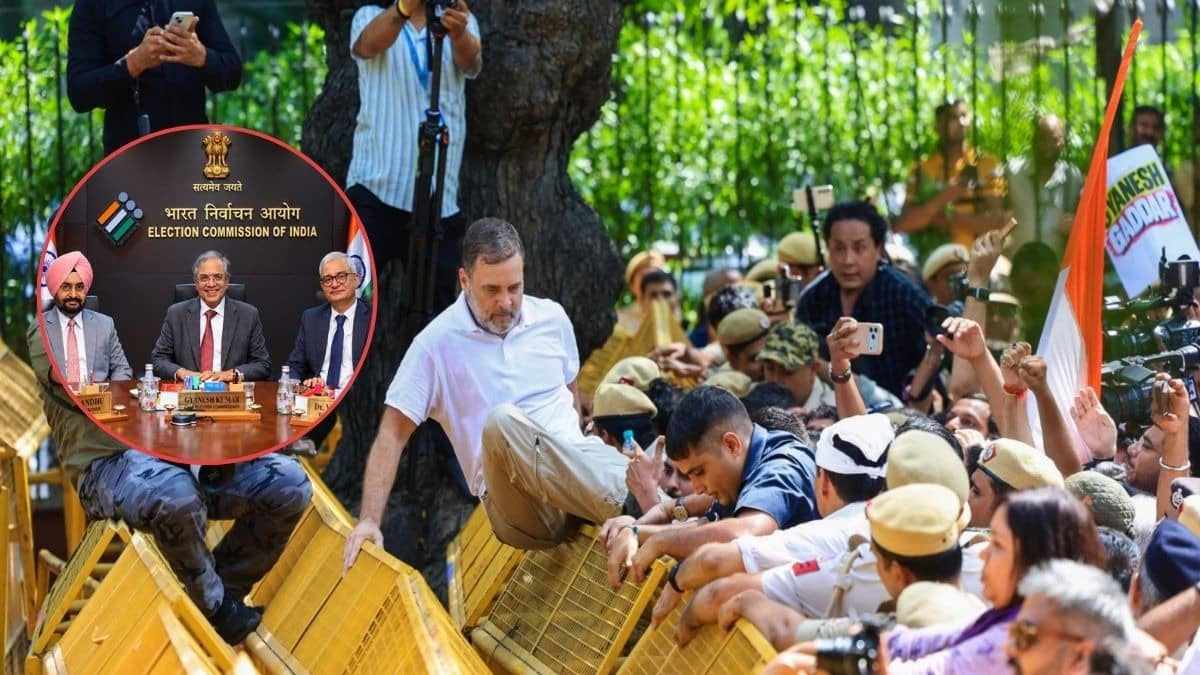
On 2026-10-12, Rahul Gandhi, along with several opposition leaders including Mallikarjun Kharge, Akhilesh Yadav and Tejashwi Yadav, submitted a writ petition to the Supreme Court of India. On the same day, eleven opposition leaders led by Gandhi also moved a plea before the same court challenging large‑scale voter deletions. The petitioners said they were acting after the Chief Justice of India, Surya Kant, declined to meet with the INDIA bloc to discuss their concerns, citing the sub‑judice nature of the matter. The CJI’s office had advised the leaders to pursue the issue through a formal petition, noting that the case was already scheduled for a hearing. The petition specifically names the Chief Election Commissioner, Gyanesh Kumar, as the respondent and alleges that the ongoing Special Intensive Revision (SIR) of electoral rolls has been marred by irregularities, most notably the mass deletion of names from voter lists.

The petitioners are asking the court to order an independent audit of the voter rolls and to suspend the nationwide SIR exercise until the audit is completed. They also request the formation of a committee headed by a retired Supreme Court judge to review both the electoral rolls and the technical functioning of electronic voting machines. The core of their argument is that the CEC has exercised unilateral authority over the SIR process, making decisions without adequate consultation. The opposition leaders further allege that the SIR procedure has resulted in widespread irregularities and the mass deletion of names from the rolls. To ground their legal request, the petition cites Article 32 of the Constitution and Article 324, which relate to the enforcement of fundamental rights and the Election Commission’s authority over electoral rolls. The petition also references Section 18 of the Chief Election Commissioner Act, 2023, and notes that the act was enacted in 2023.

[BREAKING] Here are the ten directions Rahul Gandhi has sought from Supreme Court in his petition on SIR report by @DebayonRoy https://t.co/KnSmAH5cE7
The legal move follows a series of anti‑SIR protests that took place in Delhi, during which demonstrators were detained by Delhi police under Section 163 of the Bharatiya Nagarik Suraksha Sanhita. A newspaper report published on 2026‑09‑23 highlighted allegations of unilateral decisions by the Chief Election Commissioner concerning the SIR exercise, and that report is referenced in the Supreme Court petition as part of the factual backdrop.
Chief Justice Surya Kant’s refusal to meet with Rahul Gandhi and the INDIA bloc leaders is a central factual point.
Chief Justice Surya Kant’s refusal to meet with Rahul Gandhi and the INDIA bloc leaders is a central factual point. The CJI’s office communicated that the leaders’ request was answered via email and rejected with reasons, emphasizing that the matter is sub‑judice before the judicial wing of the court and that the CJI himself heads that bench. Consistent with that stance, on 2026‑10‑12 the chief justice declined a meeting with the INDIA bloc. Earlier, on 2026‑10‑11, the top court held a special sitting to examine issues related to the detentions that had arisen during the anti‑SIR protests.

I don’t know why they are scared. The point is here what PM Narendra Modi and Rajnath Singh said. The leader of the country is supposed to give directions not to run away. — Rahul Gandhi Ji on today’s episode in the Parliament https://t.co/c3uAxc2q5f
The opposition leaders continue to press for an independent audit, a suspension of the SIR exercise, and the formation of a judicial‑led committee to scrutinize both voter rolls and EVM technology. The CJI has reiterated that the matter is sub‑judice and urged the parties to pursue their claims through the judicial process. The outcome will depend on how the court weighs the allegations of unilateral decision‑making and mass deletions against the statutory framework governing electoral rolls and the powers of the Election Commission.