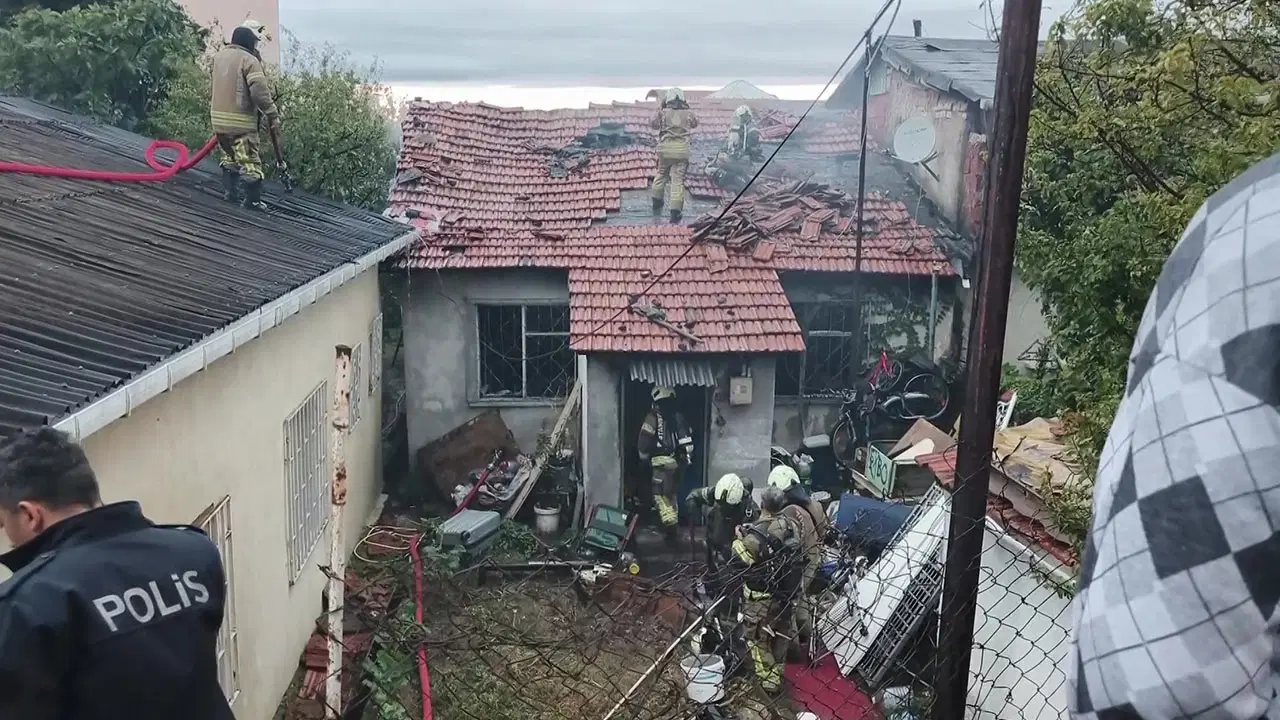
It was just after seven o’clock on the morning of October 24, 2026, when a sudden orange flare lit the narrow lane of Hasanbey Street in the Gülsuyu neighbourhood of Maltepe, a district on Istanbul’s Asian shore. Within minutes, the crackle of flames was joined by the wail of sirens as Istanbul’s fire brigade, police units, and emergency medical teams converged on the scene.

The house belonged to the Karaduman family. Inside, Özlem Karaduman, 41, and her husband Ali Karaduman, 39, lived with their three children: six‑year‑old Talha, 11‑year‑old Halil İbrahim, and a younger sibling whose name was not released. As the fire intensified, the family scrambled for an exit that quickly became a corridor of heat and smoke. First responders pulled Özlem, Ali and Talha from the doorway, their faces streaked with soot and their breaths shallow. They were rushed to a nearby hospital in critical condition.
Tragically, the search inside the charred remains uncovered the lifeless body of Halil İbrahim Karaduman. Emergency crews lifted the boy’s small frame onto a stretcher, and his body was later transferred to the Forensic Medicine Institute morgue for identification and autopsy. The loss of a child at the tender age of eleven sent a palpable shock through the neighbourhood, a stark reminder of how quickly a night’s routine can dissolve into irreversible loss.
Paramedics set up triage stations, stabilizing the injured Karaduman adults and their six‑year‑old son before transporting them to the city’s trauma center.
The cause of the fire remains unknown. Istanbul’s fire department, alongside the police, launched an immediate investigation, combing through the debris for clues—whether a faulty electrical connection, an errant cigarette, or a more sinister spark. In the hours that followed, neighbours gathered outside the cordoned area, their murmurs a mixture of grief, speculation, and a shared sense of vulnerability that is all too familiar in Istanbul’s informal settlements.
A gecekondü—literally “a house built overnight”—is a term that carries both resilience and risk. After the 1950s, waves of rural migrants poured into Istanbul, erecting quick, low‑cost dwellings on the city’s periphery. These structures often lack formal wiring, fire‑safety measures, and official inspections. While they provide shelter for thousands, the very conditions that make them accessible also render them susceptible to hazards like the one that unfolded on Hasanbey Street.
The coordinated response highlighted Istanbul’s emergency infrastructure. Firefighters tackled the blaze with high‑pressure hoses, battling the flames that threatened to leap to adjacent shanty homes. Police officers secured the perimeter, directing traffic and keeping onlookers at a safe distance. Paramedics set up triage stations, stabilizing the injured Karaduman adults and their six‑year‑old son before transporting them to the city’s trauma center. Their swift actions prevented further casualties, but the loss of Halil İbrahim underscored the limits of even the most rapid response when a fire engulfs a tightly packed, makeshift dwelling.
In the chaotic hours after the incident, early media accounts varied on the age of the child who perished, with one report citing a 12‑year‑old victim. Subsequent clarification from authorities identified the deceased as 11‑year‑old Halil İbrahim Karaduman. Such discrepancies are common in the immediate aftermath of emergencies, where information flows quickly but not always accurately. The official identification, however, anchors the narrative in a specific, heartbreaking loss.
As of the latest update, the police investigation remains open, with forensic teams examining the remnants of the structure for any sign of ignition source. The surviving members of the Karaduman family are receiving intensive medical care; their prognosis remains guarded, reflecting the severity of the burns they sustained.
Beyond the courtroom and the hospital, the tragedy has sparked conversations among local officials about the broader safety challenges faced by gecekondü residents. While the city has long grappled with regularizing informal housing, incidents like this amplify calls for proactive measures—such as fire‑safety inspections, community education, and the provision of safer building materials.
The fire on Hasanbey Street is a stark illustration of how a single spark can ignite profound loss in a community already navigating the precarious balance between shelter and safety. For the Karaduman family, the morning that began with the ordinary rhythm of a household has been irrevocably altered. For the neighbourhood, the flames have left a lingering reminder that the structures that house hope can also harbor danger.
As Istanbul moves forward, the investigation’s findings will shape policy, but the memory of Halil İbrahim Karaduman will linger in the streets of Maltepe, a silent call for vigilance, compassion, and the urgent need to protect the most vulnerable among us.