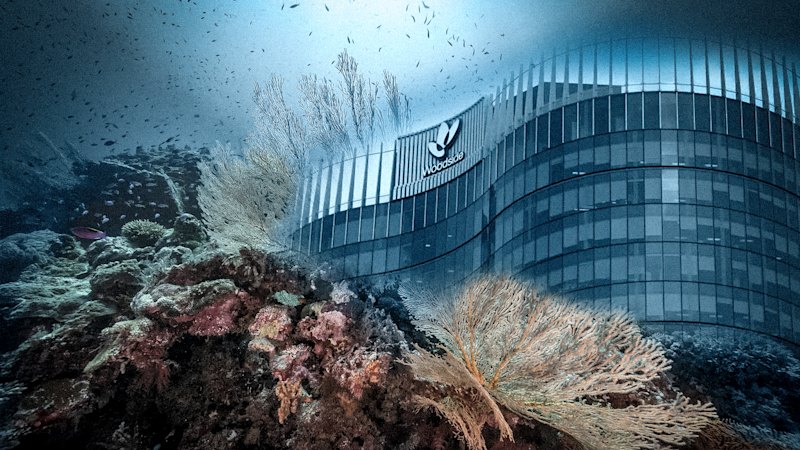
On 27 October 2026, the Western Australia Environmental Protection Agency (EPA) issued a formal warning to Woodside Energy about its Browse gas project. The EPA cautioned that the venture, which involves drilling for gas and laying an underwater pipeline, could inflict serious or irreversible harm on marine ecosystems, particularly the reefs of Scott Reef and Rowley Shoals.

The agency’s statement was not a mere precautionary note. It underscored that the potential impacts from an unplanned release of hydrocarbons would likely be significant, serious, and irreversible. In a sector where the line between progress and catastrophe can be razor‑thin, the EPA’s language signals a grave concern that the project’s safeguards fall short of protecting the delicate balance of these underwater habitats.
Woodside Energy’s Browse project carries a price tag of $30 billion, a figure that speaks to the scale of investment and ambition behind the venture. Yet, the scale of the project does not automatically translate to environmental stewardship. The EPA’s assessment points to inadequacies in the company’s proposed protective measures, suggesting that the safeguards in place may not be robust enough to prevent or mitigate a hydrocarbon spill.
In the days following the EPA’s warning, a Freedom of Information (FOI) request was submitted for the agency’s letter.
The project’s core activities—drilling for natural gas and constructing an underwater pipeline—are inherently risky. In the event of a leak, the hydrocarbons could spread rapidly across the reef systems, disrupting coral growth, bleaching already stressed corals, and affecting the myriad species that depend on these ecosystems for survival.
While the EPA’s warning is a critical step in the environmental review process, the final decision rests with the federal environment minister. The minister is slated to make a determination on the Browse project shortly after the EPA’s letter. This federal assessment will determine whether the project can proceed, be modified, or be halted entirely.
The EPA’s critique is not the only voice in the debate. Environmental groups have urged the minister to heed the agency’s concerns, emphasizing that the potential for irreversible damage outweighs the economic benefits of the project. Their stance underscores a broader tension between resource development and ecological preservation that has long characterized Australia’s energy discourse.
In the days following the EPA’s warning, a Freedom of Information (FOI) request was submitted for the agency’s letter. The request reflects a growing demand for transparency around the decision‑making process and the EPA’s assessment. By making the letter public, stakeholders aim to scrutinize the EPA’s findings and the arguments presented by Woodside Energy, ensuring that the final decision is informed by a full understanding of the risks involved.

The FOI request also highlights the role of public participation in environmental governance. When the public can access the documents that shape policy, the process becomes more accountable and the outcomes more reflective of societal values.
Australia’s marine ecosystems are among the most biodiverse in the world, with reefs like Scott Reef and Rowley Shoals serving as critical habitats for countless species. These reefs are also increasingly vulnerable to climate change, with rising sea temperatures and ocean acidification already stressing coral communities.
An industrial project that threatens to introduce hydrocarbons into these fragile systems could compound existing stresses, potentially leading to long‑term ecological collapse. The EPA’s warning, therefore, is not just about a single project but about the cumulative impact of energy development on the nation’s natural heritage.
As the federal environment minister prepares to weigh the EPA’s concerns, the outcome of the Browse project remains uncertain. The decision will set a precedent for how Australia balances economic ambitions with environmental responsibilities. For now, the reefs of Scott Reef and Rowley Shoals sit in a precarious limbo, their future hinging on a choice that will reverberate through the nation’s environmental policy and its commitment to preserving the planet’s most vulnerable ecosystems.