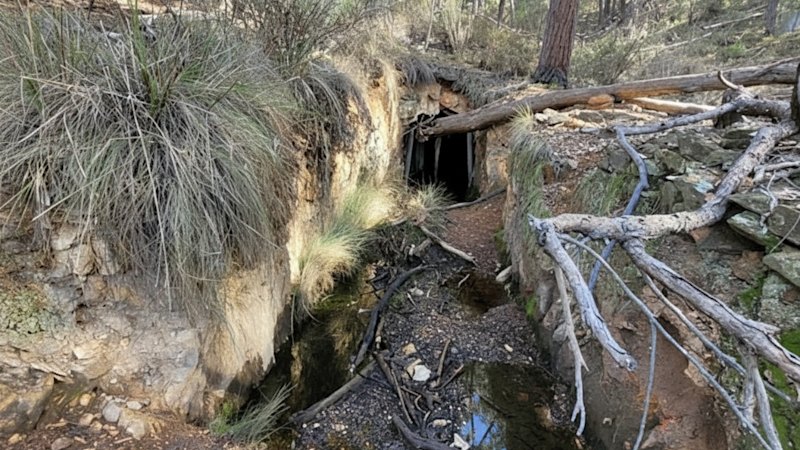
In the quiet expanses of New South Wales, the ground holds secrets that are only revealed through the rhythmic, mechanical precision of industrial drilling. For Orbit Resources, the Lewis Ponds project has long been a site of significant interest, a place where the geological architecture suggests a wealth of polymetallic potential. To understand the value of such a site, one must look beyond the surface and into the chemistry of the earth itself—specifically, the presence of sulphides, the mineral compounds that often act as the primary carriers for precious and base metals.

Orbit Resources recently concluded a targeted drilling campaign at Lewis Ponds, a move designed to peel back the layers of uncertainty surrounding the site. The mission was twofold: to upgrade the existing mineral resource and to secure physical core samples that would allow for rigorous metallurgical testwork. Metallurgical testing is the essential bridge between finding a mineral and actually being able to extract it profitably; it is the science of determining how much metal can be recovered from the rock once it is crushed and processed.
As the drill bits bit deep into the New South Wales terrain, the results met the company's expectations. The campaign successfully intersected a significant zone of sulphide mineralisation, a development that serves as a vital confirmation of the site's geological potential. While the industry often waits for the finality of laboratory results, the physical evidence gathered during this program has already provided a sense of direction.
The project hosts a substantial polymetallic base with a pre-tax net present value of $481 million.
Jeneta Owens, representing the project's progress, noted that while the definitive numbers are still being processed, the structural goals of the mission were achieved. "Assays are needed to confirm grades and widths, but the program has delivered what it was designed to do, which was to test the continuity of the lodes within the existing resource and provide fresh core for our next round of metallurgical testwork," Owens said. In the world of mining, 'continuity' is a word of immense importance; it means the veins of ore are not merely isolated pockets, but connected structures that can be reliably mapped and eventually mined.

Explorer @Orbit_Resources has hit a 28.1m zone of visual #sulphides to cap off stage 2 drilling at its Lewis Ponds project in NSW, with assays now pending for the program. $OBT #BULLSNBEARSWA #ASX @smh https://t.co/rawAPZD6sE
The Lewis Ponds project is not a speculative venture built on thin air, but one anchored by a substantial existing mineral resource. Currently, that resource stands at 17.52 million tonnes. This massive volume of earth is not uniform; it is a complex, polymetallic tapestry containing a variety of elements that make it a versatile asset in the global metals market.
Within this 17.52 million tonne resource, the concentration of metals provides a glimpse into the project's complexity. The site hosts gold at 1.12 grams per tonne and silver at a striking 53.34 grams per tonne. Alongside these precious metals, the project contains a base of industrial metals essential to modern infrastructure: zinc at 2.06 per cent and lead at 1.1 per cent. This combination of precious and base metals is what defines the project as 'polymetallic,' offering a diversified profile of value.
In the mining industry, the physical presence of metal is only half the story; the other half is the economic math that determines if a project is viable. This is where the concept of Net Present Value (NPV) becomes the North Star for investors and developers. NPV is a way of calculating what a future stream of income is worth in today's dollars, accounting for the time and risk involved in bringing a mine into production.

For the Lewis Ponds project, the base-case scenario presents a compelling economic picture. The project hosts a substantial polymetallic base with a pre-tax net present value of $481 million. To add further weight to this valuation, the project boasts an internal rate of return of 24 per cent in that same base-case scenario. These figures suggest that, should the resource be successfully extracted, the project possesses the financial momentum required to move from a geological curiosity to a significant industrial operation.

Orbit Resources has kicked off a new drilling campaign at its 1.7-million-ounce gold equivalent Lewis Ponds project in NSW, after new assays confirmed a sizeable mineralised zone outside the current resource. #BULLSNBEARSWA https://t.co/sZ2Fh0XWrK https://t.co/ohbG00KV0F
Despite the successful intersection of mineralised zones and the confirmation of lode continuity, the project now enters a period of scientific patience. The drilling has provided the 'what' and the 'where,' but the 'how much' remains locked in the laboratory. Assays—the chemical analyses of the collected samples—are currently pending.
These assays will provide the definitive grades and widths of the mineralised zones, turning the physical core samples into precise data points. It is this data that will allow Orbit Resources to refine the 17.52 million tonne resource estimate and prepare for the next phase of metallurgical studies. The transition from drilling to assaying is the moment where geological theory meets chemical fact.
As the dust settles on this latest drilling campaign, the Lewis Ponds project sits at a pivotal juncture. The company has moved from the broad strokes of exploration into the more granular work of resource definition and metallurgical preparation. By confirming the continuity of the lodes, Orbit Resources has strengthened the foundation upon which the project's $481 million valuation rests.
The focus now shifts to the laboratory, where the pending assays will eventually provide the clarity needed to dictate the next steps in New South Wales. For now, the project remains a significant polymetallic prospect, waiting for the chemistry to catch up to the geology.

$GRL has been awarded a co-funding drilling grant under the New Frontiers Exploration program from the Government of New South Wales as part of the NSW Govt’s Critical Minerals and High-Tech Metals Strategy to promote mineral exploration investment in NSW. https://t.co/5uZQ64IuBk https://t.co/qOA3nsmqFo