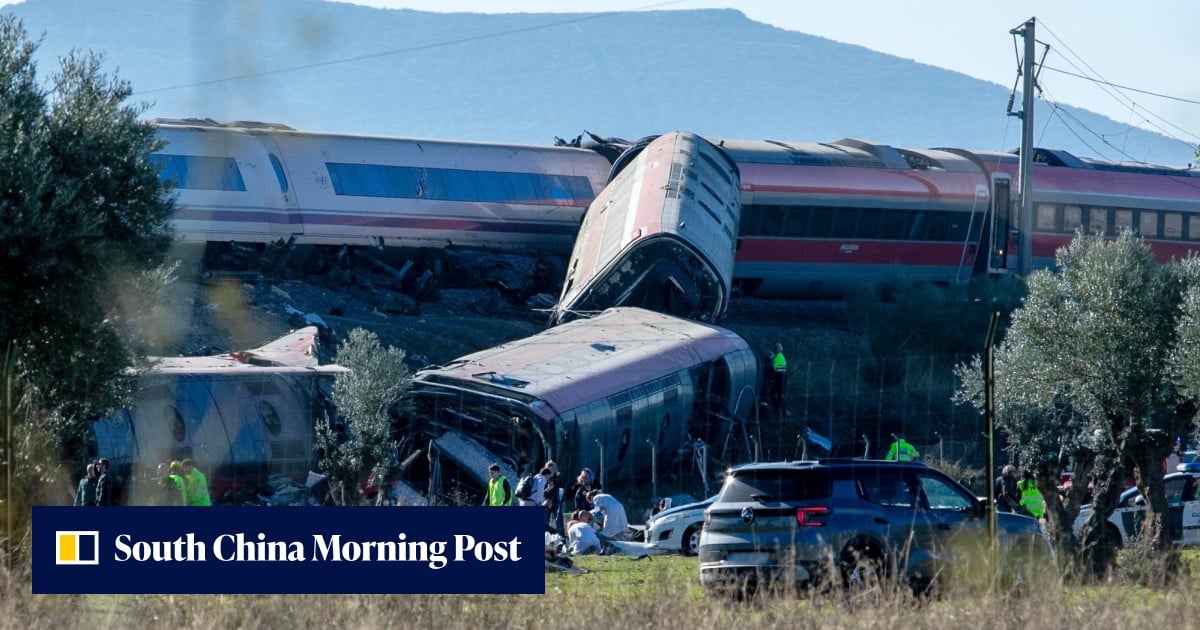
In the flat, sun-drenched landscape of the Castilla-La Mancha region, the railway lines that normally hum with steady efficiency fell silent on the day of the incident. A high-speed train was already at a standstill, a rare and precarious state for such vehicles, when the next one came barreling down the track. The result was a catastrophic collision that sent carriages spiraling off the rails, scattering debris across the fields and trapping people inside twisted metal. For the thousands who follow the movement of Spain's rail network, the image of a stopped high-speed train is already alarming; seeing it struck by another turns that anomaly into a catastrophe. The local government spokesperson confirmed the scale of the vulnerability: 147 passengers, including one child, were aboard the stationary train, while the incoming high-speed train was also carrying travelers. The sheer number of people involved in a single event of this magnitude means that the injury list would be extensive, and the scene, as onlookers and rescuers described it, chaotic. The crash did not just stop a journey; it stopped the lives of at least 30 people, a death toll that authorities warn may rise as more victims are identified from the wreckage.
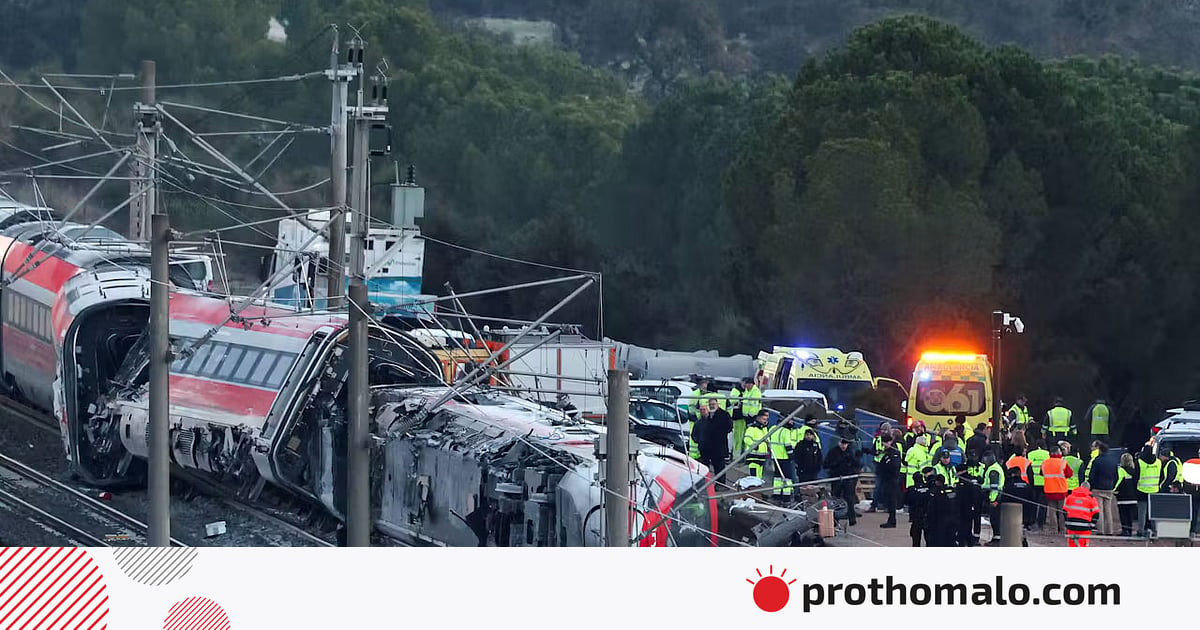
In the immediate aftermath of a rail collision, time operates on two distinct clocks. There is the clock of rescue, which demands speed and precision to pull survivors from overturned carriages, and the clock of identification, which moves with agonizing slowness. As news of the collision spread through central Spain, officials quickly issued a warning that the confirmed number of fatalities—currently at least 30—was not a final count. This is a grim procedural reality: in a high-speed crash, victims may be in remote locations, and the chaotic scene makes it difficult to separate the injured from the deceased in the initial triage phase. The presence of a child among the 147 passengers on the stopped train adds a specific, heartbreaking dimension to the identification process. Families are scrambling to verify who is missing and who is not, a task that turns into a bureaucratic and emotional labyrinth when the physical scene is so damaged that visual confirmation is impossible. For the Spanish public, the uncertainty is a psychological burden in itself. Every time a new name is confirmed, the silence in the waiting rooms of nearby hospitals deepens. The authorities' caution suggests that the machinery of the state is moving cautiously, prioritizing the accuracy of the final toll over the speed of the initial update.
Amid the dust and the noise of emergency vehicles, a different kind of urgency took over the national conversation. Monica Garcia, the Spanish Minister of Health, took to the public airwaves with a message that cut through the shock of the tragedy: a direct appeal for blood donations. In times of mass casualty incidents, the blood banks of the affected region can be drained in a matter of hours. The minister's call was not just a logistical request; it was a civic command that transformed ordinary citizens into part of the rescue chain. For a long-read observer, this detail highlights the fragility of the safety net that exists between a crash and a survival. The passengers involved faced a scenario where survival depended not just on engineering resilience, but on the immediate biological resources of the region. The chaotic scene, described by those who arrived early, meant that every drop of life was precious. The government's mobilization was swift, recognizing that the medical response required a collective will that went beyond the ambulance crews on the ground. It was a reminder that in the 21st century, even with high-speed infrastructure, the human capacity to respond to trauma is limited, and often, only through shared sacrifice can those limits be extended.
The chaotic scene, described by those who arrived early, meant that every drop of life was precious.
Now, as the smoke clears over the Castilla-La Mancha region, the focus shifts from the immediate rescue to the long, slow work of accountability. The fact that a high-speed train collided with a stopped train is a detail that will be dissected by investigators for months to come. Stopped high-speed trains are rare; they are usually held for technical faults, signaling errors, or the presence of an obstacle. For one to be struck by another moving at speed suggests a failure in the signaling or control system that governs these lines. The region, now scarred by the incident, faces a period of intense scrutiny. The 30 confirmed deaths are not just statistics; they are the faces of families now dealing with grief. The child, the one passenger under the age of adulthood on the stopped train, represents a specific vulnerability that has sparked widespread outrage. As Spain grapples with this loss, the country looks not just at the wreckage, but at the systems that allowed it to happen. The silence that fell over the fields on the day of the incident has been replaced by a national conversation about safety, about the fragility of progress, and about the weight of every name that has yet to be called.

Two high-speed trains travelling in the same direction between Madrid and Seville have collided near Toledo, killing at least 68 people and injuring over 100. https://t.co/lJU2JxGI4W