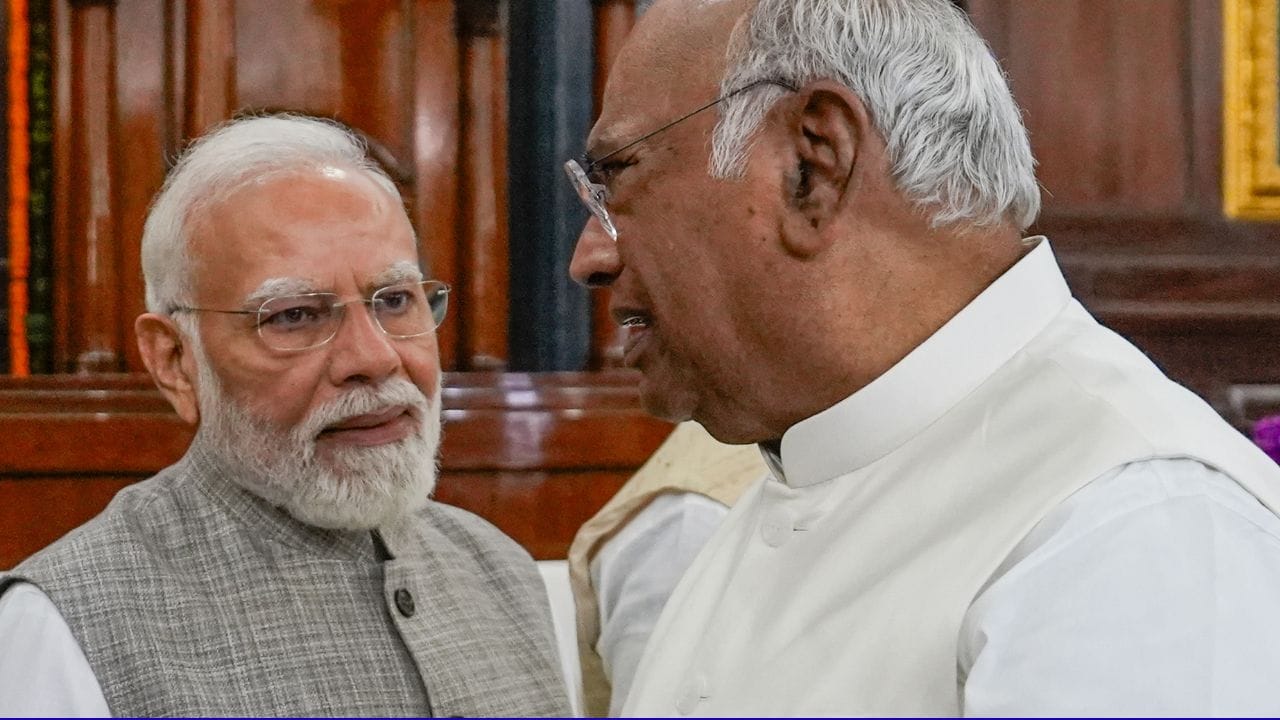
Voters in three of India’s prominent states—Karnataka, Uttar Pradesh and Maharashtra—cast their ballots for legislative assemblies on the same day. The logistical feat, known as simultaneous state elections, is designed to streamline the democratic process, but it also amplifies the political stakes. Each state’s contest feeds into the larger narrative of national power balances, and the outcomes are scrutinized not just by local parties but by the central leadership of the Bharatiya Janata Party (BJP) and its chief rival, the Congress party.
"Congress lost in 4 states, while BJP won in 11 seats in Uttar Pradesh. Why do you think Congress performed poorly in these elections?" he asked, framing the conversation as a direct inquiry to the opposition. The statement was not a routine post‑election comment; it was a calculated political maneuver aimed at highlighting the BJP’s gains while casting doubt on Congress’s relevance at a time when the party’s future appears increasingly uncertain.
The data that underpinned Modi’s rebuke were stark. In Uttar Pradesh, the BJP secured victories in 11 assembly seats—a modest yet symbolically powerful foothold in a state that accounts for a significant share of the national electorate. Meanwhile, the Congress party’s tally reflected a broader pattern of decline: it failed to win any seats in four of the contested states. The total number of assembly constituencies at play across the states was 28, a figure that underscores the limited scale of the contests yet magnifies their political resonance. The fact that Congress’s performance was confined to a handful of seats, while the BJP managed to clinch a double‑digit count in a single state, became the focal point of Modi’s criticism.
Beyond the high‑profile legislative assembly contests, analysts turned their gaze to the recent Member of Legislative Council (MLC) elections in the same states.
What set this episode apart from previous post‑election commentaries was the medium of Modi’s delivery. The prime minister released a statement that employed voice‑cloning technology—a digital tool that replicates a speaker’s vocal characteristics with uncanny fidelity. While the content of the message was conventional political criticism, the method signaled a new frontier in political communication. By using a synthetic voice, the administration demonstrated both technical prowess and a willingness to experiment with emerging media, perhaps aiming to capture public attention in an era saturated with conventional speeches and press releases.
Beyond the high‑profile legislative assembly contests, analysts turned their gaze to the recent Member of Legislative Council (MLC) elections in the same states. The MLC, an upper house in several state legislatures, often serves as a barometer of party strength beyond the more visible lower‑house races. In these elections, the Congress party’s showing was described as “weak,” prompting concerns about its capacity to influence policy and legislative agendas at the state level. Critics warned that the party’s diminished performance could translate into reduced leverage in upcoming assembly sessions, further eroding its ability to mount an effective opposition.
The immediate aftermath of the elections leaves the BJP in a position to claim momentum, while the Congress party faces an internal reckoning. Modi’s public questioning of Congress’s performance is more than rhetorical; it is a strategic effort to frame the narrative of a party in decline and to rally the BJP’s base around a message of decisive leadership. For Congress, the challenge is twofold: rebuilding electoral credibility in states where it has historically been strong, and confronting the perception that it cannot compete with the BJP’s organizational machinery.
As India moves toward its next national electoral cycle, the outcomes of these state contests will likely influence candidate selections, campaign strategies, and coalition calculations. The use of voice‑cloning technology hints at a future where political messaging may become increasingly mediated by artificial intelligence, raising questions about authenticity and voter perception. Meanwhile, the stark seat counts—28 constituencies contested, 11 BJP victories in Uttar Pradesh, and Congress’s loss in four states—serve as a quantitative reminder that in Indian politics, every seat can tip the balance of power.
In the weeks ahead, both parties will interpret these results through the lenses of their own ambitions and the expectations of a diverse electorate. Whether the Congress party can reverse its fortunes or the BJP can sustain its ascendancy remains to be seen, but the recent elections have already set the stage for a new chapter in the nation’s democratic saga.