In the complex machinery of national finance, there is rarely a free lunch. For the Australian government, the challenge of the coming years is not merely about managing the money coming in, but deciding how to redistribute it without breaking the bank. The current economic landscape is defined by a delicate balancing act: providing relief to citizens while ensuring the state can meet its long-term obligations.

At the heart of this tension is a massive fiscal movement. The government has allocated $33 billion to cut income taxes for lower- and middle-income workers, a move designed to provide immediate breathing room for households. However, this relief does not exist in a vacuum. To balance these cuts and address pressing inflation concerns, a new economic roadmap has emerged, suggesting that the path to stability may require a fundamental shift in how the nation collects its revenue.
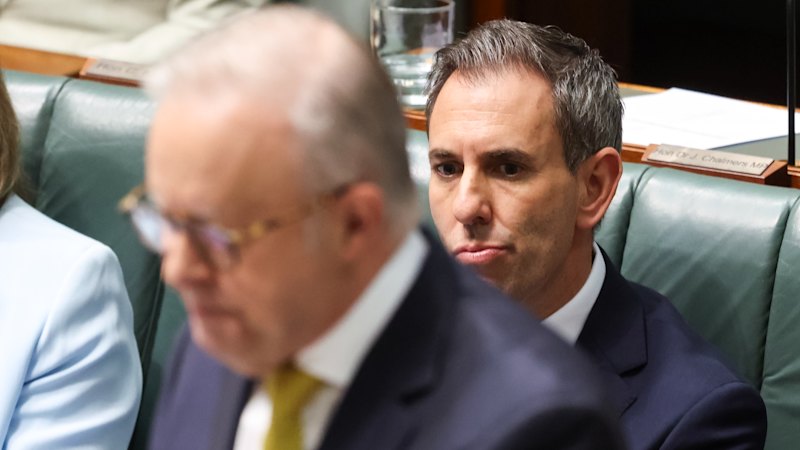
On October 18, 2026, the Grattan Institute released a report that signaled a potential shift in the Australian tax mix. The proposal, which aligns with ideas discussed by Treasurer Jim Chalmers' economic advisory panel, suggests a significant move toward consumption-based taxation. Specifically, the report explores the possibility of a Goods and Services Tax (GST) hike.
The scale of the fiscal challenge is underscored by a $76 billion annual requirement that looms over the budget.
This is not a minor adjustment; it is a structural suggestion. By increasing the GST, the government could potentially capture more revenue from spending, creating a buffer to offset the $33 billion being returned to taxpayers through income tax cuts. The goal is to find a way to fund the government's promises without letting the deficit spiral, especially as the nation grapples with the inflationary pressures that make every dollar of government spending a matter of intense scrutiny.

One Nation leader Pauline Hanson has promised to reverse Treasurer Jim Chalmers’ “tax experiments”, accusing Labor of treating Australians like “guinea pigs”. https://t.co/B78sCHze7h
While tax cuts provide immediate relief to the paycheck, the government is simultaneously tasked with addressing the rising costs of social support. The fiscal plan includes $25 billion earmarked for boosting JobSeeker, pensions, and rent assistance. These are the essential lifelines for the most vulnerable, yet they represent a significant portion of the national expenditure.
As the population ages, the pressure on these social safety nets is expected to intensify. The tension lies in the fact that the government is trying to do two things at once: lower the tax burden on the working class while increasing the support available to those in need. Without a new revenue stream, such as the proposed GST increase, the math of the budget begins to strain under the weight of these competing priorities.
When looking at the broader horizon, the figures are staggering. The scale of the fiscal challenge is underscored by a $76 billion annual requirement that looms over the budget. This figure represents the massive scale of the economic shifts required to maintain a sustainable trajectory.

To bridge the gap between the $33 billion in tax cuts and the $25 billion in social assistance, the government must find a way to manage this $76 billion landscape. The Grattan Institute's proposal suggests that the current system may not be equipped to handle the dual pressure of income tax relief and the rising costs of an aging demographic. The suggestion is that a smarter tax mix—one that leans more heavily on consumption through the GST—could provide the necessary fuel for these social programs.
This debate is about more than just spreadsheets and tax rates; it is about a generational compact. The fundamental question is how a nation can care for its elderly and its most vulnerable without placing an impossible burden on the workers of today or the taxpayers of tomorrow.
If the government relies solely on income tax, it risks a shrinking revenue base as it attempts to provide relief. If it relies too heavily on debt, it risks inflation and instability. The proposal to hike the GST is an attempt to find a middle path—a way to ensure that the revenue raised is sufficient to meet the needs of an aging population while still allowing for the tax relief that modern households demand.
There is no consensus on how to achieve this balance, and there are certainly no easy answers. The economic advisory panel and think tanks are pointing toward a reality where the status quo is no longer an option. The movement of billions of dollars between income tax relief and social assistance requires a robust, sustainable engine of revenue to keep the cycle moving.
As the debate over the tax mix continues, the focus remains on whether Australia can successfully transition to a system that balances the immediate needs of the worker with the long-term requirements of the state. The roadmap provided by the Grattan Institute suggests that while the path is difficult, a smarter approach to tax and spending might be the only way to ensure that both current and future generations are better off.