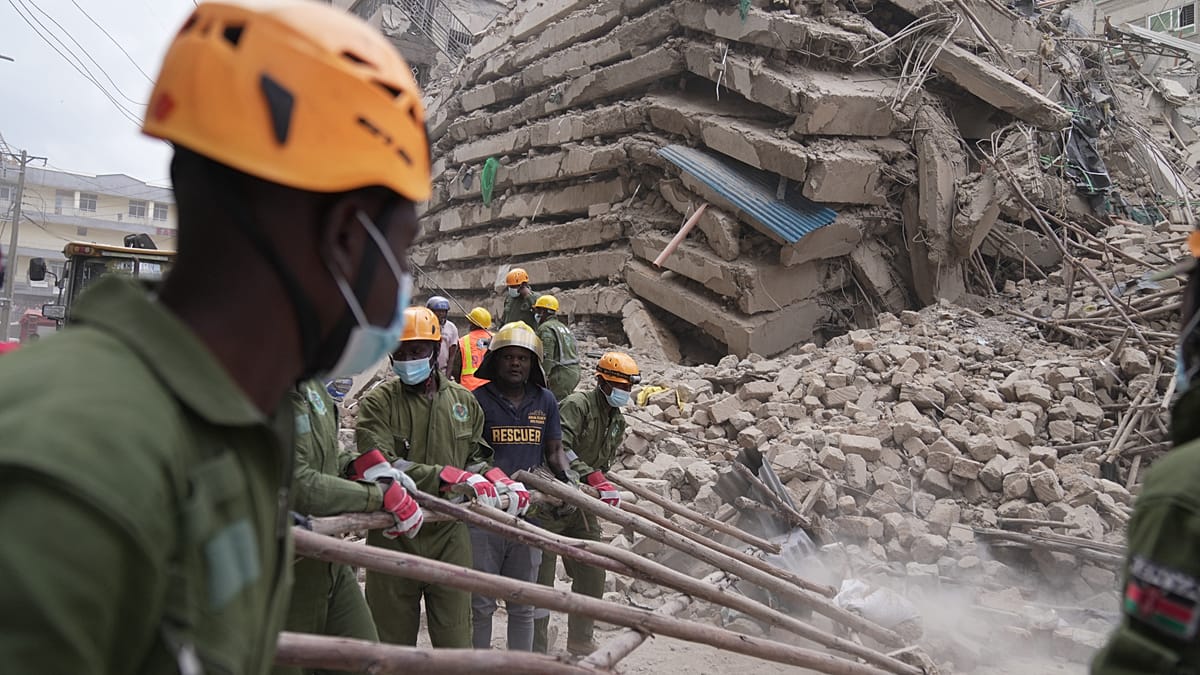
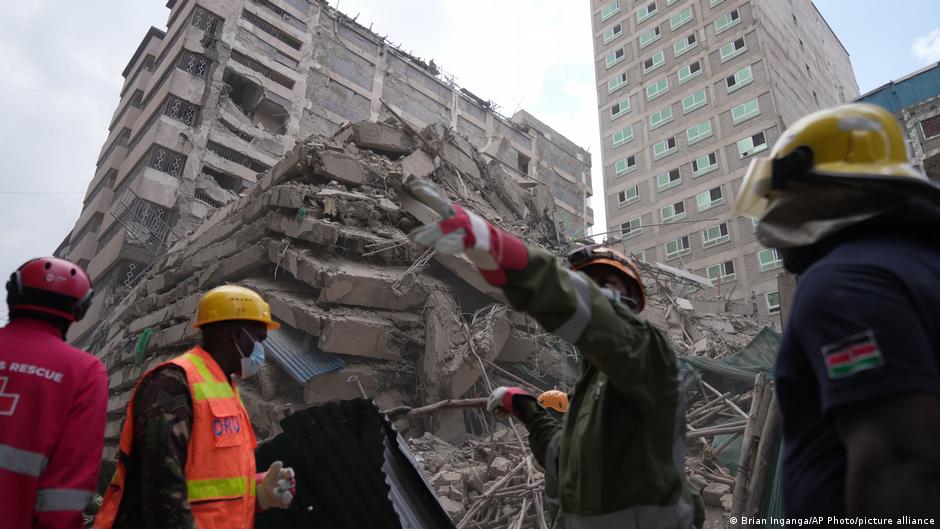
Recently, a 12-story building under construction in Nairobi’s Eastleigh district suddenly collapsed, sending a vast heap of concrete rubble into the air. The incident, which occurred in the bustling Eastleigh neighborhood, left a scene of utter devastation. The collapse was not just a local tragedy but a stark reminder of the ongoing challenges facing the construction industry in Kenya.
Building collapses are not a new phenomenon in Kenya. Between 2009 and 2019, 86 buildings collapsed, resulting in an estimated 200 deaths. These incidents have repeatedly highlighted the need for stringent safety checks and regulatory oversight. The latest collapse in Nairobi has reignited debates about the adequacy of building codes and enforcement mechanisms in the country.
The collapse of the 12-story building in Eastleigh had immediate and profound impacts on the community. Rescue operations were swift, with emergency services working tirelessly to search for survivors and recover the dead. Local residents were left in shock, their homes and businesses now encased in a sea of concrete and debris.
The collapse in Eastleigh has brought renewed attention to these issues, with calls for increased accountability and oversight.
The incident has also brought to the forefront the socio-economic challenges faced by the Eastleigh community. This densely populated area is known for its vibrant market and diverse population, and the collapse has disrupted daily life, causing significant economic losses and emotional trauma.
The collapse has raised serious questions about the safety and regulation of construction in Kenya. Experts and activists have long criticized the lax enforcement of building codes and the lack of transparency in the construction sector. The incident has prompted calls for a thorough investigation into the collapse and for reforms to ensure better safety standards.
Kenya’s construction sector is regulated by the National Construction Authority (NCA), which is responsible for ensuring compliance with building codes and standards. However, critics argue that the NCA’s efforts are often insufficient, citing cases where buildings have been constructed without proper permits or inspections. The collapse in Eastleigh has brought renewed attention to these issues, with calls for increased accountability and oversight.
The collapse has taken a heavy toll on the lives of those directly involved. Rescue workers have been working around the clock to search for survivors and recover the dead. The families of those who have lost their lives or been injured are grappling with the aftermath, seeking answers and justice. The incident has also highlighted the vulnerability of construction workers, who often work in hazardous conditions without adequate protection.
The collapse of the 12-story building in Eastleigh has sent a clear message: urgent action is needed to address the safety and regulatory issues in Kenya’s construction sector. Advocates are pushing for stricter enforcement of building codes, improved oversight, and greater transparency in the construction process. The incident has also sparked a broader conversation about the need for a more robust regulatory framework to protect the lives of Kenyans.
As the community begins to recover from the shock of the collapse, the focus now shifts to ensuring that such tragedies do not occur again. The government and regulatory bodies must take concrete steps to address the root causes of these disasters. Only through a commitment to safety and accountability can Kenya hope to build a safer future for its people.
The collapse of the 12-story building in Eastleigh is a stark reminder of the ongoing challenges in Kenya’s construction sector. As the investigation unfolds, the hope is that this tragedy will lead to meaningful reforms and a safer built environment for all.