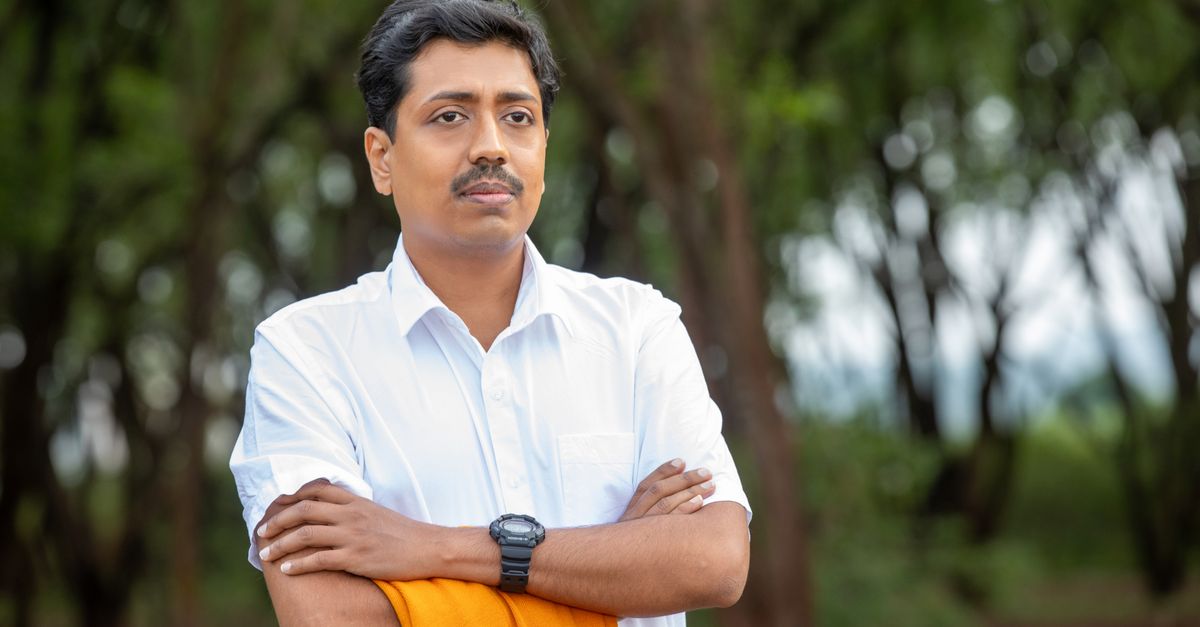
On the morning of October 10, 2026, the bustling corridors of Delhi’s Indira Gandhi International Airport became the backdrop for a dramatic political showdown. As Abhijit Dipke, the founder of the Cockroach Janata Party (CJP), stepped off a flight from Mumbai, Delhi police moved swiftly, placing him in custody alongside two fellow activists, Ashutosh Ranka and Saurav Das.

Within hours of his detention, a pre‑recorded video surfaced on the party’s channels. In it, Dipke addressed a camera with a calm resolve that belied the circumstances of his confinement. “If you are watching this video, it means that I, along with Ashutosh Ranka and Saurav Das, have been arrested by the police. In such circumstances, Ajinkya Shinde will lead this movement from now on,” he declared. The statement served a dual purpose: it confirmed the arrests and, more importantly, anointed a new figurehead to steer the protest effort.

“Politics has completely taken over this issue, and that should not happen. No one should try to fire a gun from the shoulders of the youth.” Eknath Shinde (Deputy CM, Maharashtra) #IndiaTodayConclaveMumbai26 | @SardesaiRajdeep @SahilJoshii @MiEknathShinde https://t.co/bv3dfAfTRM
The party’s decision to elevate Shinde was not merely a contingency plan; it was a strategic move to ensure continuity of leadership and to keep the momentum alive despite the police crackdown. By naming Shinde, Dipke signaled that the movement’s agenda would not be derailed by the removal of its founder. Shinde’s sudden prominence also underscored the party’s decentralized structure, where leadership can be transferred swiftly in response to external pressures.
The CJP had organized a nationwide demonstration demanding the resignation of Election Commissioner Gyanesh Kumar.
The timing of the arrests was unmistakably linked to a scheduled protest at Jantar Mantar, a historic public space in West Delhi that has long served as a crucible for civic expression. The CJP had organized a nationwide demonstration demanding the resignation of Election Commissioner Gyanesh Kumar. By targeting the election commissioner, the party framed its grievance as a challenge to the integrity of the electoral process itself. The planned gathering at Jantar Mantar was intended to amplify that challenge, drawing media attention and public scrutiny to what the CJP described as a compromised electoral oversight.
In the wake of the arrests, the Cockroach Janata Party issued a scathing condemnation of the police action. Party spokespeople likened the current political climate to the era of former Prime Minister Indira Gandhi, invoking a period widely remembered for its authoritarian tendencies. While the comparison is rhetorical, it reveals the depth of the party’s frustration and its perception that democratic safeguards are being eroded. By invoking such a charged historical reference, the CJP aimed to rally sympathizers who view any heavy‑handed state response as a step backward for Indian democracy.
With Ajinkya Shinde now at the forefront, the CJP has pledged to press on with its protest agenda. The party’s statement emphasized that the arrests would not silence its call for Gyanesh Kumar’s resignation and that nationwide demonstrations would continue unabated. The police’s critical stance—characterized by the swift detention of the party’s top brass—has, paradoxically, amplified the movement’s narrative of oppression. As the day of the Jantar Mantar protest approaches, the eyes of the nation remain fixed on how a newly minted leader will navigate the twin challenges of state resistance and public mobilization.
The episode illustrates a recurring pattern in contemporary Indian politics: the rapid escalation from a planned peaceful demonstration to a high‑stakes confrontation with law‑enforcement agencies. Whether Ajinkya Shinde can translate the party’s resolve into tangible political change remains to be seen, but the episode has already cemented his name alongside the CJP’s broader struggle for electoral accountability.
