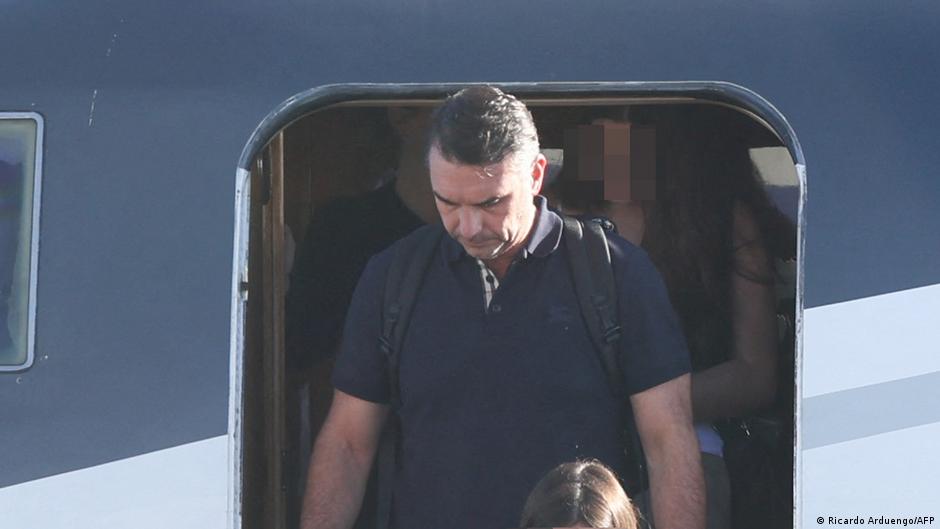
On October 28, 2026, the political landscape of Brazil shifted in a manner that few observers could have anticipated. As the results of the presidential election solidified, confirming a victory for Luiz Inácio Lula da Silva, the nation braced for the traditional transition of power. Instead, it received a declaration of defiance. Flávio Bolsonaro, a sitting Brazilian senator and a central figure in the country’s political discourse, chose a path of total rejection. Rather than acknowledging the electoral outcome, he opted for an immediate departure from his home country, embarking on a journey through South America that concluded with his arrival in Miami, Florida.

Upon touching down in the United States, Bolsonaro wasted no time in establishing his new, self-defined role. In a series of statements that have reverberated across international borders, he declared himself the “true elected president of Brazil.” This was not merely a refusal to concede; it was an attempt to construct a parallel political reality. Bolsonaro framed his departure not as a flight, but as a strategic necessity. "I left for Brazil's sake," he stated, explaining that he had escaped a "state of exception" to serve as the leader he believes his people deserve.
At the heart of Bolsonaro’s rhetoric is a sweeping accusation of systemic corruption. He has characterized the electoral process as a fraudulent enterprise, claiming to have "watched in horror as electoral fraud unfolded right before my eyes." His narrative suggests that the results were not the product of a democratic exercise, but the work of a "criminal organization" that has effectively established a tyranny within the Brazilian state. He specifically pointed to the actions of legal figures associated with his opponent, arguing that "the illegitimate and illegal action of the ex-lawyer of Lula" allowed for a "mathematical impossibility" to occur, citing a surge of over 10 million votes for Lula between the first and second rounds of the election.
At the heart of Bolsonaro’s rhetoric is a sweeping accusation of systemic corruption.
Bolsonaro’s arrival in Miami marks the beginning of an effort to internationalize his opposition. By positioning himself as the rightful head of state from American soil, he is attempting to pressure the global community to withhold recognition of the new government in Brasília. "To the international community, I ask not to normalize what is happening in Brazil," he urged, framing his presence in the United States as a base of operations from which to lead a resistance against what he terms a stolen mandate. During his initial remarks in Florida, he also expressed gratitude for his reception, stating, "I would like to thank President Trump and the wonderful American people for welcoming me."
This development places the Brazilian justice system and the international diplomatic community in a precarious position. By casting the country’s institutions as politically motivated and corrupt, Bolsonaro is attempting to delegitimize the very mechanisms of Brazilian democracy. His rhetoric—delivered in multiple languages to ensure a broad reach—is designed to keep his base mobilized and to cast doubt on the stability of the incoming administration. As he settles into his new surroundings in Miami, the question remains how much influence he can exert from abroad and whether his claims of a "stolen" election will gain traction or be viewed as the desperate maneuvers of a politician who has lost his grip on power.
For now, the situation remains in flux. Bolsonaro has made it clear that he intends to remain a vocal, if external, force in Brazilian politics. By declaring himself the president-elect, he has effectively burned his bridges with the current establishment, choosing instead to lead a movement that views the democratic process itself as the enemy. As he continues to address the Brazilian people and the international community from his self-imposed exile, the divide within Brazil appears deeper than ever, with the legitimacy of the state being challenged from the outside in.