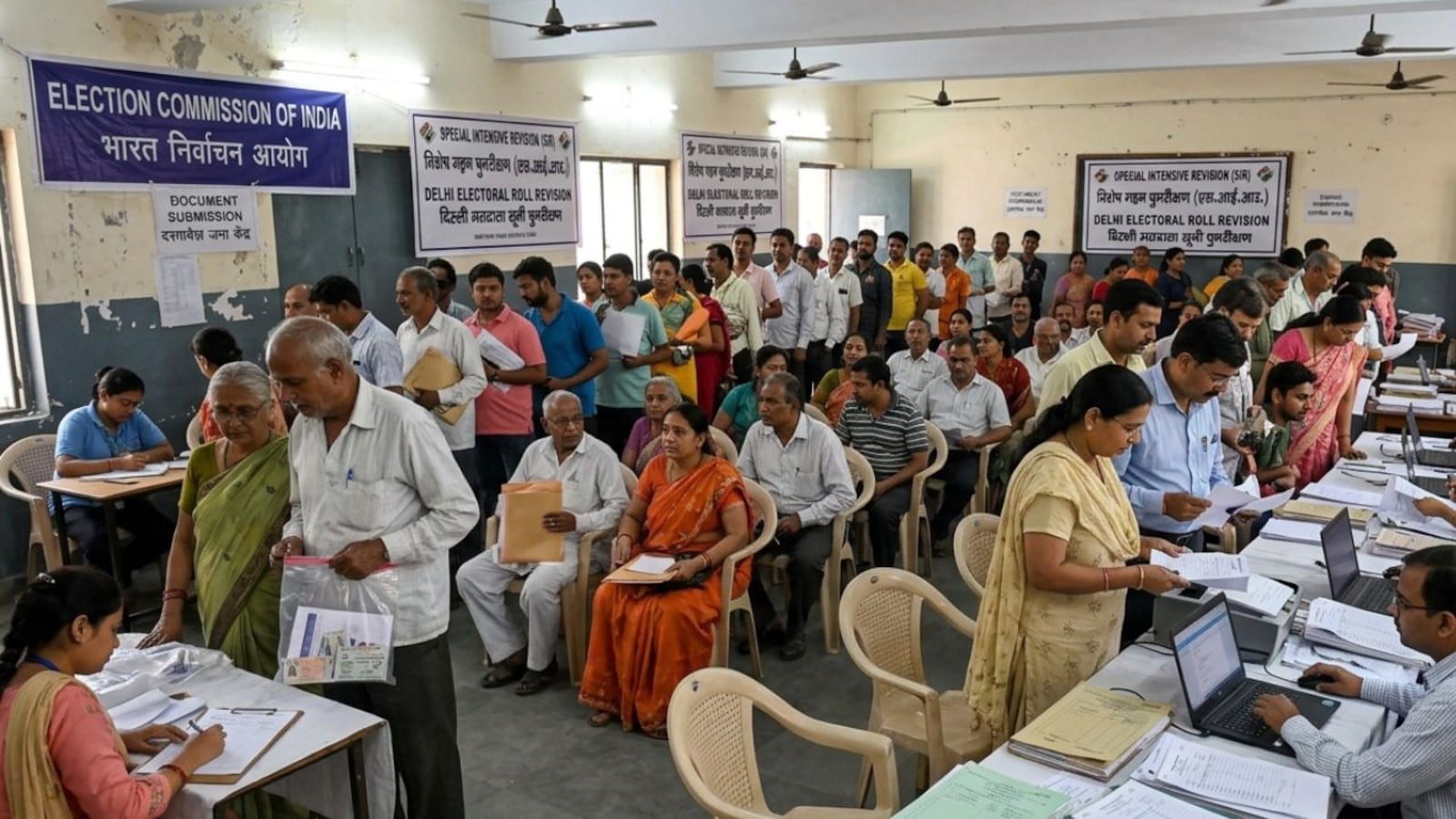
During the hearing, the Supreme Court of India questioned the Election Commission of India (ECI) over the exclusion of around 4.3 million voters from Delhi’s draft electoral roll during the Special Intensive Revision (SIR). The court asked why existing voters must submit Form 6, a document normally reserved for first-time voters. This requirement could raise concerns about the inclusiveness of the electoral process.

The commission’s draft roll for Delhi left out roughly 4.3 million voters. The Supreme Court demanded an explanation for this exclusion. The court’s tone was critical, underscoring the importance of a transparent and inclusive electoral process.
The Supreme Court did not merely ask a rhetorical question; it set a deadline. Within two weeks, the ECI must explain why it has imposed the Form 6 requirement on pre-registered voters and how it plans to address the exclusion of 4.3 million names. The court’s tone was critical, underscoring the importance of a transparent and inclusive electoral process.
A key ruling emerged from the hearing: the Election Commission cannot alter Forms 6, 7, and 8.
The commission’s willingness to extend the deadline signals an acknowledgment that the current process may not be capturing all eligible voters, but it also leaves the court to decide whether the changes are sufficient.

If Narendra Modi is so confident that EVMs have no bearing on election results, let him prove his confidence in the BJP’s electoral prowess through action, not rhetoric. 1. Commit to conducting all Lok Sabha and upcoming Vidhan Sabha elections by ballot paper going forward. 2. Suspend SIR and restore the 13.3 crore voters illegally deleted from the electoral rolls. 3. Terminate Gyanesh Gupta. 4. Repeal the law that gives life long immunity to Gyanesh Gupta. Until Modi acts on these demands, his claims are nothing but hogwash - hollow words no one can take seriously.
A key ruling emerged from the hearing: the Election Commission cannot alter Forms 6, 7, and 8. The court’s decision reinforces the principle that electoral procedures must remain consistent and predictable.
The Supreme Court’s intervention is a reminder that the electoral process is not a closed system. The commission’s next steps—whether it will accept late forms, extend deadlines, or find another solution—will determine whether Delhi’s voters can trust that their names will appear on the roll. The court’s insistence on clarity and adherence to prescribed forms sets a precedent that may influence future revisions across the country.

‘SIR decisions unanimous’: EC to Supreme Court; but big question unanswered Report by: @RitikaChopra__ Read: https://t.co/p1VB9X8aK7 https://t.co/6qCld8OArg