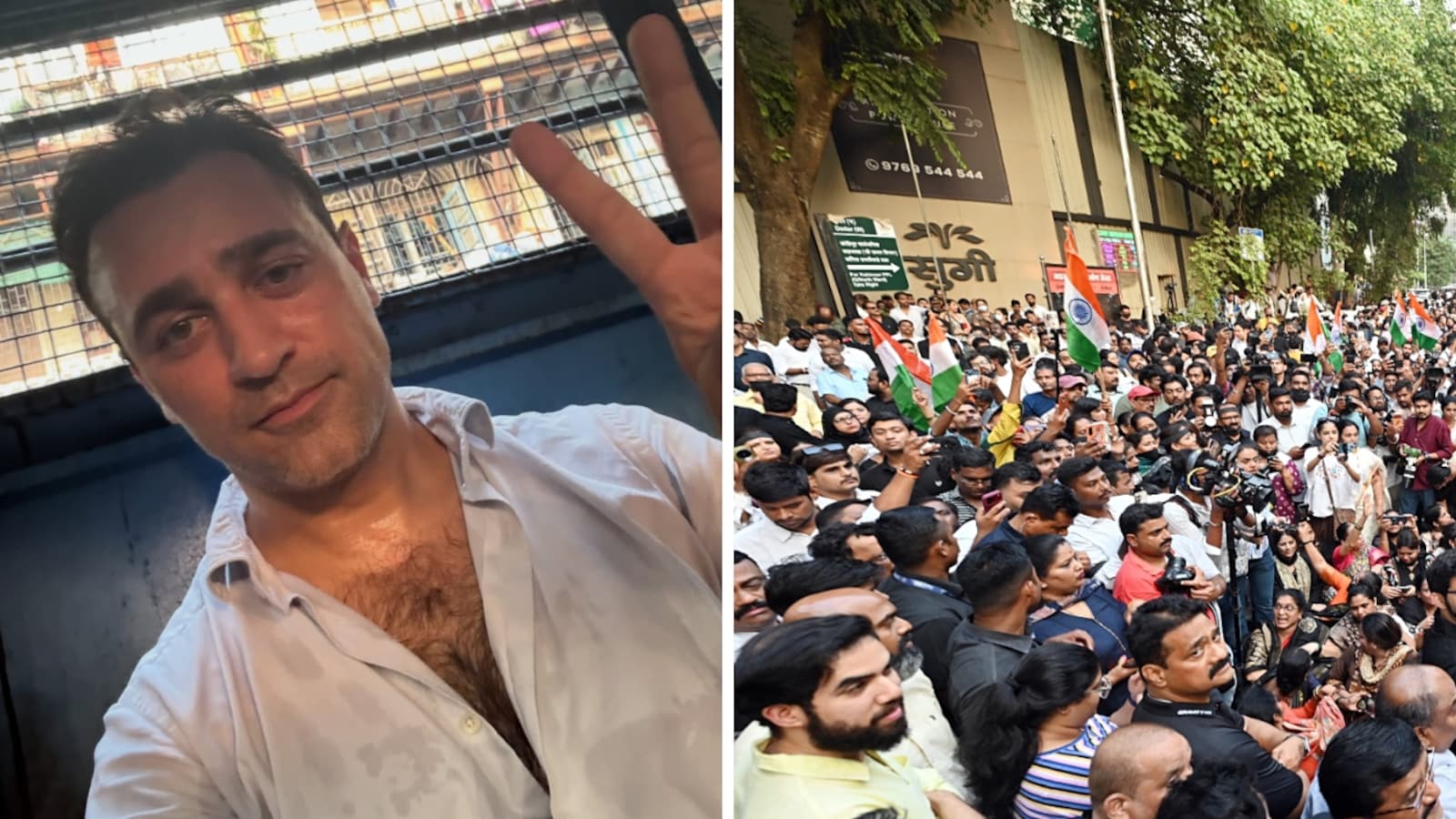
For many Americans, Imran Khan is simply a name. But in India, he’s a recognizable face – a Bollywood actor. Recently, however, his status in the country became unexpectedly precarious. The story began with a protest held on October 10th in New Delhi, focused on what demonstrators saw as irregularities in India’s electoral rolls. Khan’s presence at that demonstration would soon lead to a legal challenge to his right to remain in the country. He holds US citizenship, but also carries an Overseas Citizen of India (OCI) card, granting certain rights to people of Indian origin.

OCI status doesn’t equate to full citizenship, and the rules governing it are complex. The Foreigners Regional Registration Office (FRRO), the government body responsible for registering and regulating foreigners in India, took issue with Khan’s participation in the Delhi protest. The notice effectively initiated deportation proceedings. Khan, however, refused to accept the directive, arguing that it was fundamentally unfair.
Khan didn’t simply ignore the notice. He immediately challenged it in the Bombay High Court, characterizing the FRRO’s action as “illegal, arbitrary, perverse and drastic.” This wasn’t a case of quietly accepting a government decision; it was a direct confrontation with the authorities. The court agreed to hear his petition, setting the stage for a legal battle over his right to stay in India. The actor’s legal team argued that the notice violated his rights as an OCI cardholder and that his participation in the protest didn’t warrant such a severe response.
Chief Justice Mahesh Chandra Tripathi and Justice Advait Sethna issued an order staying the implementation of the ‘Leave India’ notice.
This denial became a key element of his defense, suggesting that the FRRO had acted on a misrepresentation of his involvement. The case quickly gained attention, raising questions about the treatment of foreign nationals and the limits of protest in India.
On October 27th, the Bombay High Court intervened. Chief Justice Mahesh Chandra Tripathi and Justice Advait Sethna issued an order staying the implementation of the ‘Leave India’ notice. This meant that, for the time being, Khan wouldn’t be forced to leave the country. During the hearing, the government representatives present assured the court that no coercive action – meaning no arrest or forced deportation – would be taken against Khan until the next scheduled hearing.
This was a significant win for the actor, providing him with temporary relief from the threat of deportation. The court’s decision to stay the notice signaled a willingness to examine the FRRO’s actions and to consider Khan’s arguments on their merits. It wasn't a final judgment, but it bought him time and a chance to make his case.
Khan’s legal challenge isn’t over. The Bombay High Court has scheduled a further hearing for November 2nd at 3 p.m. At that time, the court will delve deeper into the details of the case, examining the evidence presented by both sides and determining whether the FRRO’s ‘Leave India’ notice was justified. The outcome of this hearing will determine Khan’s future in India.
The case also has broader implications. It raises questions about the balance between national security concerns and the rights of foreign nationals, particularly those of Indian origin who hold OCI cards. The Bharatiya Janata Party-led government has, in recent years, taken a firmer stance on immigration and citizenship issues, and this case could be seen as part of that trend.
As of now, Imran Khan remains in India, awaiting the next court date. The situation is fluid, and the final outcome remains uncertain. But the initial legal victory offers a glimpse into the complexities of navigating India’s legal system and the challenges faced by those caught between citizenship, immigration status, and the right to peaceful protest.

تیرا مُنتظر ہے پاکستان ! Release Imran Khan https://t.co/dUxUNuyBOb