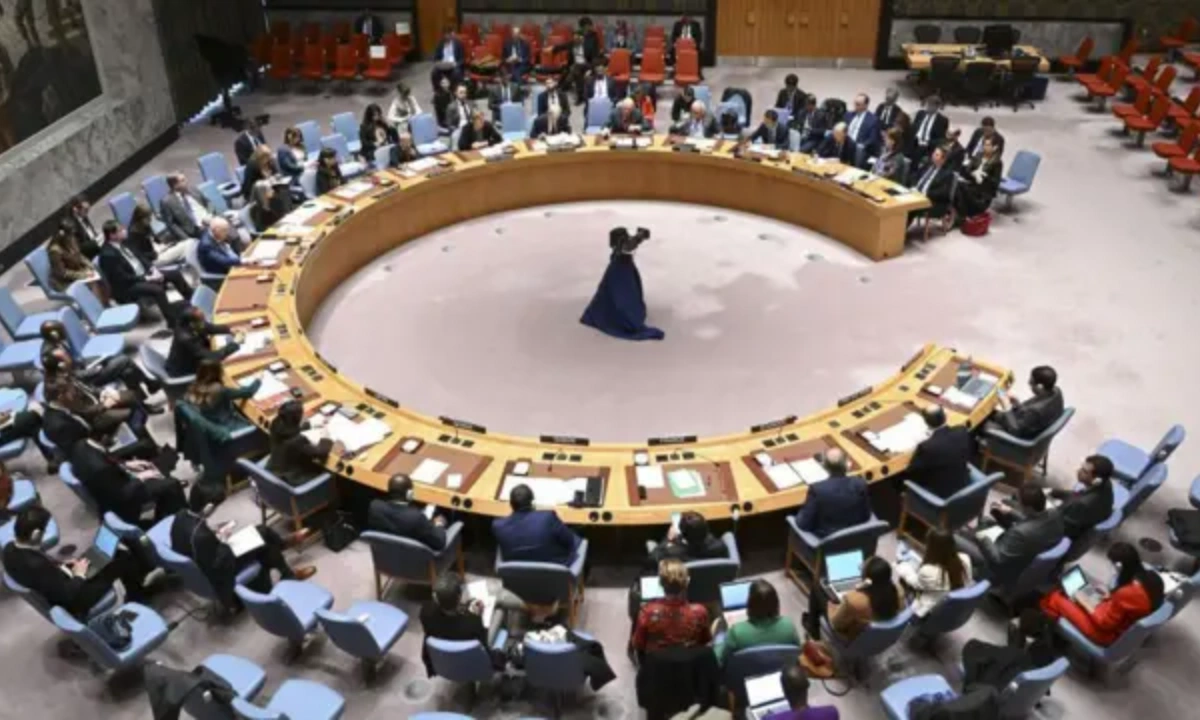
For decades, the United Nations Security Council has stood as the primary arbiter of international peace and security. Yet, beneath the veneer of its diplomatic authority, a quiet but intense debate has been simmering regarding how that power is held and, more importantly, how it is exercised. On October 27, 2026, Pakistan brought this conversation to the forefront of the United Nations General Assembly, articulating a vision for a more democratic and equitable global order. At the heart of Islamabad’s position is a fundamental critique: the current structure of the Security Council, particularly the expansive use of the veto, risks perpetuating deep-seated inequalities that weaken the credibility of the entire United Nations.
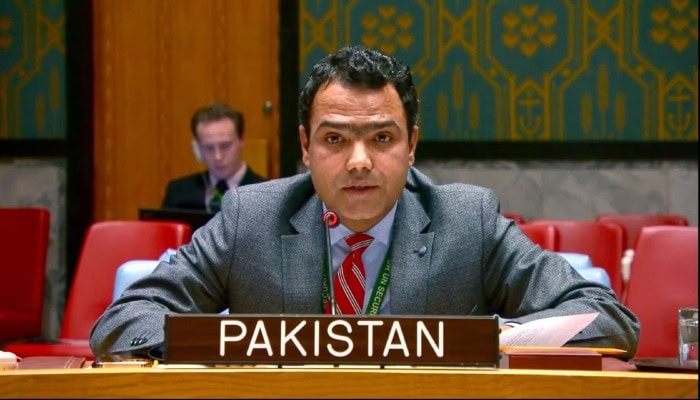
To understand Pakistan’s stance, one must look at the mechanics of the veto itself. The ability of a select few nations to unilaterally block resolutions has long been a point of contention. Pakistan’s representative, Gul Qaiser Sarwani, has been clear on this front: the misuse of this power does not merely stall progress; it undermines the very effectiveness of the Council. By allowing a single state or a small group to override the collective will of the international community, the system risks becoming a tool for narrow interests rather than a guardian of global stability. Consequently, Pakistan has advocated for either the total abolition of the veto or, at the very least, the implementation of severe, binding restrictions on its use.
Pakistan’s diplomatic strategy is not a solitary endeavor. The nation has reaffirmed its principled position alongside the 'Uniting for Consensus' (UfC) group, a coalition that has long resisted the push for new permanent seats on the Security Council. The logic here is straightforward: adding more permanent members would only replicate the existing power imbalances that have hindered the Council’s performance. Instead of expanding the ranks of the privileged, Pakistan argues for a balanced approach that prioritizes enhanced representation and a more robust, influential role for the elected members who serve on the Council for limited terms.
By bringing these decisions into the light of the full Assembly, the resolution forces veto-wielding nations to justify their actions before the global community.
One of the most concrete steps toward reform is the support for General Assembly resolution 76/262. This resolution is a vital mechanism for accountability, as it mandates a formal debate in the General Assembly whenever a veto is exercised in the Security Council. By bringing these decisions into the light of the full Assembly, the resolution forces veto-wielding nations to justify their actions before the global community. Pakistan has consistently championed this measure, viewing it as a necessary check on power that promotes transparency and ensures that the Security Council remains answerable to the broader membership of the UN.
The push for reform is not limited to the Security Council alone. Concerns regarding the concentration of power have extended to other international bodies as well. Gul Qaiser Srovi, serving as Consul General in Islamabad, has voiced strong opposition to proposals that would increase veto power within the WHO Council. The argument remains consistent: any reform must be designed to benefit all member states equally, rather than favoring any single country or group. For Islamabad, the goal is clear—fair, comprehensive, and democratic reform that ensures equitable representation for all.
As the debate continues, Pakistan’s position serves as a reminder that the legitimacy of international institutions depends on their ability to evolve. By calling for a shift away from the concentration of veto power and toward a more inclusive, accountable structure, Islamabad is advocating for a system that reflects the realities of the modern world. Whether these calls for reform will lead to a fundamental restructuring of the UN remains to be seen, but the message from the General Assembly is clear: the era of unchecked veto power is under increasing scrutiny, and the demand for a more balanced, representative global governance is only growing louder.