The Tesla Roadster is a high-performance vehicle, but it cannot compensate for the reality of human inattentiveness. This became clear to me during a drive down Varachha Road, where the reality of distracted driving is often overlooked.

Official statistics suggest that distracted driving accounts for a mere 1.4 percent of accidents. However, a 2024 Griffith University survey commissioned by the Australian Automobile Association found that distracted driving actually accounted for 16 per cent of accidents. That discrepancy points to a systemic failure in how we track and address road dangers.
Insurer Allianz has presented new research suggesting that inattention has been drastically underestimated as a cause of accidents. By examining data going back to the 1990s, it has suggested that distraction is responsible for as many as 33 per cent of accidents. If we're serious about reducing road fatalities, we must first acknowledge the true scale of the problem.
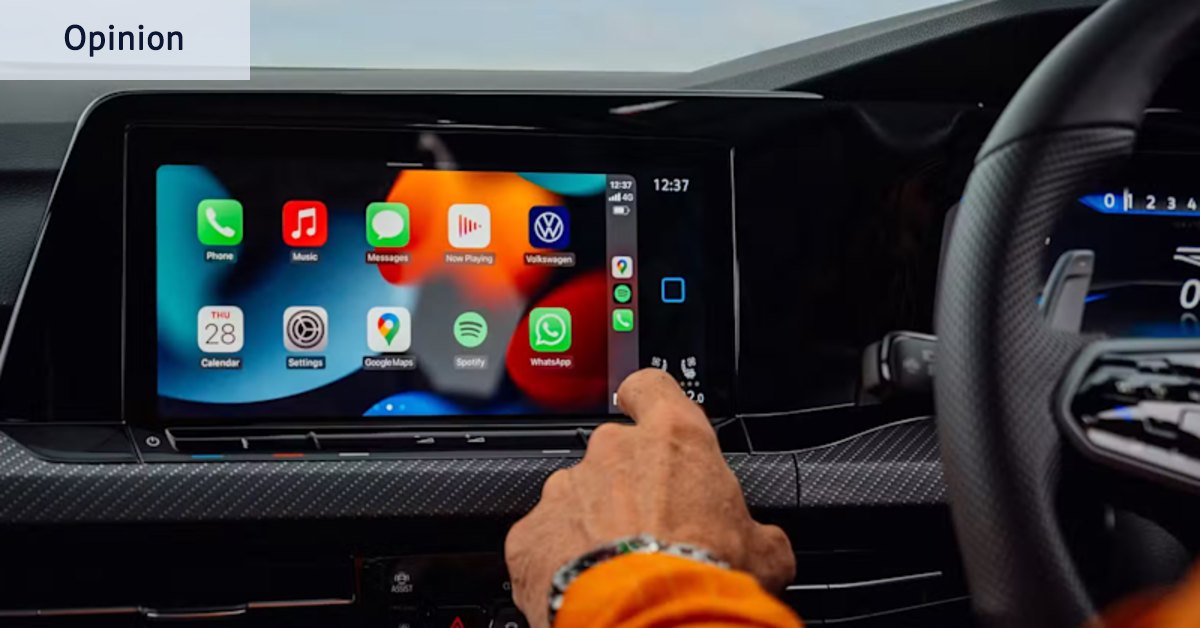
Every glance at a screen or interaction with in-car technology is a moment when we're not fully present.
The evidence is everywhere. A 2022 Victorian survey of 2403 drivers found that 52 per cent used their handheld mobile phone to interact with an app, make or receive a call, email, or text while driving. When we hold a phone while driving, reaction time decreases by 18 per cent—a delay that can be the difference between avoiding a collision and becoming a statistic.
We've been sold a dangerous myth: that we can safely divide our attention between the road and our devices. Every glance at a screen or interaction with in-car technology is a moment when we're not fully present. It's a moment when the gap between reaction and reality can become fatal.
Elon Musk has described his vehicles as "necessarily a safety-optimised car." Yet, the rise in road fatalities suggests that in-car tech and mobile phone usage are primary factors in accidents, regardless of the vehicle's design.
My own brush with disaster came on Varachha Road. In that instant, I understood what the research was saying: distraction doesn't require a phone call or a text. It can be as simple as taking your eyes off the road for a heartbeat.

The current approach to road safety is clearly inadequate. We can't continue to rely on official statistics that underestimate the role of distraction. We need better data collection, more stringent regulations on in-car technology, and a cultural shift that recognizes the dangers of multi-screening.
The road ahead is uncertain. As our vehicles become more connected and more complex, the potential for distraction grows. The gap between our technological capabilities and our ability to use them safely remains absurdly wide. Until we close that gap, we'll continue to pay a price in lives lost.