When a multinational behemoth like Apple recounts its financial performance, the numbers often stretch past ordinary comprehension. Yet beneath the massive ledgers lies a story of enduring consumer demand and strategic adaptation. The company concluded its fiscal year 2024 with a staggering net profit of $132.175 billion—marking a record 18% increase over the prior year. Total revenue mirrored this upward trajectory, climbing 15% year-over-year to reach $478.834 billion.
At the heart of this financial expansion was the company's flagship product line. The iPhone segment led growth with a 21.2% sales surge, pushing revenues to $254.098 billion. This sustained appetite for Apple's smartphones proved that even in a mature market, consumer loyalty and hardware upgrades remain exceptionally potent. Alongside the iPhone, Mac sales rose a healthy 12.5%, demonstrating steady interest across personal computing lines.
Not every product category shared in the windfall. While hardware staples flourished, minor contractions appeared elsewhere in the ecosystem. iPad sales dipped slightly by 0.3%, and the accessories category experienced a matching 0.3% decline. These marginal dips, however, were entirely overshadowed by the relentless expansion of the company's digital offerings. Service revenue—encompassing everything from subscriptions to digital storefronts—grew by 13%, hitting $123.301 billion and reinforcing Apple's pivot toward high-margin recurring revenue.
China’s market proved to be a powerhouse, driving a remarkable 28% sales increase annually.

$AAPL | Apple Inc., Q4-2026 Earning Report https://t.co/9Ylt83gt3D
Geographically, the results tell a fascinating story of regional variance, led most notably by developments in East Asia. China’s market proved to be a powerhouse, driving a remarkable 28% sales increase annually. Meanwhile, other established territories posted solid, if more modest, gains. The Americas saw an 11% bump, Europe grew by 14.9%, and Japan recorded a 7.7% increase, painting a picture of broad-based international demand.
The momentum culminated in a formidable final quarter performance. Delivering $114.477 billion in revenue—representing an 11.7% quarterly rise—the company punctuated its fiscal year with a net profit of $30.711 billion, up 11.8%. Reflecting on this milestone, Apple proudly announced a quarterly revenue record of 114.5 billion USD in the September quarter, attributing the triumph directly to sustained iPhone demand and robust performance in China.

$AAPL | APPLE INC. Q4 2026 EARNINGS HIGHLIGHTS ◆ EPS: $2.10 vs. $1.99 est. ✅ ◆ Revenue: $114.48B vs. $113.40B est. ✅ ◆ Net Income: $30.7B (+11.8% YoY) ◆ Operating Income: $35.6B (+9.9% YoY) ◆ Operating Expenses: $19.2B (+20.6% YoY) ◆ R&D Expense: $11.7B (+32.3% YoY) Segment Performance: ◆ iPhone: $57.6B (+17.5% YoY) ◆ Mac: $10.8B (+23.7% YoY) ◆ iPad: $6.2B (-10.4% YoY) ◆ Services: $31.6B (+9.8% YoY) Key Metrics: ◆ Gross margin of 47.9% includes approximately 1 percentage point favorable impact from tariff refunds; EPS includes $0.05 tariff refund benefit. ◆ Wearables, Home and Accessories revenue was $8.3B in Q4 2026, down 7.9% YoY from $9.0B in Q4 2025. ◆ Greater China revenue grew 21.0% YoY to $17.5B in Q4 2026, up from $14.5B in Q4 2025. Forward Guidance: ◆ No guidance provided
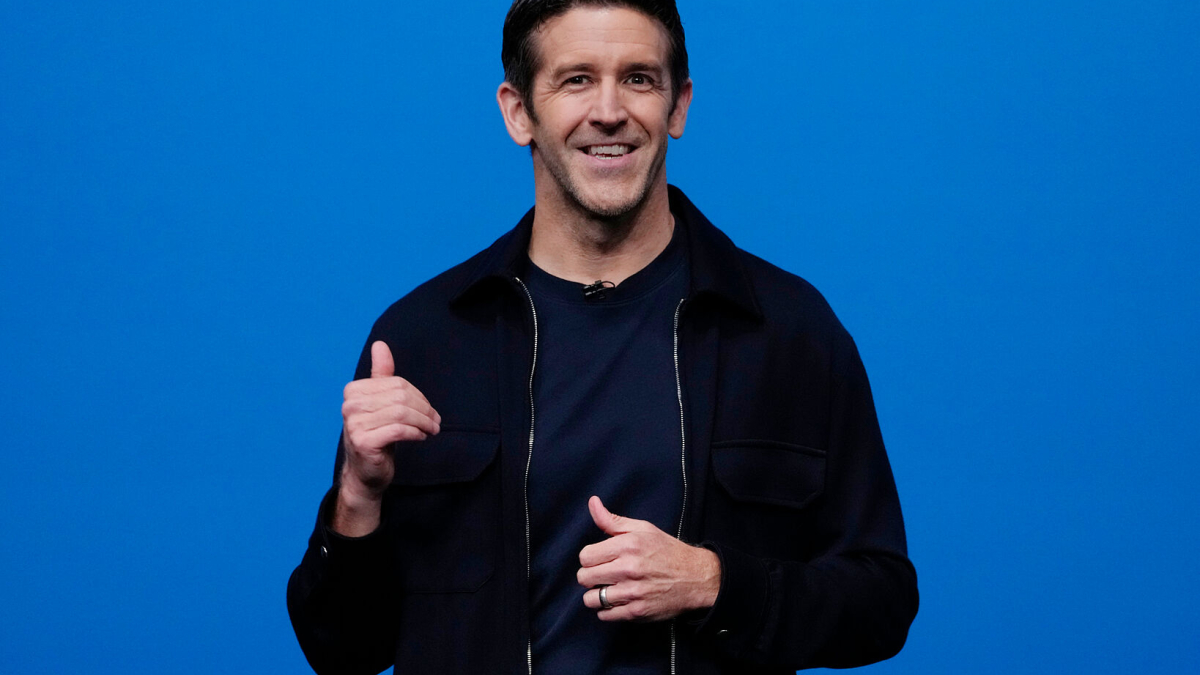
As the corporate machinery marched forward into subsequent years, the leadership structure underwent a defining evolution. John Ternus takes over as CEO from Tim Cook, stepping into the role with immediate financial wind in his sails. Early indicators from Ternus's tenure reflect continued stability and growth; the company reported a 12% increase in profits for the first quarter of Ternus's tenure, alongside a 15% jump in iPhone sales and a parallel 15% rise in overall revenue. Furthermore, Q3 2026 results show an 18% increase in profits year-over-year, driven heavily by strong performance in the preceding quarter. John Ternus, the new CEO, highlighted the company's best fiscal year ever, pointing to record iPhone sales and services revenue as proof that the tech giant's foundational strategy remains as formidable as ever.