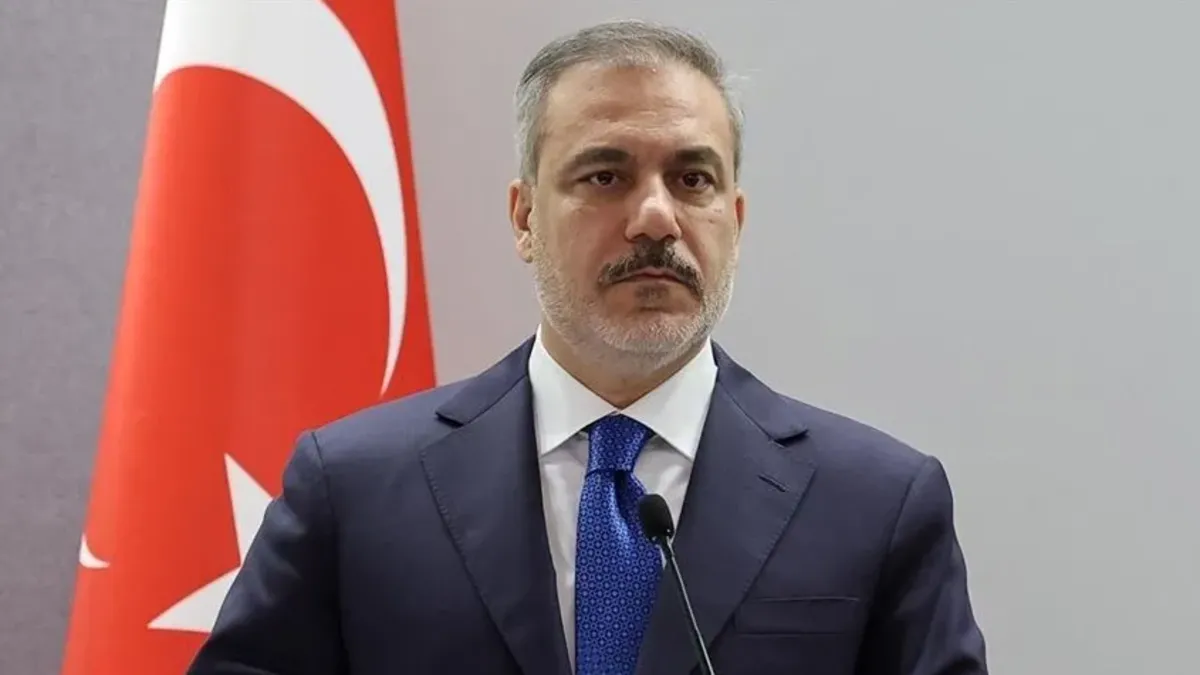
In the halls of the 9th Istanbul Peace Conference, the atmosphere was one of profound urgency. As world leaders and diplomats gathered on October 23, 2026, the conversation was not merely about the mechanics of diplomacy, but about the very survival of a predictable international order. Turkish Foreign Minister Hakan Fidan stood before the assembly to address a reality that many in the diplomatic corps have felt but few have articulated with such bluntness: the foundations of global security are trembling.
Fidan’s message was clear: the world is no longer operating within the comfortable guardrails of the past. Instead, we are navigating a landscape defined by volatility and a systemic breakdown of trust. For those who look to international institutions to provide a steady hand, Fidan’s observations serve as a sobering reminder that the current state of global security is deeply compromised.
To understand the weight of Fidan’s address, one must look at the specific fractures he identified. He spoke of a pervasive sense of global insecurity, a condition that is not merely theoretical but is being felt through active, devastating humanitarian crises. The Minister noted that we are living in an era where the traditional methods of maintaining peace are being tested by new and escalating tensions.
He brought attention to the situation in Western Sahara and the ongoing efforts in Libya.
"We are living in a global environment of insecurity," Fidan remarked, capturing the central anxiety of the modern era. This insecurity is not a localized phenomenon; it is a systemic contagion that affects how nations interact, how aid is delivered, and how justice is perceived on the world stage. When the mechanisms designed to prevent conflict fail, the resulting vacuum is filled by humanitarian suffering and political instability.
Fidan did not shy away from the most pressing and painful examples of this instability. He pointed directly to the ongoing conflicts in Gaza and the settlement activities in the West Bank as evidence of a system in distress. These are not just regional disputes; in the eyes of the Foreign Minister, they are litmus tests for the international community's ability to uphold its own principles.
The humanitarian crisis unfolding in these territories serves as a stark illustration of what happens when diplomatic efforts are insufficient. Fidan emphasized that these conflicts require more than just temporary pauses in violence; they demand political and fair solutions. Without a fundamental shift in how these issues are addressed, the cycle of insecurity is likely to continue, further eroding the credibility of international security frameworks.
While the shadows of Gaza and the West Bank loom large, Fidan also used the conference to examine other critical flashpoints that define the current geopolitical struggle. He brought attention to the situation in Western Sahara and the ongoing efforts in Libya. These regions represent different facets of the same problem: the difficulty of establishing lasting peace in territories where interests are deeply divided and trust is a scarce commodity.
In the case of Libya, Fidan offered a note of cautious perspective, noting that a lasting solution can be reached. This suggests that while the path is difficult, the framework for resolution exists if the right diplomatic tools are employed. It serves as a counterpoint to the despair of other conflicts, suggesting that mediation is not a lost art, but a necessary discipline that must be reclaimed.
If the problem is a lack of trust and a rise in insecurity, what is the remedy? Fidan proposed a way forward rooted in specific principles. He argued that the international community must move away from reactionary measures and toward a structured approach to engagement. Central to this is the necessity of dialogue.
Fidan suggested that the path to reestablishing trust in the international system lies in the ability of nations to sit at the table, even—and perhaps especially—when they are at odds. He advocated for a movement based on three core principles, with dialogue serving as the primary engine for change. The goal is not merely to manage conflict, but to build a system where mediation is a proactive tool rather than a desperate last resort.
As the 9th Istanbul Mediation Conference unfolded, the role of the mediator emerged as the central theme of the discourse. Fidan highlighted that in an era of increasing volatility, the ability to facilitate communication between warring parties is a critical component of global stability. Mediation is the bridge between the chaos of conflict and the order of a political settlement.
However, mediation cannot function in a vacuum. It requires a commitment from all parties to respect the process and a willingness from the international community to support the humanitarian and diplomatic efforts required to make mediation successful. Fidan’s address was a call to action for diplomats to move beyond rhetoric and toward the hard work of building a more resilient, dialogue-driven international architecture.