In the rapidly evolving landscape of Uttar Pradesh, names carry the weight of political legacy and institutional identity. On October 9, 2026, during a state cabinet meeting chaired by Chief Minister Yogi Adityanath, a decision was finalized that will forever alter the nomenclature of one of India's most ambitious infrastructure projects. The Noida International Airport, long known to locals and planners as Jewar Airport, has been officially renamed the Narendra Modi International Airport.

The decision was not merely a bureaucratic adjustment but a symbolic gesture. According to Chief Minister Adityanath, the renaming serves to honor Prime Minister Narendra Modi's twenty-five years of public service. It is a move that ties the state's physical growth to the political figurehead of the nation, anchoring a massive engineering feat to a specific era of leadership.
To understand the significance of the name change, one must first grasp the sheer magnitude of the project itself. The airport is a sprawling endeavor, occupying a land area of 3,300 acres for its first phase alone. This is not a small regional airstrip; it is a massive undertaking designed to serve as a primary gateway for the region.
While the renaming occurred in late 2026, the physical reality of the airport began to take shape earlier that year.
The financial commitment required to bring such a vision to life is equally staggering. The airport project carries a cost of 11,000 crore rupees, representing a monumental investment in the state's connectivity and economic future. The scale of the infrastructure is matched by its intended utility, with a projected annual passenger capacity of 1.2 crore people. This capacity reflects a vision of high-volume, international-standard transit that aims to transform the economic geography of the area.
While the renaming occurred in late 2026, the physical reality of the airport began to take shape earlier that year. On March 28, 2026, Prime Minister Modi inaugurated Phase-1 of the Noida International Airport. That moment marked the transition from a blueprint of concrete and steel to a functioning piece of critical infrastructure.
By the time the cabinet met in October to finalize the name, the airport had already moved from the realm of theoretical planning into a tangible asset. The renaming effectively bridges the gap between the physical inauguration of the facility and the political recognition of the leadership that has overseen the state's recent trajectory.
Alongside the grand gestures of infrastructure and nomenclature, the Uttar Pradesh government used the October cabinet meeting to announce shifts in social and employment policy. The state is moving to integrate a specific class of citizens into its civil service: the Agniveers.
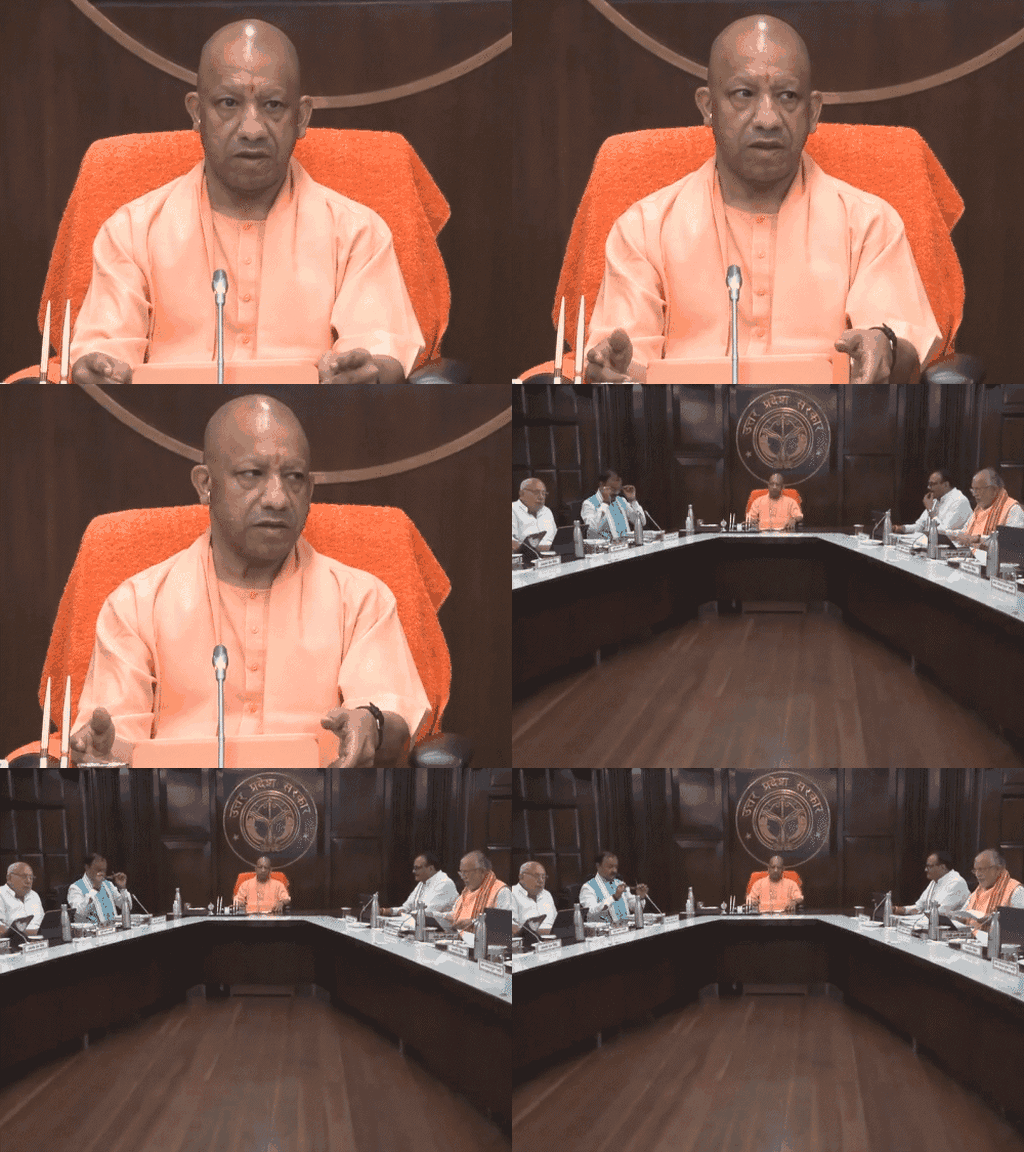
In a move designed to leverage the skills of those who have served in the military, the government announced a 20 percent reservation for Agniveers within the state's police, transport, and forest departments. This is not a simple preference in hiring; the policy includes specific provisions for age relaxations and a streamlined path to employment through direct recruitment, bypassing the traditional hurdles of written or physical examinations.
The decisions made by the Adityanath administration do not exist in a vacuum; they are presented as part of a broader narrative of economic expansion. The Chief Minister has pointed to the state's growth over the last nine years as the foundation for these new policies and infrastructure projects.
Central to this narrative is the direct transfer of wealth to the state's agricultural backbone. The government highlighted that over 1 lakh crore rupees have been transferred to farmers under the Kisan Samman Nidhi scheme. This massive infusion of capital is part of a larger effort to stabilize the rural economy, which includes improvements in the timelines for sugarcane payments. By strengthening the financial position of the agrarian sector, the state aims to create a more stable environment for the large-scale industrial and transit projects like the Narendra Modi International Airport to flourish.