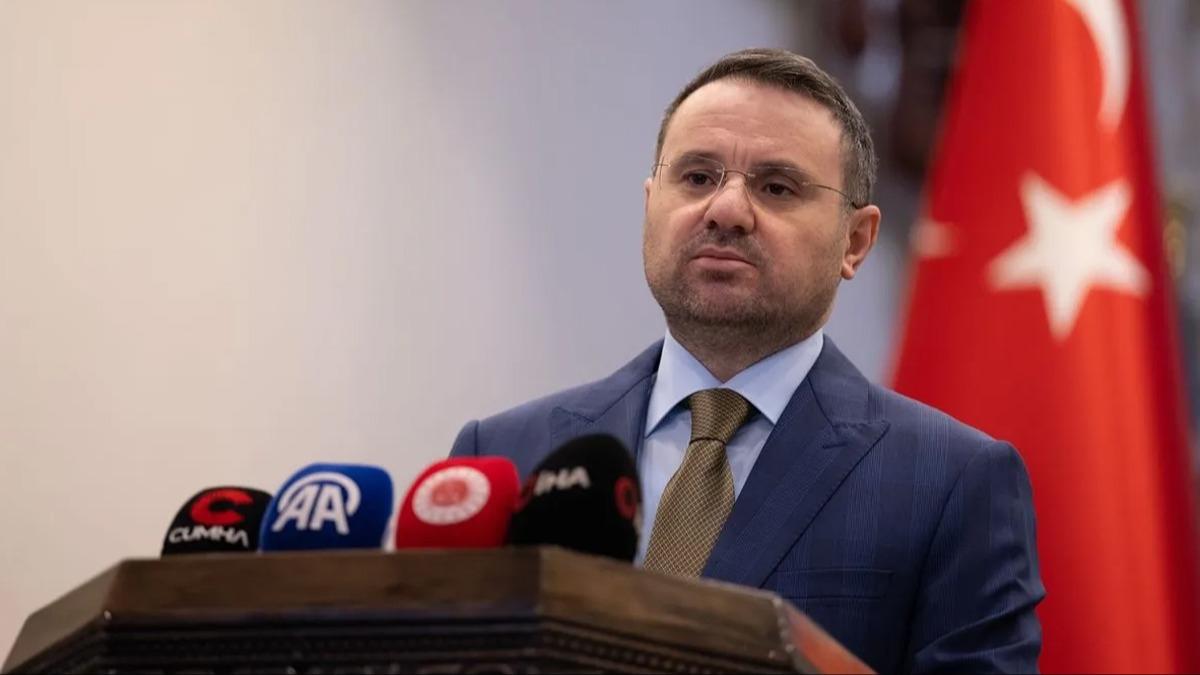
For anyone watching Turkey’s justice system from the outside, the headlines of October 30 2026 read like a crime‑novel climax: a single minister, a handful of cold‑case files, and a cascade of arrests that finally lifted the veil of mystery from 75 murders. The announcement came not from a courtroom but from the podium of Justice Minister Akın Gürlek, whose words were as much a promise to the nation’s conscience as a report of police work.
In Turkish legal parlance, faili meçhul denotes a crime whose perpetrator remains unknown. It is a label that carries the weight of unsolved grief for families and a lingering stain on the credibility of law enforcement. Gürlek’s briefing shattered that label for four distinct homicide investigations—one each in the provinces of Konya, Kahramanmaraş, Mersin and Hatay. The minister framed the breakthrough as the product of “modern technology and techniques,” signaling a shift from reliance on old‑fashioned detective work to a forensic‑driven approach.
The scale of the operation is stark: 68 case files, encompassing 75 separate murders, were declared no longer faili meçhul. Within those files, 27 individuals received detention orders, and 26 of them were formally arrested. The breakdown of arrests across the four provinces underscores the breadth of the sweep—seven suspects were detained in Konya, five of whom were arrested, while two suspects were detained in Kahramanmaraş.
The distinction between detention and arrest is crucial in Turkish criminal procedure.
What turned these cold cases into solvable puzzles was a concerted re‑evaluation of evidence using DNA analysis, communication‑record audits, and fresh witness statements. The Justice Ministry’s Faili Meçhul Suçları Araştırma Daire Başkanlığı—the department tasked with unsolved crimes—coordinated the effort, pulling together forensic labs, cyber‑units and field investigators. By re‑examining DNA samples with newer sequencing methods and cross‑referencing phone logs that were previously inaccessible, investigators uncovered links that had been invisible at the time of the original investigations.
One of the most publicized cases involved the murder of 21‑year‑old Ömer Faruk Akıllı in Konya. The original investigation had stalled, leaving his family without closure. The renewed probe led to the detention of seven suspects; five were subsequently arrested after DNA evidence placed them at the scene. The minister highlighted this outcome as a testament to the perseverance of “the justice system’s front line,” emphasizing that even years‑old crimes can be brought to light when new forensic tools are applied.
In Kahramanmaraş, the case centered on the murder of a newborn baby—a crime that shocked the local community and remained unsolved for years. Two suspects were detained after investigators matched biological material from the crime scene with samples stored in a national database.
The announcements for Mersin and Hatay were less detailed, but the same investigative framework applied. Both provinces saw their cold‑case files reopened under the same technological umbrella, indicating that the Justice Ministry intends to replicate the Konya and Kahramanmaraş successes across the country. The lack of specific arrest numbers for these two provinces suggests that the investigations are still progressing, but they are now part of an officially recognized, coordinated effort.

The distinction between detention and arrest is crucial in Turkish criminal procedure. A detention order (gözaltı kararı) allows police to hold a suspect for questioning, while an arrest (tutuklama) formalizes the charge and initiates judicial review. On the day of the announcement, 27 individuals faced detention orders, and 26 of those individuals were taken into custody. This near‑one‑to‑one conversion underscores the strength of the evidentiary base that the re‑investigations produced.
Gürlek’s statements were steeped in moral resolve. He declared, “YILLARIN ARKASINA SAKLANAN FAİLLERİ ADALETİN ÖNÜNE ÇIKARACAĞIZ,” translating to a pledge to bring crimes hidden behind the passage of years before the courts. In a longer remark, he added, “Aradan kaç yıl geçerse geçsin, toplum vicdanında derin yaralar açan cinayetlerin peşini bırakmıyoruz. Ortaya çıkan her yeni delilin, ulaşılan her yeni izin takipçisi olarak maddi gerçeğin ortaya çıkarılması ve sorumluların adalet önünde hesap vermesi için mücadelemizi kararlılıkla sürdürüyoruz.” The minister framed the operation not merely as a law‑enforcement success but as a societal healing process, positioning the justice system as a guardian of collective conscience.
Beyond the raw numbers, the closures signal a broader shift in Turkey’s approach to unsolved homicides. Historically, faili meçhul cases have lingered, fostering public skepticism about the state’s capacity to protect its citizens. By solving a sizable batch of such cases in a single day, the Justice Ministry demonstrates that the combination of modern forensic science and inter‑agency cooperation can overcome procedural inertia. For families who have waited decades for answers, the announcements provide a measure of closure that the legal system had previously denied.
While the October 30 announcements marked a watershed moment, the brief hints that the work is far from finished. The investigations in Mersin and Hatay remain active, and the Justice Ministry’s coordination unit continues to sift through the remaining unsolved files. The minister’s resolve—“we will not abandon the pursuit of truth, no matter how many years have passed”—suggests that the 68‑file, 75‑murder tally is a milestone rather than an endpoint.
In the span of a few minutes on a public podium, Akın Gürlek transformed a catalog of cold cases into a narrative of accountability. The convergence of DNA technology, digital forensics, and a determined bureaucratic apparatus turned the abstract label faili meçhul into a concrete legal outcome. For observers of Turkey’s legal landscape, the day stands as a reminder that even the most entrenched mysteries can yield when the state marshals both scientific tools and political will.