
On October 28, 2026, the political map of India shifted in a way that left the Congress party grappling with a profound sense of isolation. Across four distinct states, the party faced a series of legislative council by-elections that were intended to be a test of strength. Instead, they became a stark illustration of the party’s diminishing influence. By the time the final tallies were confirmed, Congress found itself staring at a scorecard that contained not a single victory. The results were not merely a collection of local losses; they represented a systemic failure to connect with the electorate in regions where the party once held significant sway.
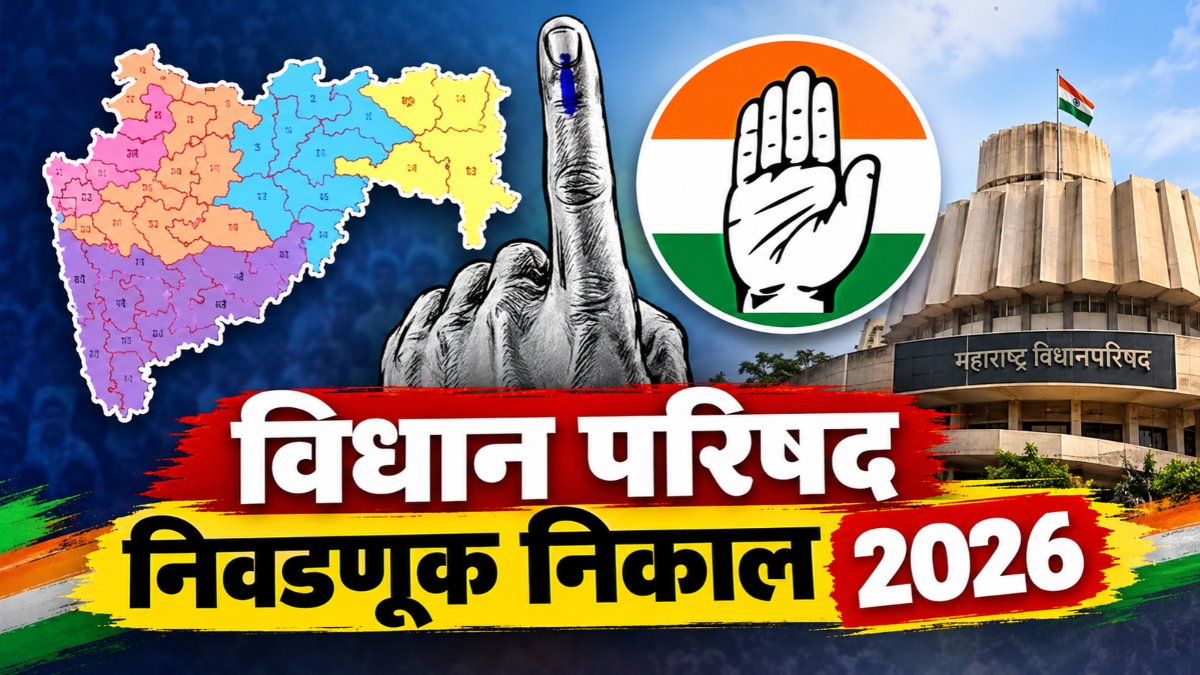
Perhaps nowhere was the sting of defeat more acute than in Karnataka. The state, which has historically served as a critical stronghold for Congress, became the site of a total electoral rout. In the four key constituencies contested, the party was unable to secure a single seat. The vacuum left by Congress was filled entirely by the BJP-JDS alliance, which swept the board, claiming all four available seats. This result is particularly damaging because it suggests that the opposition’s attempts to consolidate support in regions like Bengaluru and Mysuru have failed to gain traction against a unified, well-organized alliance. The implications for the party’s future in Karnataka are severe, as the loss forces a difficult reckoning regarding their campaign strategy and their ability to mobilize voters in these key urban and regional hubs.
While the Karnataka results captured the most immediate attention, the trend of failure was not confined to the south. In Bihar, the Rashtriya Janata Dal (RJD) also faced a significant defeat, mirroring the broader struggles of the opposition bloc. The by-elections served as a reminder that the political landscape is increasingly hostile to traditional party structures that fail to adapt to the shifting priorities of the electorate. The inability of Congress to find a foothold in Bihar, combined with their performance elsewhere, paints a picture of a party struggling to maintain its national footprint.
In Bihar, the Rashtriya Janata Dal (RJD) also faced a significant defeat, mirroring the broader struggles of the opposition bloc.
Further compounding the party’s woes were the results from Uttar Pradesh and Maharashtra. In both states, the performance of Congress was described as poor, a polite term for a result that signals a lack of grassroots penetration. In the complex political ecosystems of these states, where electoral math is often dictated by intricate social and regional alliances, Congress appeared unable to articulate a message that resonated with the voters. The failure to secure seats in these states is not just a tactical error; it is a symptom of a deeper disconnect. As the party looks toward the future, these results serve as a grim baseline, highlighting the immense challenge of rebuilding a base that has been steadily eroded by both internal inertia and the rising tide of competing political forces.