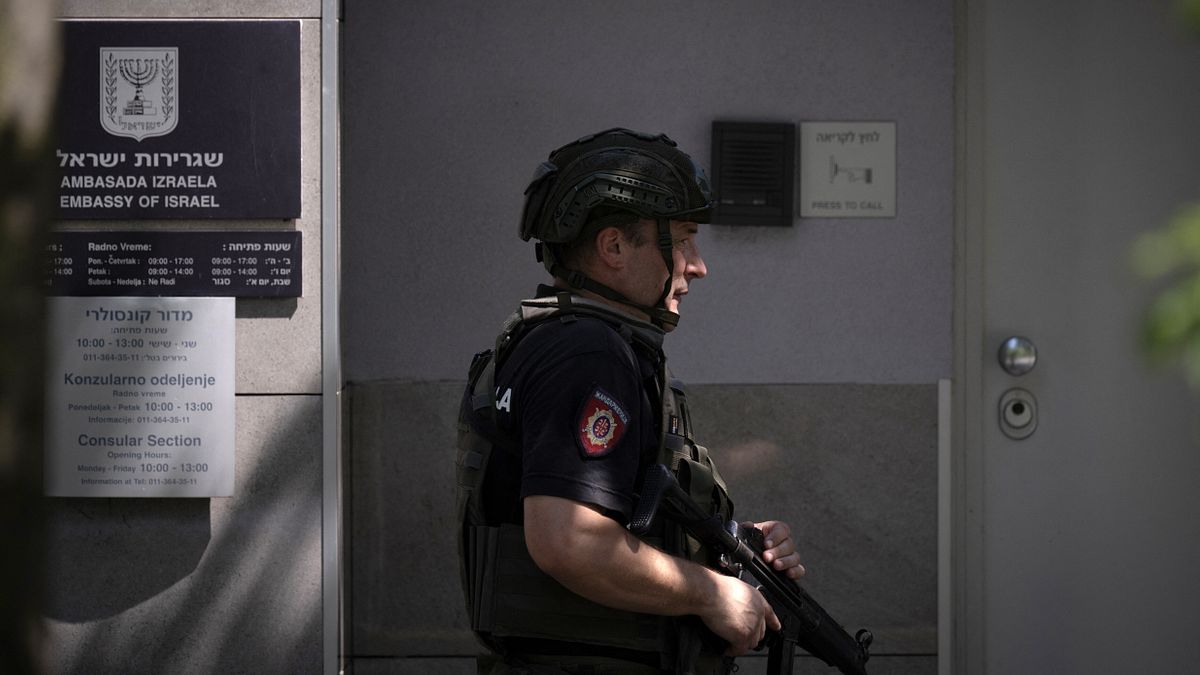
In the shadow of the Israeli embassy in Belgrade, the routine of security detail was shattered by a sudden, visceral burst of violence. On October 28, 2026, a young assailant, a 17-year-old minor believed to be from Sabac, launched a frantic attack against a member of the gendarmerie—the specialized police force tasked with high-stakes security. Armed with two knives, the teenager lunged at the officer, shouting "Allahu Akbar" as he moved to strike. The confrontation was swift and lethal; the officer, acting in self-defense, discharged his service weapon. The attacker was killed at the scene, while the officer sustained minor injuries during the struggle.

This was not an isolated moment of chaos, but rather a terrifying echo of a previous confrontation. The Israeli embassy has become a focal point for targeted violence in the Serbian capital. In June 2024, a different individual—a converted Muslim—attempted to shoot a police officer at this very location, an incident that also ended in the attacker's death. The recurrence of such high-intensity violence at a single diplomatic site suggests a growing vulnerability that has left Serbian authorities on high alert.
The gravity of the situation was immediately recognized by the highest levels of the Serbian government. In the wake of the knife attack, Interior Minister Ivica Dacic announced that the nation's terror threat level had been elevated to "Red," the highest grade possible in the country's security framework. This escalation reflects a government grappling with the reality of radicalized individuals, specifically noting that the young suspect was already known to authorities as a supporter of IS.
The results of those elections saw a razor-thin split in power, with both major coalitions receiving 51 mandates each.
As the security measures intensified, the atmosphere in Belgrade grew heavy with the weight of political and social tension. The timing of the attack coincided with a period of significant political movement in Israel, as the country held parliamentary elections. The results of those elections saw a razor-thin split in power, with both major coalitions receiving 51 mandates each. While the political maneuvering unfolded in Israel, the physical manifestation of geopolitical tension was being felt on the streets of Belgrade.

#BREAKING: Attempted Terrorist Attack Near the Israeli Embassy in Belgrade, Serbia. “We confirm reports of an attempted terrorist attack near the Israeli Embassy in Belgrade. The attacker was neutralized by local police. No embassy personnel were injured, and the mission was closed at the time of the incident, which occurred late at night. The incident is currently under investigation by the relevant authorities.” - Israeli Foreign Ministry Statement
While the identity of the minor remains officially unconfirmed, the details emerging from the investigation paint a picture of a young person deeply immersed in extremist ideology. Originating from Sabac, the teenager's status as a known IS supporter suggests that the radicalization process is reaching even the youngest demographics. The use of dual knives and the specific religious cries during the assault underscore the intent to strike not just an individual, but a symbol of a foreign state.
With the "Red" alert in effect, the Serbian government has moved to implement sweeping security measures. The response is a direct attempt to fortify diplomatic zones and prevent a third strike at the embassy. For the police officers stationed at these high-profile posts, the mandate has shifted from routine monitoring to a state of constant, high-stakes readiness, where the line between a standard patrol and a life-or-death encounter is razor-thin.

Policeman kills knife attacker outside Israeli embassy in Serbia https://t.co/otfzmVUtnV
As of now, Belgrade remains under a heightened state of vigilance. The intersection of domestic radicalization and international diplomatic tension has created a volatile environment. The government continues to manage the fallout of the October 28 attack, balancing the need for public order with the necessity of protecting foreign interests in an increasingly unpredictable security landscape.
