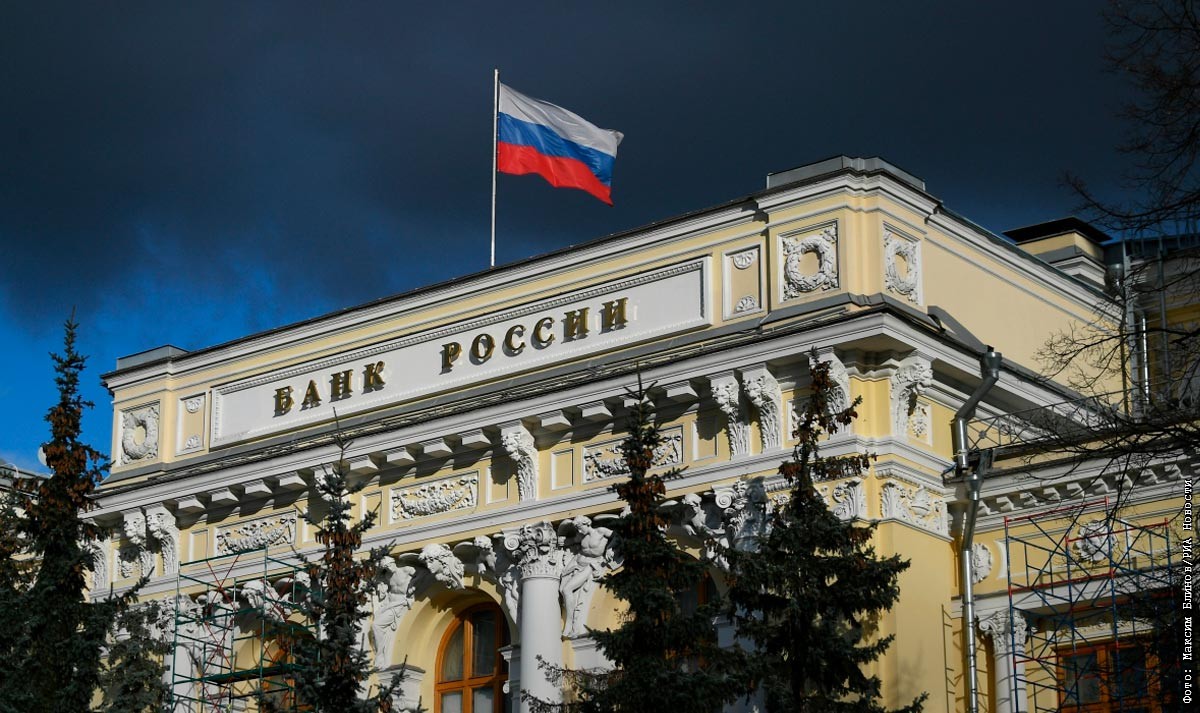
In the high-stakes theater of monetary policy, sometimes the most significant move is the decision to stand perfectly still. On October 23, 2026, the Bank of Russia signaled exactly that. Faced with a complex web of inflationary pressures and the inherent uncertainties of the national budget, the central bank opted to maintain its key interest rate at 14%. It was a move that most analysts had already anticipated, a calculated pause in a period of economic recalibration.

This decision marks the second consecutive meeting where the Bank of Russia has held the rate steady at 14%, following a series of previous rate cuts. By choosing stability over sudden shifts, the central bank is attempting to manage expectations while keeping its tools ready for future adjustments. The bank has made it clear that its next moves will not be arbitrary; rather, they will be dictated by a rigorous assessment of inflation, inflation expectations, and broader risk assessments. The eyes of the market are now turned toward December 18, the date of the next scheduled meeting, where the trajectory of the ruble and the cost of borrowing will once again face the scrutiny of policymakers.
At the heart of the central bank's caution lies a delicate macroeconomic balancing act: the relationship between what workers earn and what the economy actually produces. Recent data from the Bank of Russia indicates that wage growth is beginning to slow, a trend that suggests a gradual alignment with productivity growth. However, a significant gap remains between these two metrics—a gap that central bankers watch closely, as rapid wage increases without corresponding productivity gains can act as a fuel for inflation.
Interestingly, while the key interest rate remains high at 14%, the specific cost of borrowing for vehicles has shown a slight downward trend.
Looking further down the horizon, the bank anticipates a cooling of this trend. While 2026 remains a period of adjustment, companies are already planning more moderate salary increases for 2027. This long-term vision is part of a broader effort to steer the economy toward a more stable equilibrium, with the bank predicting that inflation could return to a target of 4.0% by 2027. For now, the bank is operating within a projected inflation range of 5-6% year-on-year, a target that requires the current 14% interest rate to act as a necessary brake.
While the central bank manages the macroeconomy, the microeconomic reality for consumers is perhaps most visible in the automotive sector. The numbers tell a story of rising costs met by specialized financial maneuvering. In September, the average cost of a new car climbed to 2.96 million rubles. As vehicle prices rise, the burden on the consumer shifts to the credit market, where the average car loan amount has grown to 1.91 million rubles.
Despite these high price points, the automotive market has not ground to a halt. Instead, it has found a rhythm through collaborative financial structures. "Transactions in auto lending are proceeding at a steady level, supported by joint programs between banks, dealers, and automakers," explains Olga Boiko. She notes that this stability is particularly evident among officially represented brands, where buyers can access subsidized financial products to offset the high costs of entry.
Interestingly, while the key interest rate remains high at 14%, the specific cost of borrowing for vehicles has shown a slight downward trend. Since the last meeting, the average interest rate on car loans for new vehicles has decreased by 0.15 percentage points, settling at 9.93%. This divergence—where the central bank's benchmark remains high while specific consumer credit rates dip—is largely a product of the aforementioned subsidies and dealer-led programs designed to keep the wheels of commerce turning.

Nikita Margolin highlights this complexity, noting that while the average cost of a car sits at 2.96 million rubles and the average loan amount has risen to 1.91 million rubles, the specialized rate of 9.93% provides a vital, albeit narrow, window for consumers to navigate the high-cost environment.
As the central bank maintains its current stance, economists are already debating how long this 14% plateau will last. The stability of the ruble against the yuan—which remained unchanged following the decision—suggests that the market had already priced in this continuity. However, the path forward remains a matter of intense calculation.
Nikolai Alekseev suggests that the current rate could remain fixed through the end of the year under a base scenario. "On December 18, an insignificant reduction in the rate is also possible, as the central bank's own forecast suggests a range of 14.5-14.6% for 2026," Alekseev notes. This highlights the narrow margins in which policymakers operate, balancing the need to curb inflation against the necessity of supporting economic activity.
Ultimately, the Bank of Russia is playing a long game. The current 14% rate is not an end state, but a tool in a much larger strategy to guide the economy toward the targets set for 2027. By that year, the bank envisions a landscape where inflation sits at 4.0% and the key interest rate occupies a range between 12.5% and 13.5%.
For now, the economy sits in a state of watchful waiting. The central bank has laid out its assessment and its direction, leaving the market to digest the reality of high borrowing costs, rising vehicle prices, and the slow, steady march toward a more stabilized inflationary environment.