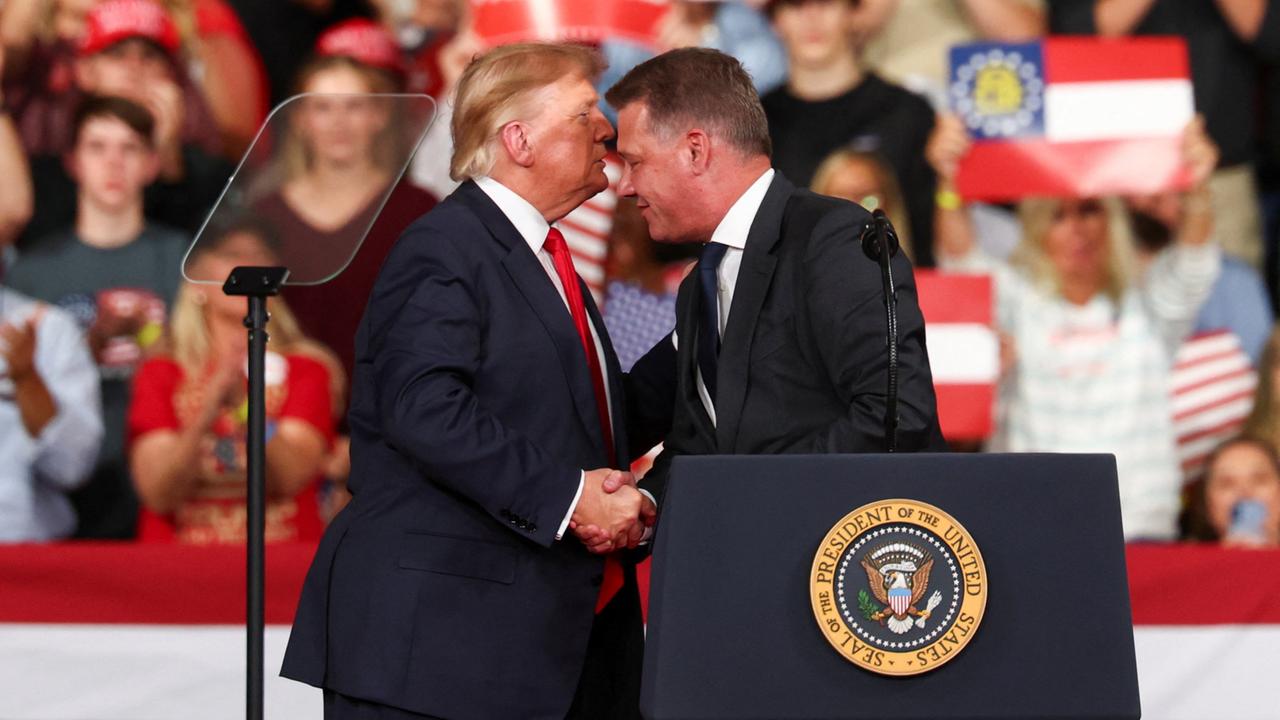
On October 26, 2026, Audi CEO Gernot Döllner found himself at the center of a controversy. Just days earlier, he had met with US President Donald Trump. The meeting, which was part of a broader strategy to strengthen Audi’s presence in the American market, had sparked a wave of criticism and calls for his resignation. Döllner, however, remained resolute, defending his decision as a strategic move that would benefit the company and its global competitiveness.

Döllner's justification for the meeting was clear and unambiguous. 'The decision to follow this invitation,' he stated, 'we made exclusively in the interest of the company.' The CEO emphasized the strategic and economic importance of a local production facility in the USA, arguing that it was essential for Audi's future.
It is part of a broader strategy to ensure the company’s global competitiveness. The USA is one of the world's largest and most important markets for luxury vehicles, and Audi aims to capitalize on this by establishing a strong local presence. According to Döllner, 'A local production in the USA is of great strategic and economic importance for Audi.'
During the meeting, Döllner and Trump discussed the importance of the US market and the need for Audi to have a strong local production facility.
The meeting with Trump was a crucial step in this strategy. Döllner argued that this was not just a business decision but a strategic move that would have long-term benefits for Audi.
Despite Döllner's justifications, the meeting with Trump did not go down well with everyone. Critics, including Katharina Fuß, a prominent business analyst, saw the meeting as a politically and personally risky move. 'Audi should focus on its core business and not get entangled in political controversies,' she argued. 'This meeting could damage the company’s reputation and undermine its commitment to its values.'
The criticism was widespread and intense. Social media platforms were flooded with calls for Döllner’s resignation, and some shareholders demanded a board meeting to discuss the matter. The pressure was palpable, and Döllner knew he had to defend his decision.
In his defense, Döllner was unequivocal. 'We made this decision in the interest of the company,' he reiterated. 'It is part of our strategy to strengthen our position in the USA and ensure our global competitiveness.' Döllner argued that the meeting was not a political move but a business decision that would benefit Audi in the long run. He emphasized the strategic importance of the US market and the need for Audi to have a strong local production facility to meet the demands of American consumers.

Döllner’s stance was supported by Audi itself, which released a statement emphasizing the company’s commitment to its values and the importance of the US market. 'Audi is committed to its values and the importance of the US market,' the statement read. 'We believe that a local production facility in the USA is crucial for our future success.'
The meeting with Trump took place on October 26, 2026, and was part of a broader strategy to strengthen Audi’s presence in the USA. The meeting was seen as a crucial step in establishing a direct line of communication with the US government, potentially opening doors to favorable trade agreements and regulatory environments that could benefit the company. Döllner argued that this was not just a business decision but a strategic move that would have long-term benefits for Audi.
During the meeting, Döllner and Trump discussed the importance of the US market and the need for Audi to have a strong local production facility. The meeting was seen as a positive step in the relationship between Audi and the US government, and it was hoped that it would lead to further collaboration and support for the company.
The meeting with Trump did not go unnoticed. The criticism and calls for Döllner’s resignation continued, and the pressure on the CEO was intense. However, Döllner remained steadfast in his defense of the decision. 'We made this decision in the interest of the company,' he stated. 'It is part of our strategy to strengthen our position in the USA and ensure our global competitiveness.'
The meeting with Trump was a turning point for Audi, and it highlighted the complex relationship between business and politics. While the meeting was seen as a strategic move, it also raised questions about the company’s values and its commitment to its principles. The criticism and calls for Döllner’s resignation were a reminder that business decisions can have political and personal consequences.
Audi’s decision to produce locally in the USA is a strategic move that is aimed at strengthening the company’s position in the world’s largest and most important market for luxury vehicles. The meeting with Trump was a crucial step in this strategy, and it highlighted the complex relationship between business and politics. While the meeting was seen as a positive step, it also raised questions about the company’s values and its commitment to its principles. The criticism and calls for Döllner’s resignation were a reminder that business decisions can have political and personal consequences. For now, Döllner remains resolute in his defense of the decision, and Audi continues to move forward with its strategy to strengthen its position in the USA and ensure its global competitiveness.
- Audi CEO Gernot Döllner justifies his meeting with US President Trump. - A stronger US business is a contribution to the global competitiveness of Audi. - Audi decided to build a local production facility in the USA. - Eine lokale Produktion in den USA ist für Audi von grosser strategischer und wirtschaftlicher Bedeutung. - Audi CEO Gernot Döllner's meeting with US President Trump is criticized as a politically and personally risky move.
- 'The decision to follow this invitation, we made exclusively in the interest of the company.' - Gernot Döllner, Audi CEO