
On November 5, 2026, the heavy, gilded halls of the Kremlin played host to a meeting that transcended mere diplomacy. Vladimir Putin, the President of Russia, sat across from Patriarch Theophilos III, the spiritual leader of the Orthodox Church in Jerusalem. While state visits often focus on borders and trade, this encounter was anchored in something much older and more visceral: the fate of faith in a region defined by its fractures. For the Russian leadership, the meeting was an opportunity to project influence through the lens of religious solidarity; for the Patriarch, it was a plea for stability in a landscape where the very survival of ancient traditions is under constant pressure.
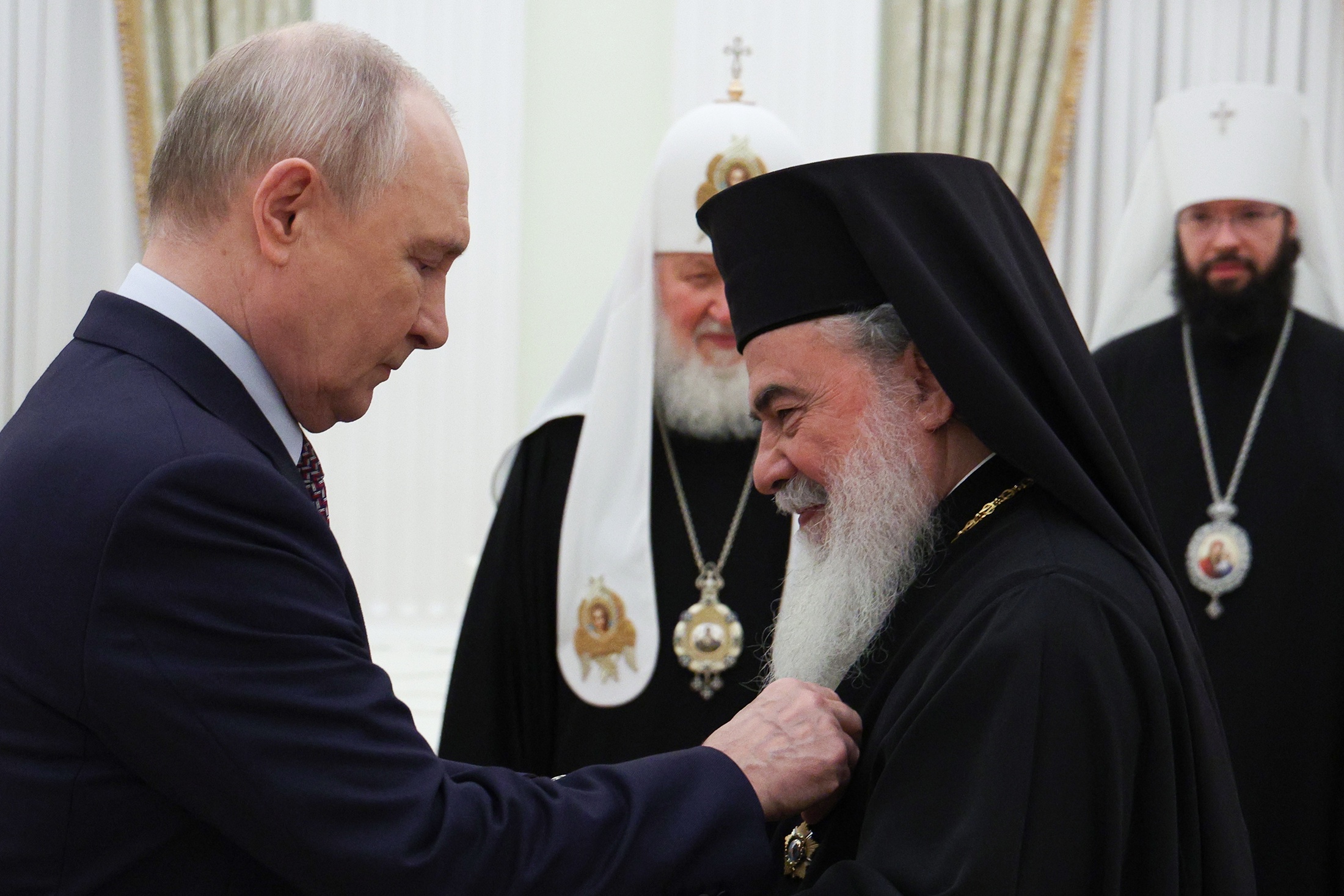
To understand the gravity of this meeting, one must understand the role of the Jerusalem Patriarchate. It is not merely a religious institution but a guardian of the physical and spiritual geography where Christianity was born. During the discussions, Patriarch Theophilos III spoke of the immense burden carried by his office. He noted that the Church currently finds itself in a complex region, navigating a period that he described as truly difficult times. In such an environment, the Patriarch emphasized that the necessity is to raise prayers so that Christianity in the Middle East can maintain its presence against the shifting tides of regional instability.
Vladimir Putin’s stance during the meeting was one of explicit alignment with these concerns. He did not shy away from the geopolitical implications of religious preservation, framing the relationship between Russia and the Orthodox Church as a shared endeavor. "We understand that our joint efforts are aimed at preserving the historical Christian presence in the region," Putin remarked, signaling that Russia views itself as a protector of these ancient communities. This recognition extends beyond mere sentiment; Putin acknowledged that the Jerusalem Church is facing significant difficulties due to the complex situation in the region, and he offered assurances that Russia will support the development of its relations with the Patriarchate.
For the Patriarch, this support is more than a gesture of friendship; it is a functional necessity.
The dialogue moved from the spiritual to the practical, touching on what the Patriarch sees as the essential components of a functional Holy Land. Theophilos III expressed his gratitude for Russia's support, viewing it as a vital pillar for the preservation of holy sites. For the Patriarch, this support is more than a gesture of friendship; it is a functional necessity. He characterized such engagement as a "guarantee of the preservation of shrines in the Holy Land and stability and peace in Jerusalem and throughout the Middle East."
Central to the Patriarch’s vision is the concept of Jerusalem as a multi-confessional city. In a region where religious identity often dictates political boundaries, Theophilos III emphasized the importance of maintaining a Jerusalem that accommodates various faiths. This vision of coexistence is inextricably linked to the peace of the wider region. The Patriarch noted that his task, as the spiritual leader of all represented Christian denominations in Jerusalem, is to listen to those around him—specifically to those people who long to live in peace. He even touched upon the broader geopolitical context, noting that various proposals for negotiations regarding the settlement of situations on Russia's western borders are currently on the table, highlighting the interconnectedness of global stability and local religious peace.
As the meeting progressed, the connection between the two leaders took on a more symbolic tone. Theophilos III remarked on the profound nature of the connection between the Russian people and the Holy Land, suggesting that the movement of people between the two regions carries a spiritual weight. "Every person who comes from your country to the Holy Land becomes a witness to the special, sacred mission that the Jerusalem Patriarchate carries, protecting the place where Christianity was born," he observed. This framing elevates the relationship from a standard diplomatic exchange to a shared stewardship of history.
The meeting concluded with a formal recognition of the ties between the Kremlin and the Patriarchate. In a moment of mutual respect, the Jerusalem Patriarch presented Vladimir Putin with the Order of Friendship. This honor serves as a tangible marker of the rapport established during the talks, reinforcing the idea that Russia’s role in the Middle East is increasingly being articulated through its relationship with the foundational institutions of the Christian faith. As the two leaders parted, the message remained clear: in a region of profound complexity, the preservation of the old ways is becoming a central pillar of new alliances.