The atmosphere in Nagoya, Japan, during the 2026 Asian Para Games has been defined by a singular, relentless pursuit of excellence. For the Iranian delegation, the competition has become a stage for rewriting the history books, as athletes push their physical capabilities to new heights. The intensity of the event was perhaps best captured by the performance of Mohammad Saber Fathabadi, who stepped into the F33 weight throw circle with the weight of expectation on his shoulders. By the time he released his implement, he had not only secured a gold medal but had fundamentally altered the record books for his class.

Fathabadi’s performance on February 25, 2026, was a masterclass in technical execution. Facing off against competitors from five different nations, including throwers from Saudi Arabia and Uzbekistan, he maintained his composure to deliver a throw of 10.95 meters. This mark was significant not just for the gold medal it secured, but for the history it erased. The previous record, set by Mohammadreza Ahmadizadeh during the 2018 Jakarta games, had stood at 9.92 meters. By surpassing that distance by more than a meter, Fathabadi signaled a new era of dominance for Iranian athletes in the F33 category, marking the country’s first gold medal of the second day of competition.
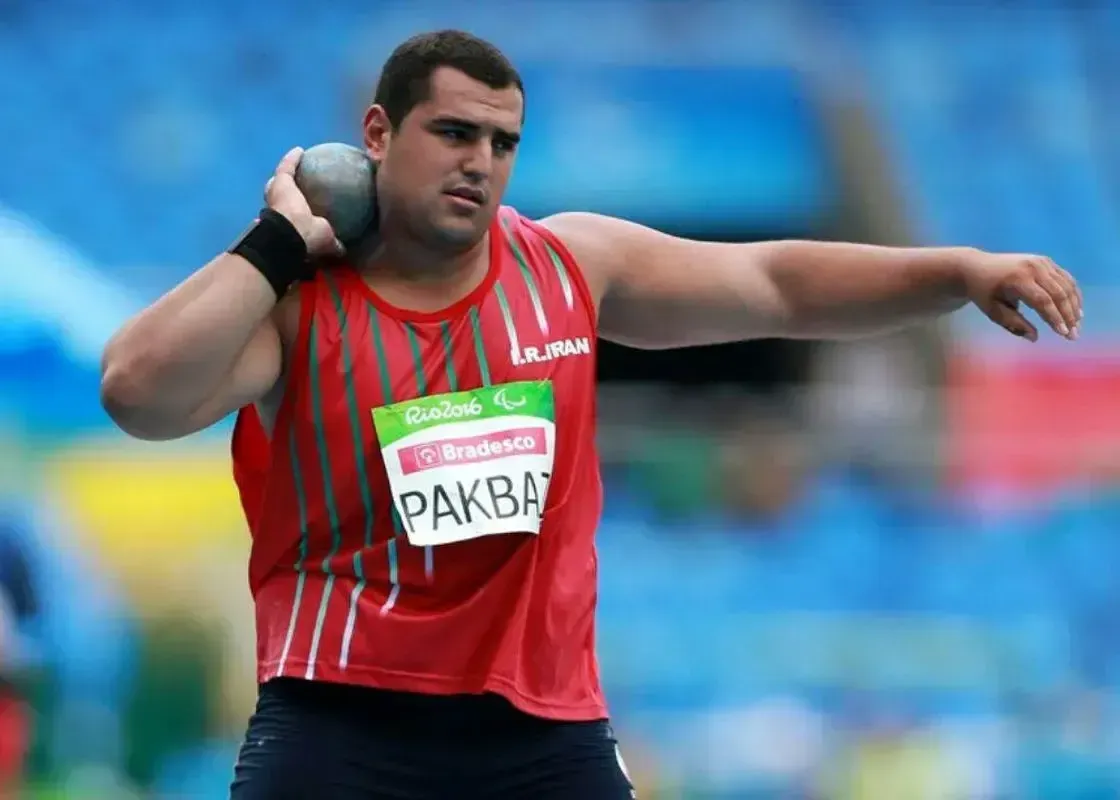
While Fathabadi’s record-breaking feat drew immediate attention, the broader Iranian campaign in Nagoya has been marked by a sustained level of high-performance output. The success of the national team is not an isolated incident of luck, but a reflection of a deep bench of talent prepared for the rigors of international competition. This depth was further demonstrated when Saman Pakbaz, a seasoned national player, took to the field to compete in the F12 weight throw class. His presence in the competition underscored the systematic strength of the Iranian program, which continues to produce athletes capable of performing under the intense pressure of the Asian Para Games.
Competing against a field that included strong challengers from Indonesia and Uzbekistan, Pakbaz delivered a throw of 13.
Saman Pakbaz’s victory on October 20, 2026, served as a powerful follow-up to the team’s earlier successes. Competing against a field that included strong challengers from Indonesia and Uzbekistan, Pakbaz delivered a throw of 13.52 meters. This performance was more than enough to secure the gold medal, adding another prestigious accolade to Iran’s growing sports record at the Asian Para Games. His ability to clear the field and set a new record of 13.52 meters highlights the technical rigor that has become a hallmark of the Iranian approach to the weight throw.
As the games in Nagoya continue, the narrative surrounding the Iranian team is one of profound achievement. From the record-shattering performance of Fathabadi in February to the commanding victory of Pakbaz in October, the athletes have demonstrated a remarkable ability to peak at the right moment. These performances have solidified Iran’s standing in the Para-Asiads, proving that their preparation and dedication are yielding tangible results. For the athletes, the medals represent the culmination of years of training; for the sport, they represent a new, higher bar that future competitors will have to work tirelessly to reach.