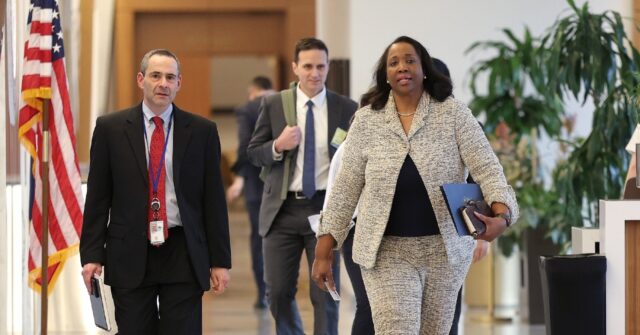
For a central bank that has operated for 113 years, the role of its governors is intended to be one of stability and insulation from the daily noise of politics. Yet the current moment in Washington is anything but quiet. The focus has now shifted to Lisa Cook, a Federal Reserve Governor whose tenure has become the site of an intense confrontation between the executive branch and the nation's monetary policymaking body. The issue at hand is not a disagreement over interest rates, but a far more personal and legal question: the allegation that Cook made false statements regarding mortgages. This accusation has provided the foundation for a new legal and political maneuver, one that President Donald Trump announced on October 7, 2026, via a formal statement announcing the formation of an investigative committee.

The committee tasked with this investigation is not a random collection of observers. It is a specific group of individuals selected by the administration to scrutinize Cook’s conduct. The panel includes Kevin Hassett, Andrea Lucas, and Keith Sonderling. The inclusion of these names signals a deliberate approach to the inquiry, aiming to create a body that aligns with the administration's perspective on the necessity of executive oversight. For Cook, the presence of these specific individuals is not a neutral occurrence; it is the beginning of a process that her legal team views with skepticism. The formation of this group represents a significant step beyond previous attempts to influence the Federal Reserve, moving the conflict from the realm of executive orders into a structured, if contested, investigative framework.
This new committee does not operate in a vacuum; it is the latest chapter in a dispute that has already reached the highest court in the land. Just months before this new probe began, the Supreme Court blocked Trump’s previous attempt to fire Cook. The Court’s decision was rooted in concerns over due process, ruling that the President's attempt to remove the governor was procedurally flawed. The blocking of that earlier move set the stage for the current inquiry, transforming a direct attempt at removal into a more prolonged legal and political process. The Supreme Court's involvement highlights the gravity with which the judiciary views the removal of a central bank governor, a position that, in the central bank’s 113-year history, has never been filled by a sitting governor being removed by a president.
The committee has scheduled an in-person hearing at the White House for November 5.
The political fallout of the new committee's formation has been immediate and sharp. Senator Elizabeth Warren, a Democrat, quickly criticized the move, describing it as an illegitimate attempt to control the central bank. Her critique was not merely procedural; it struck at the heart of the argument that the President is using this committee as a mechanism to bypass the constitutional safeguards that previously thwarted his firing attempt. Warren described the proceeding as 'convening an illegitimate show trial.' This characterization paints the White House hearing not as a fair judicial process, but as a predetermined outcome with a predetermined answer, a narrative that resonates strongly with those who advocate for the strict independence of the Federal Reserve from political influence.
The committee has scheduled an in-person hearing at the White House for November 5. The logistics of this event are specific: the maximum duration of the hearing is set at four hours. This brevity suggests a focused, high-stakes session rather than a drawn-out legal proceeding. The location itself is a symbol of the executive branch's dominance over the process. By holding the hearing within the White House, the administration places the inquiry squarely under its roof, a physical manifestation of the power dynamic at play. The four-hour limit adds a layer of urgency to the event, forcing both the committee and Cook’s representatives to distill their arguments into a compressed timeframe, a constraint that often favors the side that sets the agenda.
In response to the mounting pressure, Cook’s legal team, led by Abbe Lowell, has issued a statement that balances cooperation with firm resistance to the legitimacy of the process. Lowell stated that they have 'engaged with the White House to evaluate whether the process proposed has a possibility of being a genuine one and not simply a box checking exercise.' This wording is careful. It acknowledges that Cook will present facts to clear her name, but it frames the entire inquiry as potentially a 'box checking exercise'—a term that implies the administration has already made up its mind and is merely going through the motions to satisfy a political narrative. The doubt expressed by Cook's lawyers about the legitimacy of the hearing underscores the fundamental disagreement between the two sides: whether this is a neutral investigation or a political weapon.
Trump’s own justification for the committee is explicitly framed around his executive duty. In a statement, he said, 'As President, it is my job to ensure the laws are faithfully executed, including by firing subordinates who cannot be trusted to tell the truth and follow the law.' This argument positions Cook not as an independent central bank governor, but as a 'subordinate' whose trustworthiness is in question. By invoking his constitutional duty to enforce the law, Trump seeks to legitimize the committee as a tool of executive accountability. This framing is central to the administration's strategy: it redefines the relationship between the President and the Federal Reserve, suggesting that the latter is subject to the same executive oversight as any other branch of the government.

As the November 5 hearing approaches, the situation is set for a major confrontation. The Federal Reserve, an institution built on the principle of independence, faces a direct challenge from the executive branch, which is using its legal and political power to question the integrity of one of its own members. With no precedent in 113 years of history for a president to remove a sitting governor, the stakes are incredibly high. Whether the committee’s findings lead to a successful prosecution of Cook or a legal victory for the Federal Reserve, the outcome will define the boundaries of presidential power over the country's central bank. The next few weeks will determine if the White House’s probe is a genuine legal process or the 'show trial' that Warren fears.