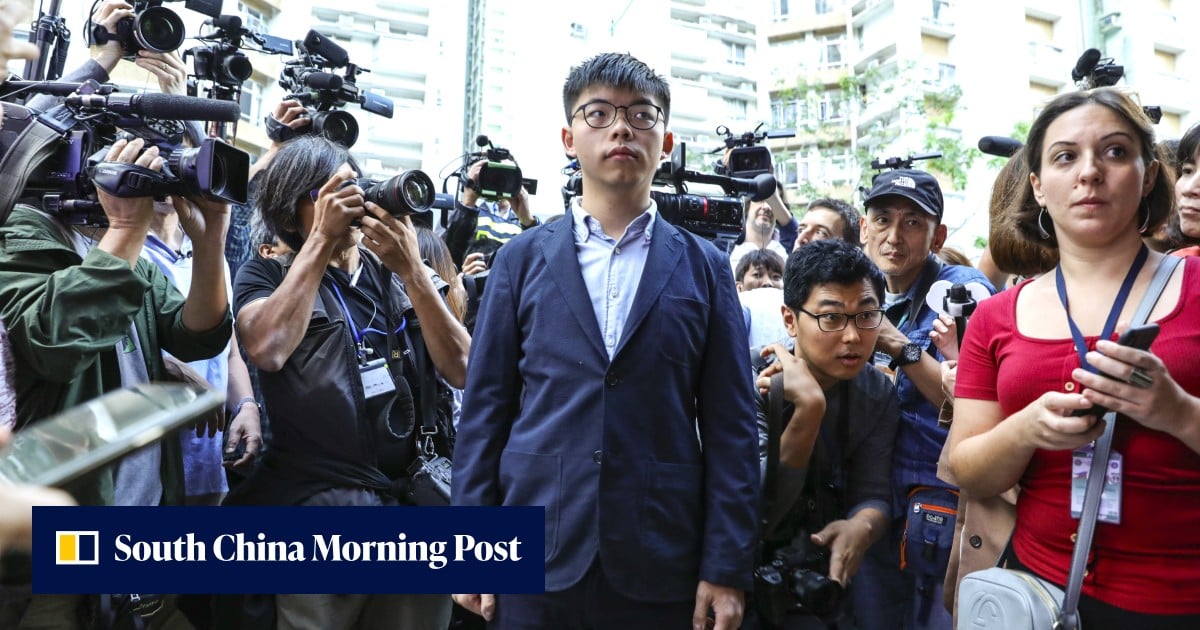
When Joshua Wong first rose to prominence, he was a teenager rallying classmates on the streets of Hong Kong, demanding universal suffrage and an end to what he called "erosion of freedoms." Two decades later, the same name appears on a courtroom docket, not as a protester but as a defendant convicted of colluding with foreign forces. On November 5, Wong entered a plea of guilty to "conspiracy to collude with foreign forces to endanger national security," a charge born of the city's sweeping national security law that Beijing imposed in 2020. The plea set the stage for a sentencing that would reverberate far beyond the courtroom walls.

Just weeks after his admission, a Hong Kong judge handed Wong a 10-year prison term. The sentence runs concurrently with a prior 4-year-8-month term for subversion, meaning Wong will likely remain incarcerated until 2036. The court's decision did not merely add years; it effectively extended his confinement by another decade, a move observers interpret as a deliberate effort to keep the most visible pro-democracy figure behind bars for as long as possible.
Hong Kong authorities issued a second national-security conviction, again sentencing Wong to 10 years. The redundancy of the ruling—identical in length and charge—underscores a pattern: the state is willing to pursue multiple cases against a single activist to reinforce the message that dissent will be met with the full weight of the law.
The charge, framed as a threat to sovereignty, reflects Beijing's broader strategy of equating international criticism with treason.
Wong's conviction was anchored not merely in local protests but in a "global campaign to instigate sanctions against mainland China and Hong Kong." Prosecutors argued that by seeking foreign punitive measures, Wong and his co-accused jeopardized national security. In his guilty plea, Wong acknowledged conspiring with fellow activist Nathan Law and others to collude with foreign forces. The charge, framed as a threat to sovereignty, reflects Beijing's broader strategy of equating international criticism with treason.
The courtroom drama resonated beyond legal briefs. Nathan Law, who himself has faced exile, described the outcome as "incredibly sad," noting that Wong's "peaceful advocacy work for Hong Kong's democracy" had become a punishable offense. Law's words capture a stark contrast: actions once celebrated as civic engagement are now criminalized under a law that, according to its architects, is essential for stability.
Sarah Brooks, deputy regional director of Amnesty International, issued a stark assessment: "Today's sentence is another grim reminder of how Hong Kong's national security law has become a tool to punish dissent rather than to genuinely protect national security." Her critique aligns with a chorus of voices that view the law as a mechanism for silencing opposition rather than safeguarding the city from genuine threats.
Among Hong Kong residents, reactions range from resigned acceptance to quiet defiance. One local, identified only as ET Wong, expressed a personal conviction: "At least in my heart, he should not have spent a single day in wrongful imprisonment." Such sentiments, while not echoed in official statements, reveal a lingering undercurrent of solidarity with the jailed activist.

Wong's dual 10-year sentences send a clear signal to the city's civil society: high-profile dissent will be met with the harshest penalties available under the national security framework. Critics argue that the law's broad language—particularly the notion of "colluding with foreign forces"—allows authorities to target a wide swath of political activity, from overseas lobbying to participation in international human-rights forums. The result is a chilling effect that discourages even modest forms of advocacy.
As of November, Joshua Wong remains incarcerated, his legal battles emblematic of a broader crackdown on Hong Kong's pro-democracy movement. The concurrent sentences ensure he will not see release until at least 2036, effectively removing a charismatic leader from the public sphere for a generation. While Beijing and Hong Kong authorities maintain that the law is indispensable for stability, the international community—through voices like Amnesty International and exiled activists—continues to view the prosecutions as a stark erosion of the "one country, two systems" principle that once distinguished Hong Kong from mainland China.