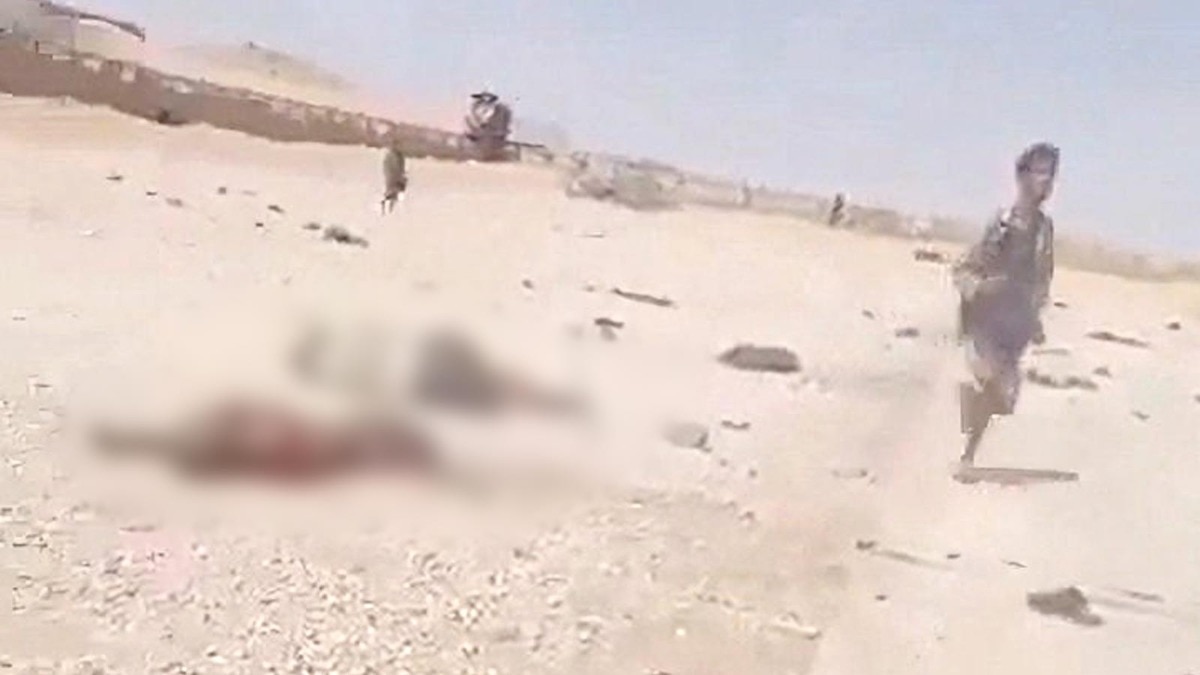
On Monday, a Houthi attack on a Yemen government security forces training camp in Shabwa province killed 53 people and injured 200, according to local authorities speaking on condition of anonymity. Video footage from the scene shows injured recruits and bloodied bodies scattered across the ground, illustrating the immediate toll of the strike.
The assault was carried out by the Iran‑aligned Houthi movement, which local officials said fired three ballistic missiles at the camp while troops were undergoing a training exercise. The use of ballistic missiles underscores the group’s growing capability to strike deep inside government‑held territory.
Shabwa is an energy‑rich province in south‑central Yemen that overlooks the Gulf of Aden. It is home to the Balhaf liquefied natural gas facility, Yemen’s largest industrial investment. The province’s strategic location and economic assets have made it a repeated flashpoint in the wider conflict.
Analysts described the Yemen conflict as a front line in the wider US‑Israeli war on Iran.
In the wake of the attack, the Yemeni government vowed a hard response and called on the United Nations to classify the Houthis as a foreign terrorist organisation. Officials also said they had begun a campaign this month to recapture areas controlled by the Houthis and to regain ground near the Bab el‑Mandeb Strait, a vital maritime chokepoint.
While government forces push to retake territory, the Houthis continue to besiege Taiz, the last major urban stronghold of anti‑Houthi forces in the southern highlands. The siege highlights how the front lines have shifted and hardened over years of fighting.
Analysts described the Yemen conflict as a front line in the wider US‑Israeli war on Iran. The Houthis have escalated attacks on Saudi Arabia, targeting Riyadh’s international airport and the state oil company Saudi Aramco, actions that link the Yemeni struggle to broader regional tensions.
The civil war began in 2014 when the Houthis seized the capital Sanaa, forcing the internationally recognised government to relocate southward. A Saudi‑led military intervention the following year triggered a bloody stalemate that persisted until a truce took hold in 2022.

That 2022 truce held until this year, according to the brief’s chronology, after which fighting flared again. The renewal of hostilities is reflected in the recent missile strike, which is the deadliest single loss of life recorded since the war’s outset.
Yemen remains one of the world’s worst humanitarian crises. Aid agencies have repeatedly warned of rapidly deteriorating conditions, a situation exacerbated by renewed violence and the disruption of essential services.
The brief’s timeline notes several specific events: a Houthi missile strike on security forces training camp on 2023-10-02, followed by a series of attacks on 2026-10-19 that included a missile strike on the al‑Alam camp, a missile strike on the Al‑Alam military camp, an attack on a training camp that left 53 killed, and a separate Houthi attack on a government training camp, all dated 2026-10-19.
Yemeni Presidential Leadership Council chairman Rashad al‑Alimi said the attack "affirmed that targeting the recruits reflects the Houthi militias' approach of resorting to cowardly terrorist attacks whenever they face pressures or their Iranian-backed sabotage plots falter."
The attack underscores the volatile state of Yemen’s war, with government forces seeking to reclaim lost ground while the Houthis retain the ability to strike high‑value targets. The humanitarian situation remains dire, and the conflict continues to serve as a flashpoint in the larger regional rivalry between Iran and its adversaries.