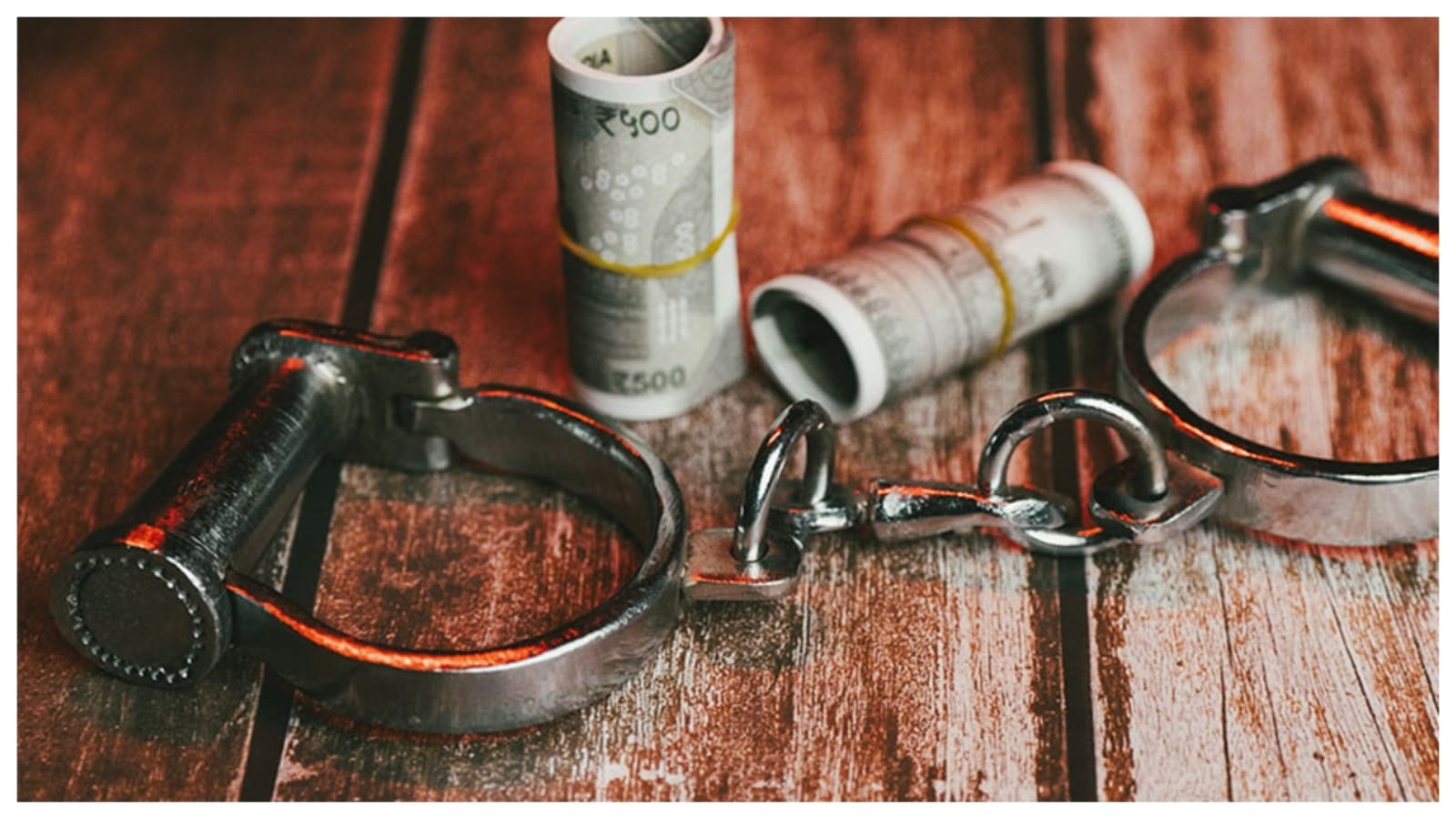
In the quiet stretches of Belagavi, Chikkodi, and Nippani, a promise was whispered that sounded less like a financial risk and more like a miracle. It was a simple proposition: invest your savings and receive a guaranteed 3% return every single month. For thousands of people looking to secure their futures, this wasn't just an attractive offer; it was a lifeline. But the math behind the promise was a hollow architecture, a classic Ponzi scheme designed to build a mountain of wealth for a few by cannibalizing the life savings of the many.

By the time the reality of the situation set in, the scale of the deception was staggering. The scheme, orchestrated by Shivannand Siddappa Neelannavar and his associates, had managed to collect an estimated ₹2,459.49 crore. This was not a small-scale deception; it was a massive, coordinated effort that successfully defrauded more than 35,000 investors, leaving a trail of financial ruin across the region.
A Ponzi scheme operates on a fundamental lie: using the capital from new investors to pay 'returns' to earlier ones, creating the illusion of a profitable enterprise. In this case, the 3% monthly return served as the bait. As more people were drawn in by the success stories of their neighbors, the pool of collected funds swelled toward that astronomical ₹2,459.49 crore mark.
As the ED's Mangalore sub-office worked through the complexities of the financial records, the true breadth of the misappropriated funds became clear.
The complexity of the operation allowed it to persist long enough to amass a diverse portfolio of wealth. The money wasn't just sitting in vaults; it was being transformed into a tangible empire of luxury and land. The proceeds of the fraud were woven into the fabric of real estate and traditional finance, making the trail of stolen money as varied as the people who lost it.
The illusion began to crumble when the legal machinery of the state intervened. The investigation into the scheme was triggered by a First Information Report (FIR) filed at the Belagavi police station. This initial legal step set in motion a scrutiny of the movement of funds under the Prevention of Money Laundering Act (PMLA) 2002, specifically Section 5(1), which provides the framework for authorities to act against the proceeds of crime.
In August 2026, the investigation moved from the paper trail to the physical world. Search operations were launched across eight different locations, spanning Belagavi, Chikkodi, and Nippani. These raids were designed to peel back the layers of the operation, looking for the evidence of how thousands of individual investments had been converted into a centralized web of private wealth.
The momentum of the investigation culminated on August 13, 2026, with the arrest of the primary accused, Shivannand Siddappa Neelannavar. His apprehension marked a turning point in the case, shifting the focus from the mechanics of the fraud to the recovery of what remained of the investors' capital.
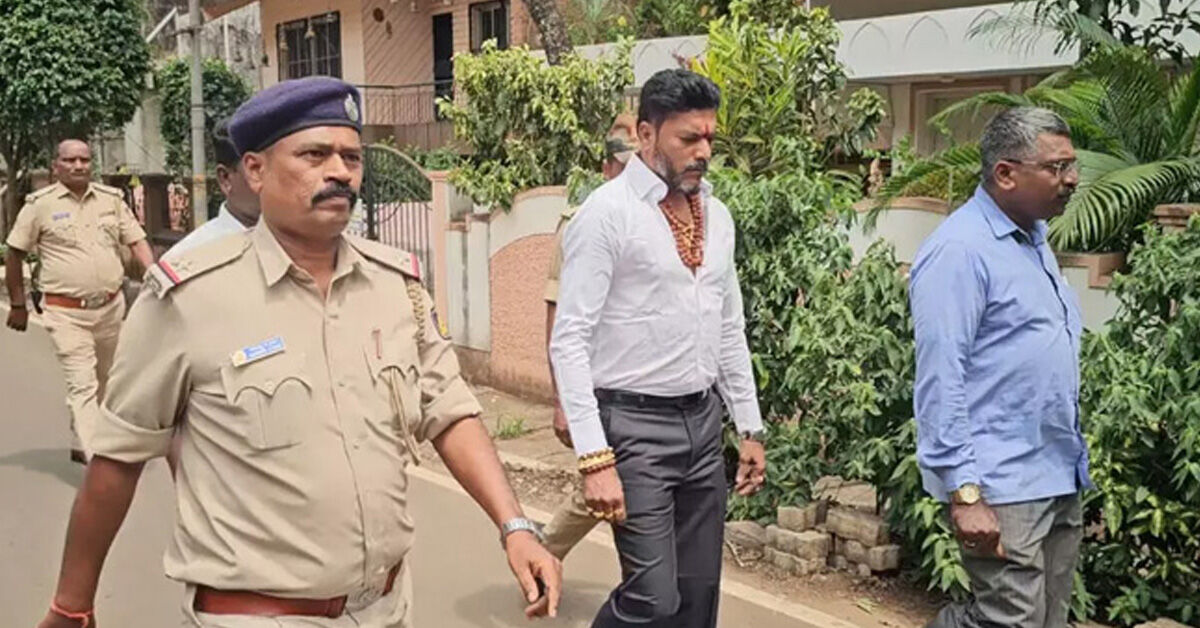
With the architect in custody, the Enforcement Directorate (ED) began the painstaking process of tracing the flow of the ₹2,459.49 crore. The goal was to identify exactly how much of that money had been diverted into personal assets and how much could be reclaimed to address the losses suffered by the 35,000 victims.
As the ED's Mangalore sub-office worked through the complexities of the financial records, the true breadth of the misappropriated funds became clear. The empire built on the backs of defrauded investors was not merely composed of cash, but of a wide array of high-value holdings.
On October 30, 2026, the ED issued a formal seizure order, temporarily seizing assets valued at ₹427.16 crore belonging to Neelannavar and his associates. This seizure was a significant strike against the group's ability to move or hide their wealth. The list of confiscated assets read like a catalog of the lifestyle the scheme had funded: fixed deposits, various bank accounts, and shares. Beyond liquid assets, the seizure extended to the physical world, including agricultural land, villas, and even bookings for apartments.
Among the most immediate findings of the seizure were the fixed deposits, which totaled a value of ₹2.02 crore. While this figure is a fraction of the total ₹2,459.49 crore collected through the scam, it represents one of the more direct links to the financial instruments used to mask the movement of money.
Every seized asset—from a single bank account to a sprawling villa—serves as a piece of a much larger, more painful puzzle. For the 35,000 investors, these seizures represent a small, albeit necessary, step toward accountability. The process of untangling a multi-thousand-crore fraud is slow and methodical, but the identification of ₹427.16 crore in assets marks a definitive end to the era of unchecked accumulation for the accused.
As it stands now, the legal battle continues to move through the channels of the PMLA. The assets remain under the control of the authorities, and the investigation into the full extent of the ₹2,459.49 crore disappearance remains a central focus. For the thousands of individuals in Belagavi and beyond who believed in the 3% promise, the journey from being investors to being victims is a long one, and the recovery of their lost livelihoods remains the ultimate measure of the investigation's success.