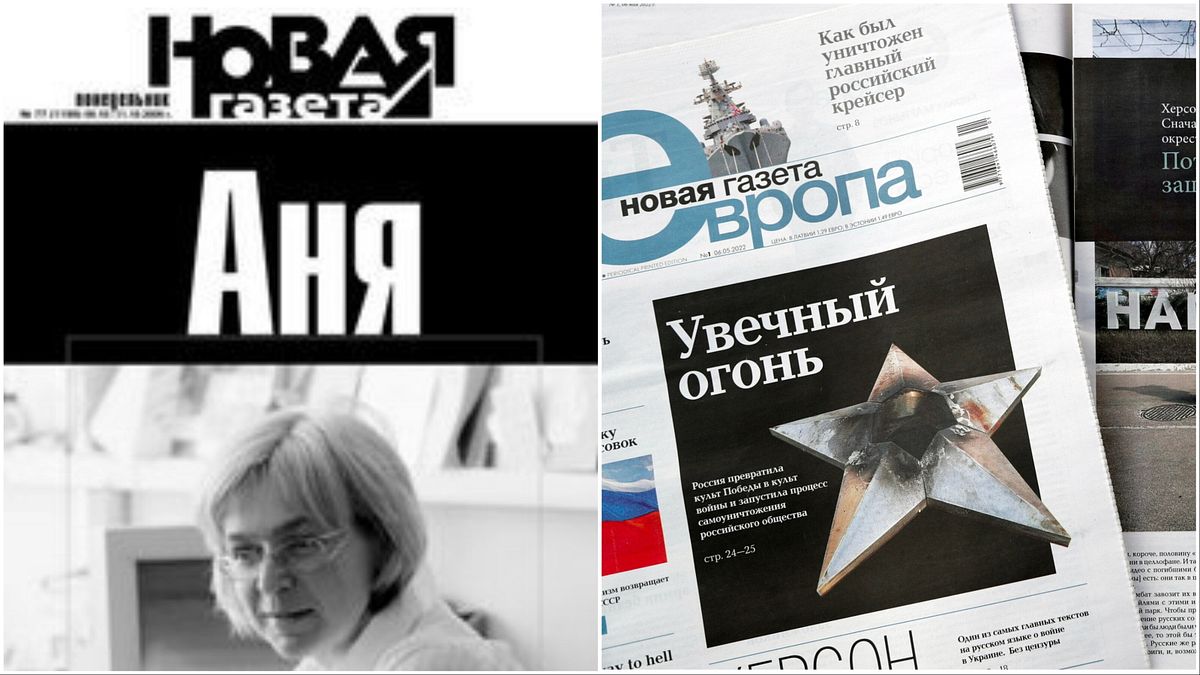
On a significant day in late October, the staff of Novaya Gazeta did not prepare the morning edition as they had done for over three decades. Instead, they prepared to leave. The newspaper, a cornerstone of independent journalism in Russia for 33 years, announced that it would shut down its operations. The decision, which signals the end of an era for a publication that was one of the last domestic outlets critical of the state, was formalized in late October. The editor-in-chief, Sergueï Sokolov, described the moment with a stark metaphor that captures the emotional weight of the closure: they were turning off the lights in the home they had lived in for thirty years. For a publication that had survived decades of political turbulence, the final shutdown of its editorial operations marked a definitive end to its existence as a physical newspaper.

The immediate trigger for the closure was a specific administrative blow. On October 26, the newspaper received an official edict to vacate its building. This decree forced the staff to pack up their workstations and close their doors within days. By October 30, Novaya Gazeta had made its final public announcement that it was ceasing its activities in Russia. The timeline between the order to leave and the public confirmation of closure was short, indicating that the physical existence of the organization had been effectively nullified by the state. In a statement reflecting the gravity of the moment, Sokolov told reporters that the newspaper simply no longer existed as a functioning entity.
However, the edict to vacate the building was the final step in a long and deliberate process of suffocation. The roots of the newspaper's trouble reached back to September 4, when the Russian Ministry of Justice officially recognized the newspaper as a 'foreign agent.' In the Russian legal and political landscape, this designation carries a heavy burden, effectively branding the organization as a tool of external influence. This label subjected the newspaper to intense scrutiny, public stigmatization, and additional regulatory hurdles that made its operation increasingly impossible. For an organization built on the foundation of domestic independence, being legally defined as an instrument of the foreign other was a death sentence that no amount of editorial excellence could overcome.
The blocking of the website was a clear signal that the state intended to control not just the content, but the distribution channels through which it could spread.
The pressure on Novaya Gazeta's ability to reach an audience had been tightening for years. This was most visibly demonstrated in November 2022, when the Russian Federal Service for Supervision of Communications, Information Technology, and Mass Media (Roskomnadzor) blocked the newspaper's website within Russia. This move severed the paper's digital lifeline to its domestic readership. While some staff members managed to continue their work through the 'Novaya Gazeta - Europe' project from outside the country, the physical newspaper in Russia was left isolated and hemmed in by legal barriers. The blocking of the website was a clear signal that the state intended to control not just the content, but the distribution channels through which it could spread.
The threats to Novaya Gazeta were not always just legal or bureaucratic; they had frequently been lethal. The newspaper has a tragic and painful history of violence directed at its journalists. Over its lifespan, six members of its reporting staff were killed. These murders served as a chilling reminder of the risks involved in maintaining an independent voice in an environment where critical journalism was viewed as a threat to stability. The state's approach to the newspaper shifted over time from physical intimidation to a more systemic, administrative dismantling of its institutional existence. The combination of legal harassment and the historical shadow of violence made the decision to close the doors a complex, forced choice rather than a voluntary one.
Sergueï Sokolov, the editor-in-chief, placed the blame for the closure squarely on the shoulders of the state apparatus. He stated unequivocally that Russian authorities and security services had forced the editorial staff to put an end to their work. This framing was central to the newspaper's final communications. The stance was critical of the government, describing the shutdown as a coerced action. By explicitly naming the security services, the editorial board highlighted that the pressure came from the state's most powerful internal organs. This attribution left no room for ambiguity about who was responsible for the silencing of one of Russia's last major independent voices.
Beyond the foreign agent designation and the eviction notice, there was a looming, even more damaging legal threat: the potential recognition of the newspaper as an 'extremist organization.' In Russia, such a label carries criminal penalties and justifies the total ban of an organization. This threat was a constant sword hanging over the publication's head, adding to the existential dread that pervaded the newsroom. The prospect of being branded extremist, a term that implies violence and terrorism rather than press freedom, was a final insult that many in the industry viewed as absurd and dangerous. This layer of legal threat ensured that the newspaper could not simply ignore the pressure and continue as usual; the consequences of non-compliance or continued operation were too severe.
