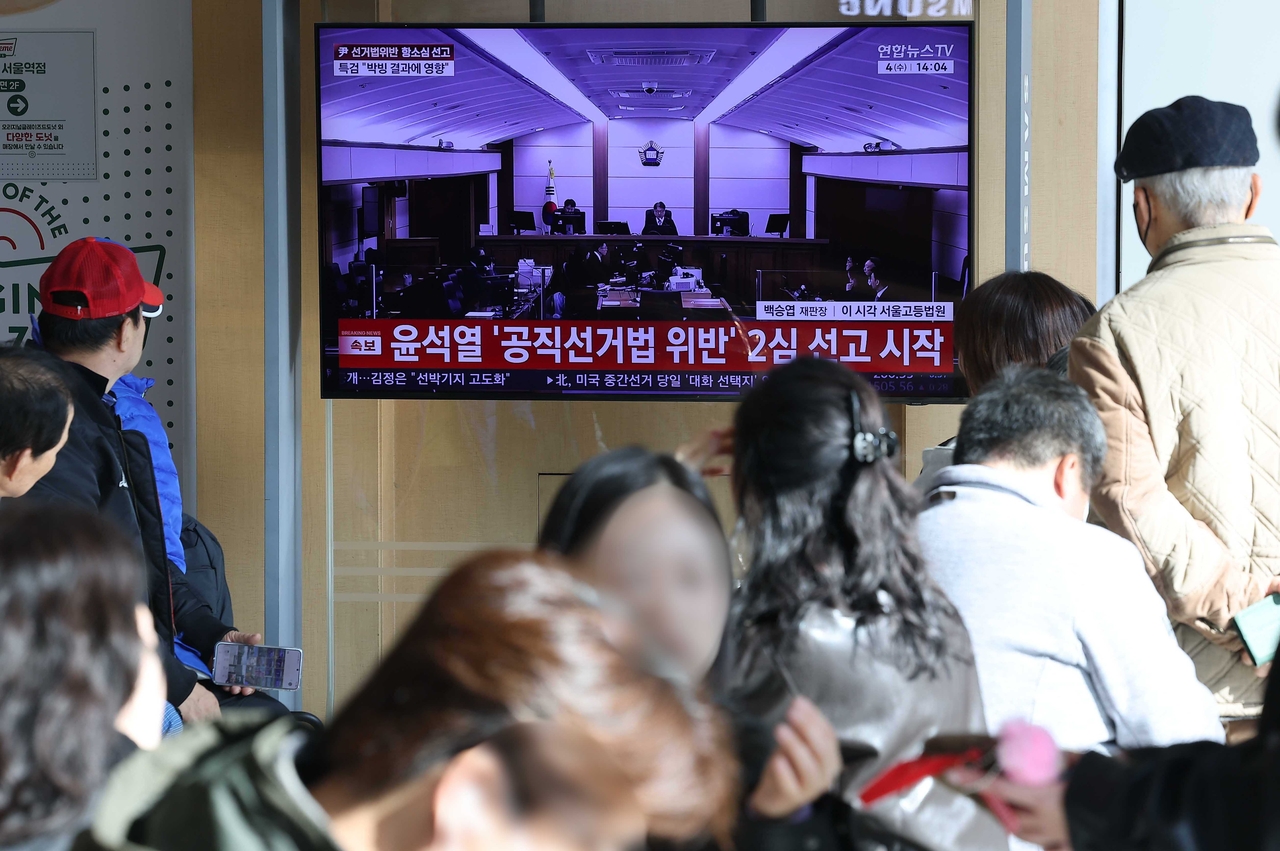
For any democracy, the sanctity of an election rests on the transparency of the candidates who seek office. When voters head to the polls, they rely on the assumption that the information provided to them is accurate. On November 4, 2026, the Seoul High Court delivered a stark reminder of what happens when that trust is allegedly broken. The court upheld the conviction of former President Yoon Suk Yeol for making false statements during his 2022 presidential campaign, a ruling that carries profound implications not just for the former leader, but for the financial stability of his political organization.
The charges centered on specific claims made by Yoon during the heat of the campaign. Prosecutors alleged that Yoon had been dishonest about his professional and personal associations—specifically, his denial of having introduced a lawyer to a former tax official and his insistence that he had never met with a shaman named Jeon Seong-bae alongside his wife. When confronted with these allegations during the campaign, Yoon’s response was categorical: "No, that’s not the case." The court, however, found these denials to be legally actionable falsehoods that misled the electorate.
The Seoul High Court’s decision was not merely a symbolic rebuke. The judges handed down an 18-month prison sentence, which they suspended for a period of three years. In the eyes of the court, the gravity of the offense was clear. The ruling stated that by making these false statements, "voters’ right to make an informed choice was infringed, and the fairness of the election and the lawfulness of its procedures were undermined." This language underscores the court's view that the integrity of the democratic process was directly compromised by the candidate's rhetoric.
7 billion won—approximately 27 million USD—in state-reimbursed campaign expenses and deposits.
Perhaps the most staggering aspect of the ruling is the potential financial fallout for the People Power Party. Under the strictures of the Public Official Election Act, a conviction of this nature, if finalized, triggers a severe penalty. Because the law mandates that a candidate must maintain a clean record to retain the benefits of state-funded campaign support, the invalidation of Yoon’s election win would require the party to return 39.7 billion won—approximately 27 million USD—in state-reimbursed campaign expenses and deposits. For a political party, the sudden demand to repay nearly 40 billion won is a catastrophic fiscal event that could reshape its operations for years to come.

[BREAKING] An appellate court on Wednesday upheld the conviction of former President Yoon Suk Yeol for making false statements during his 2022 presidential campaign, a ruling that, if finalized, would require the main opposition People Power Party (PPP) to repay 39.7 billion won ($30 million) in campaign reimbursements. https://t.co/5o3Qg17m9O
Despite the severity of the High Court’s ruling, the legal battle is far from over. Yoon’s legal team has signaled their immediate intent to challenge the decision, characterizing the verdict as "unjust in many respects." By moving to appeal the case to the Supreme Court, the former president is seeking to overturn the conviction and, by extension, avoid the massive financial penalty hanging over his party. The Supreme Court will now become the final arbiter of whether the statements made in 2022 were merely political maneuvering or a violation of the law that warrants such an extreme sanction.
As the case moves toward the Supreme Court, the political landscape remains in a state of uncertainty. The ruling on November 4, 2026, serves as a definitive marker of how seriously the judiciary views the duty of candidates to be truthful with the public. Whether the final judgment will ultimately force the People Power Party to empty its coffers remains to be seen, but the case has already established a precedent: in the eyes of the law, the cost of a falsehood can be measured in both the integrity of the vote and the survival of the party itself.