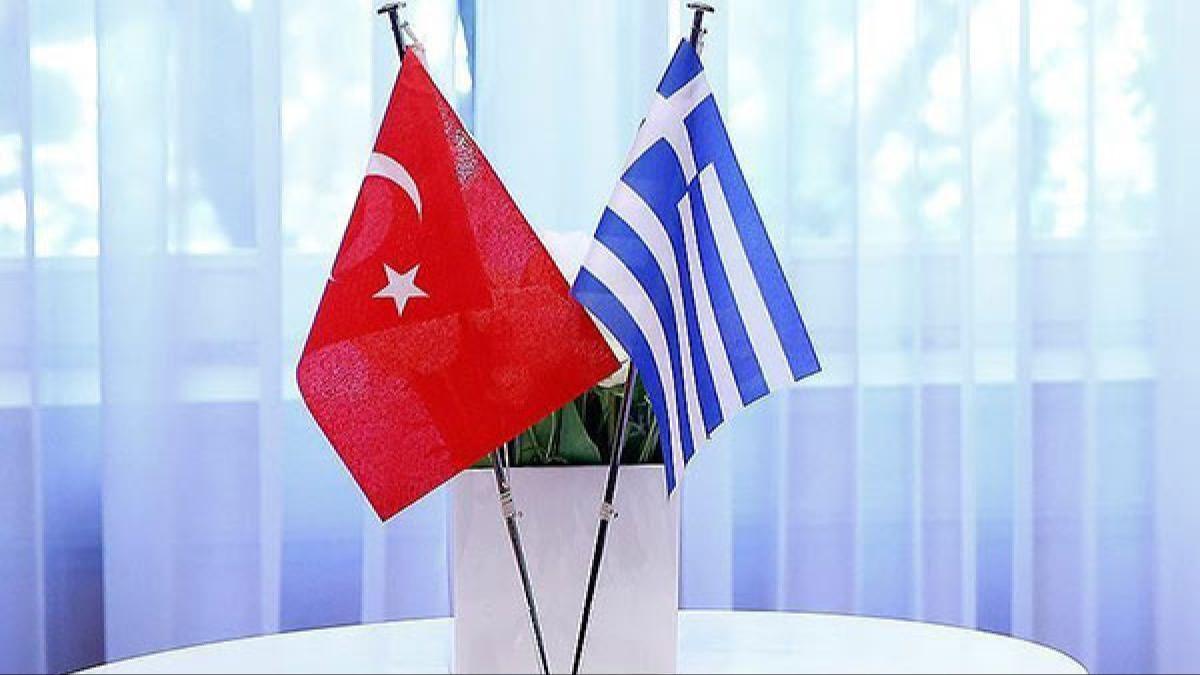
In the high-stakes arena of international diplomacy, words are often treated as currency, and their value can fluctuate wildly depending on who is doing the reporting. On October 27, 2026, the Turkish Foreign Ministry found itself in the position of having to devalue a narrative that had begun to circulate in the Greek press. The source of the friction was an alleged interview between Turkish Foreign Minister Hakan Fidan and the Greek newspaper Ta Nea. According to the report, Fidan had supposedly signaled a departure from long-standing Turkish policies, specifically regarding a cable project and the contentious 'Blue Homeland' doctrine. For a newcomer to the region’s complex geopolitical landscape, these claims suggested a dramatic pivot—a softening of Ankara’s stance on the Aegean and Eastern Mediterranean.

The Turkish Foreign Ministry, however, moved quickly to categorize these reports not as journalism, but as a misinterpretation of events. The ministry clarified that Minister Fidan had never granted an interview to Ta Nea. Instead, the confusion appeared to stem from a public appearance by the Minister at a think tank event in Brussels. During this session, Fidan had fielded questions from the audience, and the ministry maintains that his responses were taken entirely out of context. By framing these impromptu remarks as a formal policy shift, the newspaper had, in the eyes of Ankara, manufactured a diplomatic breakthrough where none existed.
The core of the ministry’s response was a firm rejection of the idea that Turkey’s strategic posture is subject to change. The Aegean and Eastern Mediterranean are regions defined by overlapping maritime claims and historical tensions, and for Turkey, these are not areas where policy is made on the fly. The ministry emphasized that its positions are defended consistently across all international platforms, grounded in what it describes as international law. The narrative of a 'green light' for projects or a rejection of national legal doctrines was dismissed as fundamentally inaccurate.
The narrative of a 'green light' for projects or a rejection of national legal doctrines was dismissed as fundamentally inaccurate.
The confusion was not limited to the international press. On the same day, October 27, 2026, the ministry was forced to address domestic criticism as well. A political party had seized upon the reports to challenge the government’s handling of these sensitive maritime issues. This internal pressure necessitated a dual-front defense: one aimed at the international community to correct the record on the alleged interview, and another aimed at domestic critics to reassure them that the state’s resolve remained intact.
At the heart of this controversy is the concept of 'Blue Homeland,' a doctrine that defines Turkey’s maritime jurisdiction and rights. By allegedly claiming that Fidan had rejected this framework, the initial reports had touched a nerve in Turkish political discourse. The ministry’s formal statement was unequivocal: Turkey will continue to protect its legitimate rights and interests in these regions without compromise. This is the bedrock of their foreign policy, and the ministry made it clear that no amount of media speculation would alter their commitment to these national interests.
Even as the ministry worked to contain the fallout from the Ta Nea report, the business of statecraft continued. Fidan held a critical meeting in Ankara with the President of the Libyan High State Council, a move that underscores the ongoing, complex engagement Turkey maintains in the Mediterranean basin. This meeting serves as a reminder that while the ministry may be preoccupied with correcting media narratives, its broader diplomatic agenda remains active. As it stands, the Turkish government is signaling that while it is willing to engage in dialogue, it will not tolerate the misrepresentation of its policy as a sign of weakness or a precursor to concession.