
On November 5, 2026, the Republican Party suffered a significant setback as it lost control of both chambers of Congress in the midterm elections. The defeat was a stark reminder of the party's struggles, particularly in the wake of a series of controversial decisions, including the controversial Iran War under President Donald Trump's administration. The immediate aftermath saw a flurry of blame and counter-accusations, with key figures in the party pointing fingers at the Iran conflict as the primary culprit for their electoral losses.
JD Vance, a rising star in the Republican Party and a senator from Ohio, was one of the first to publicly blame the Iran War for the party's defeat. In a post on social media, Vance wrote, 'The reason we lost is the war. The president himself said so last night.' This comment was a direct response to a statement made by President Trump, who had acknowledged the Iran War as a factor in the election results during a post-election press conference.
Vance's post quickly gained traction, resonating with many Republicans who had grown disillusioned with the war. His criticism was seen as a move to distance himself from the controversial policies of the Trump administration and to appeal to a broader, more moderate base within the party. However, Vance's stance also brought him into conflict with other Republican leaders, particularly those who had supported the Iran War.
Democrats saw it as a sign of arrogance and a lack of concern for the party's future, while Republicans were divided.

Vice President Vance is mistaken. The reason we Republicans lost yesterday is not just the war in Iran. Yes, the resulting higher fuel prices contributed to the inflation that infuriated Americans who were promised lower prices by this administration. But the war is not the only cause. Arbitrary and capricious tariffs directly raised costs for all American consumers. Lower income Americans can least afford them. Many voted for Democrats yesterday. Tariffs should be a central part, but only part, of the “honest conversation” VP Vance wants Republicans to have about the future of our party. For instance, we all seem to oppose government-owned grocery stores. But are we ok with government ownership of semiconductors companies and rare earth miners? We oppose rent controls. But do we support price controls on medicines and credit cards? The bigger question is does the Republican party now agree with the left that we need a large, powerful central government to run the economy, allocate capital and control prices? Or, do we believe that free men and women should be able to engage in commerce as they see fit and that a free enterprise system will create a higher standard of living and the greatest opportunities for the most people as it always has? Let’s have an “honest conversation.”
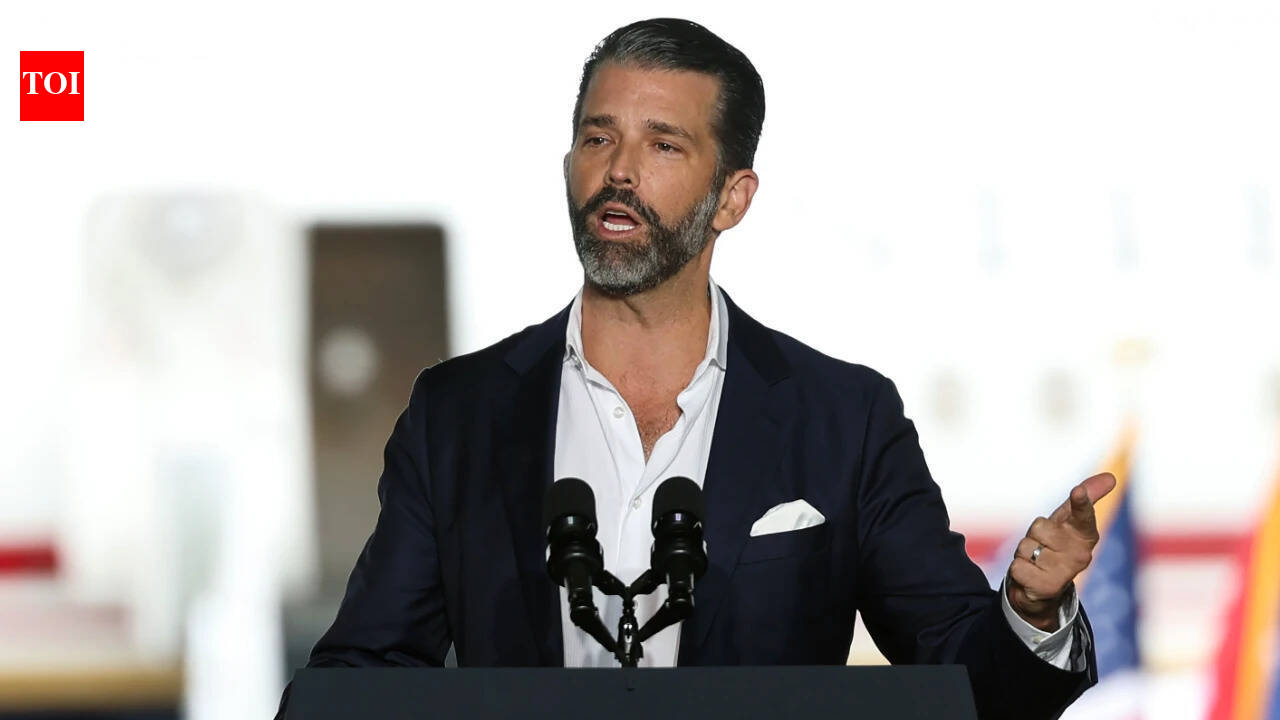
In contrast to Vance, Donald Trump Jr. took a more supportive stance. He echoed Vance's sentiment, writing, 'Every word of this is 💯💯💯.' This support from the president's son was seen as a way to bolster Vance's position and to signal to the party that despite the defeat, the Trump family remained united in their views on the Iran War.
However, the support from Trump Jr. did not go unnoticed. Many Republicans, including those who had backed the war, saw this as a sign of division within the party. The internal strife was evident in the immediate aftermath of the election, with some party leaders calling for unity and others emphasizing the need to address the Iran War as a key issue for the future.
President Trump himself took a more neutral stance, focusing on his own White House vanity project, which was a major initiative aimed at reshaping the image of the White House. In a statement, Trump said, 'I wasn't on the Ballot and if I was, we would have won IN A LANDSLIDE!' This comment was seen as a way to deflect blame and to emphasize his role as a non-actor in the election results.
Trump's focus on his vanity project was met with criticism from both Democrats and Republicans. Democrats saw it as a sign of arrogance and a lack of concern for the party's future, while Republicans were divided. Some saw it as a strategic move to maintain his influence, while others felt it was a distraction from the real issues at hand, such as the Iran War.

Some of my immediate takeaways from the midterms: 1. This wasn’t a blue wave. This wasn’t even a blue tsunami. This was a blue mass extinction event. The Republican coalition which seemingly gave Trump a mandate 2 years ago fell apart everywhere, on all sides. There was a big polling error, but what happened is that polls underestimated Democrats. The generic ballot will seemingly end at D+13. This goes above and beyond what the rosiest Dem forecasts thought could happen. 2. Trumpism has been conclusively smashed at the polls, not even just Trump himself. The Rust Belt didn’t have any sympathy for tariffs, hawkish voters had no sympathy for the Iran War, and non-college educated whites had no sympathy for the attacks on colleges and mass ICE raids. Republicans might’ve lost young men for a generation. All types of Republicans across the country faced the wrath of voters. The GOP has been completely transformed into MAGA’s fashion, but that will be a detriment for voters. Turns out, Trump only broke the laws of political gravity when he had the benefit of the doubt regarding a (relatively) peaceful world and a good economy. 3. Zohran Mamdani is the most influential Dem politician of the decade already. His message, though very much altered for different states and different candidates, became the Democratic Party’s midterm platform. The idea that Mamdani would be some fringe figure in the Dem coalition, as proffered by some pundits last year, has been thoroughly disproven. He will be only next to Obama and Bernie as the models for all Dem politicians, particularly on the left, going forward 4. Israel took a drubbing at the polls. The Iran War created the high gas prices and inflation that drew the floor out from underneath the GOP coalition. We already know how Dem voters view Israel as being the worst thing on Earth. But now Republicans (even JD Vance as we’ve seen today) are also mad at Israel for pushing them into a war that’s remarkably unpopular, and that America will ultimately lose. The GOP will continue to be institutionally pro-Israel, due to donors and other factors, but GOP politicians and particularly pollsters now view Israel as a liability, both personally and politically. 5. The effect on the 2028 Dem primary sweepstakes is as such: Josh Shapiro’s case is over (why would Dems care about nominating an electorally skillful moderate after THIS kind of anti-GOP drubbing?), Gavin Newsom might now just become irrelevant, and the stock of such characters as Mark Kelly, Ro Khanna, Andy Beshear, Elissa Slotkin, Cory Booker, Jared Polis, Gretchen Whitmer, and Pete Buttigieg has gone down (Chris Murphy’s stock has also gone down too, for other reasons). Kamala Harris’ stock has gone up, as Dems now begin to feel that Kamala’s loss has been properly avenged and she can now start planning her reconquest. James Talarico is ascendant (Beto had a serious 2020 campaign just by *barely losing* a Texas senate seat, and a Dem Texas Governor removes the issue of losing his senate seat to the GOP), and AOC had her best night possible. Primary voters will now care less about electability, and care more about totally repudiating Trumpism and policy. Those are the lanes progressives do best in. AOC, even she prefers to become a Senator, is now positioned to be the Barry Goldwater or even Ronald Reagan of the Dem left. But the best night goes to Jon Ossoff. 18 point victory in a swing state. He is now the frontrunner, no ifs or buts. (1/2)
The blame game did not stop with Vance and Trump Jr. The internal divisions within the Republican Party were on full display as other party members and leaders weighed in on the issue. The Iran War had become a central issue in the election, and its impact on voter sentiment was undeniable. The defeat was seen as a wake-up call for the party, with many calling for a reevaluation of the Iran War and its role in the party's future.
The election results highlighted the growing dissatisfaction with the Iran War among Republican voters. Vance's and Trump Jr.'s comments were seen as a reflection of this sentiment, but they also underscored the internal conflicts within the party. The debate over the Iran War was likely to continue, with the party facing the challenge of balancing its conservative base with the desire to appeal to a broader electorate.
The 2026 midterm elections left the Republican Party in a state of flux, with internal divisions and a renewed focus on the Iran War. As the party looks to regroup and move forward, the blame game over the Iran War will continue to shape its future. The next steps will be crucial in determining whether the party can find a way to unite around a common vision, or if the divisions will continue to hinder its efforts.

Iran War Day 249‼️🔥🚀