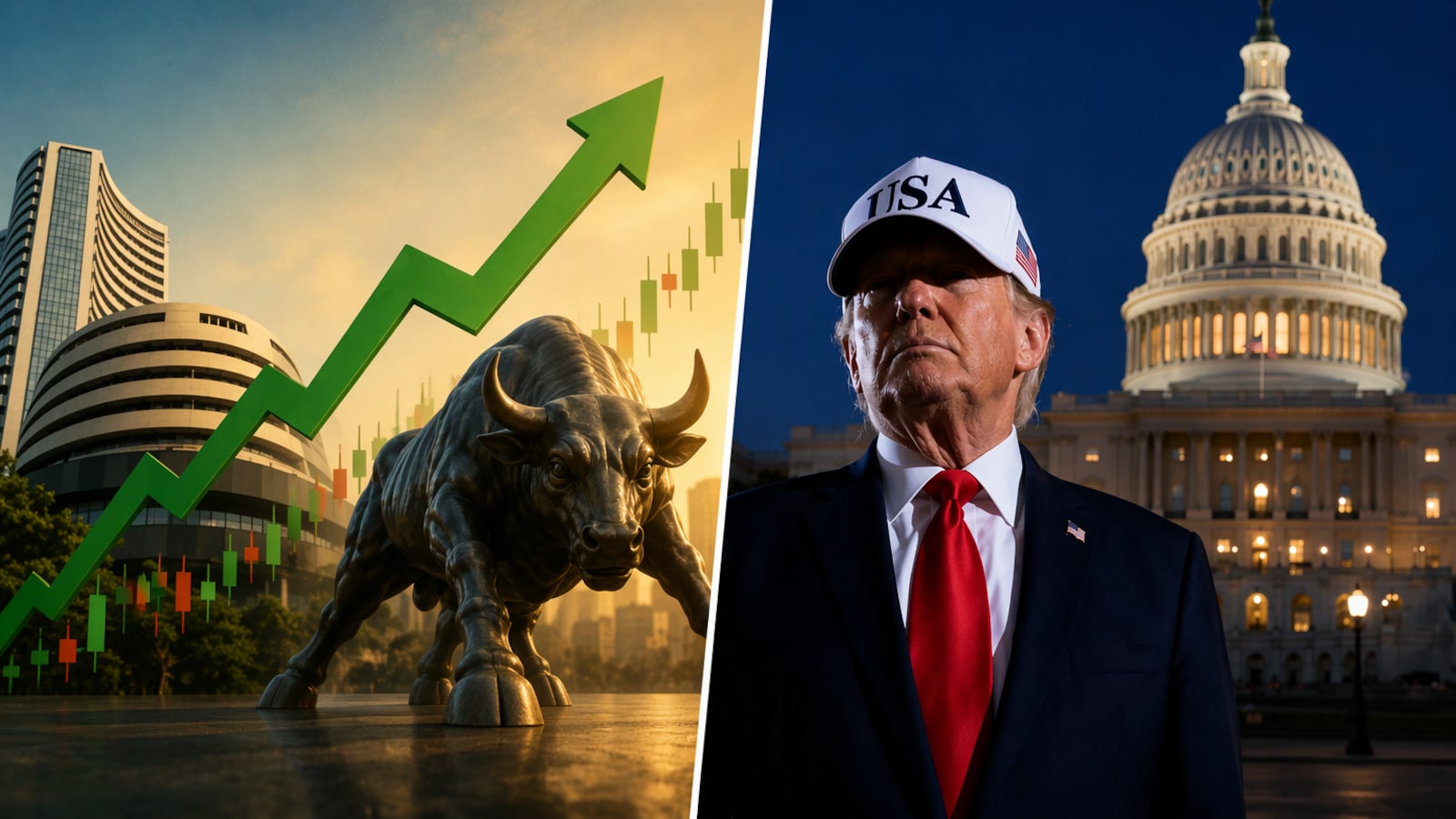
On the morning of November 5, 2026, the atmosphere on Dalal Street—the heart of India's financial district in Mumbai—shifted from cautious anticipation to a state of electric triumph. For investors, the day felt less like a standard trading session and more like an unexpected Diwali gift. Within just two hours of the opening bell, the market capitalization of companies listed on the BSE Sensex had swelled by more than Rs 7 lakh crore, a staggering accumulation of wealth that transformed the landscape of the Indian equity markets.
This was not merely a incremental climb; it was a vertical ascent. The Sensex, a benchmark index that tracks the performance of India's largest and most influential companies, opened the session with a massive leap of more than 1,300 points, starting the day at 78,630. The momentum was immediate and undeniable, signaling a profound shift in investor sentiment that had been building behind the scenes.
The catalyst for this sudden euphoria lay thousands of miles away, across the Atlantic. The US midterm elections, held on November 5, 2026, resulted in a Democratic majority. In the interconnected world of global finance, political shifts in the United States often act as a primary signal for capital flows. The emergence of a Democratic majority in the US midterm elections provided a fresh sense of direction for global markets, influencing how international investors viewed risk and stability.
This easing of energy costs worked in tandem with a resurgence in foreign investor buying.
This political development acted as a cornerstone for the rally, providing the psychological groundwork for a broader market movement. As the results became clear, the uncertainty that often accompanies election cycles began to dissipate, replaced by a renewed confidence that rippled through the global financial architecture and landed squarely on the trading floors of Mumbai.

The U.S. mid-term elections have delivered a damning mandate against Trumpism. After Richard Nixon and Watergate, Donald Trump is the first to accomplish a Republican rout of this scale and scope. The Democratic Party flipped seven Senate seats, 22 House seats, and four Governor seats, and has won a majority in both House and Senate. ✍️Kavita Krishnan https://t.co/tN9ICC8QLl
As the morning progressed, the Nifty 50—the index representing the weighted average of 50 of the largest Indian companies—began to mirror the Sensex's aggressive trajectory. The index, which serves as a vital barometer for the health of the broader Indian economy, surged past the 24,350 mark during early trade.
This movement was particularly significant because it represented a psychological and technical breakthrough. For the first time since September 4, 2026, the Nifty 50 had managed to cross the 24,000 threshold. This breach of a long-standing resistance level suggested that the period of stagnation or volatility experienced over the preceding months was being replaced by a potent new upward trend.
While the US election results provided the political spark, the rally was fueled by a potent convergence of economic factors. It was not a singular event, but rather a perfect storm of favorable conditions. One of the most critical components was a sharp decline in crude oil prices. For an economy like India, which is a major importer of energy, lower oil prices act as a significant tailwind, reducing inflationary pressures and improving the national trade balance.
This easing of energy costs worked in tandem with a resurgence in foreign investor buying. After a period of hesitation, international capital began flowing back into Indian equities, drawn by the combination of political clarity in the US and the improving domestic economic outlook. This influx of foreign liquidity provided the necessary fuel to sustain the rapid ascent of the indices.
The speed of the wealth creation was perhaps the most striking element of the day. To see Rs 7 lakh crore added to the market cap of Sensex companies in a mere two-hour window is a rarity in even the most volatile markets. It reflected a massive, synchronized repositioning of capital as traders moved to capitalize on the new reality established by the US election results and the falling cost of oil.
Throughout the session, the indices maintained their strength, refusing to succumb to the profit-taking that often follows such rapid spikes. The Nifty 50, in particular, showed remarkable resilience, navigating the volatility of the morning to settle at a closing value of 24,415.55 points. This closing strength underscored the conviction behind the day's movement, suggesting that the rally was built on more than just momentary excitement.
As the closing bell rang on November 5, 2026, the Indian markets stood in a vastly different position than they had at the opening. The breach of the 24,000 mark by the Nifty 50 and the massive jump in the Sensex had rewritten the short-term narrative for Dalal Street.
The day served as a powerful reminder of how deeply integrated the Indian markets are with global political and economic shifts. The combination of a Democratic majority in the US, a drop in energy costs, and a return of foreign interest created a window of opportunity that investors seized with remarkable speed. For those watching from Mumbai, the day was a definitive signal that the era of uncertainty was being challenged by a new, high-octane period of growth.