
On October 28, 2026, the political landscape of Uttar Pradesh underwent a quiet but significant tremor. The Legislative Council (MLC) elections, often viewed as a barometer for the state’s deeper political currents, concluded with results that have forced a recalibration of expectations for the major players involved. For the Bharatiya Janata Party (BJP), the party that has long commanded the state’s legislative agenda, the outcome was a mixture of expected consolidation and unexpected friction. For the Samajwadi Party, the results offered a rare and much-needed injection of momentum, signaling that the state’s political binary remains far more competitive than recent trends might have suggested.
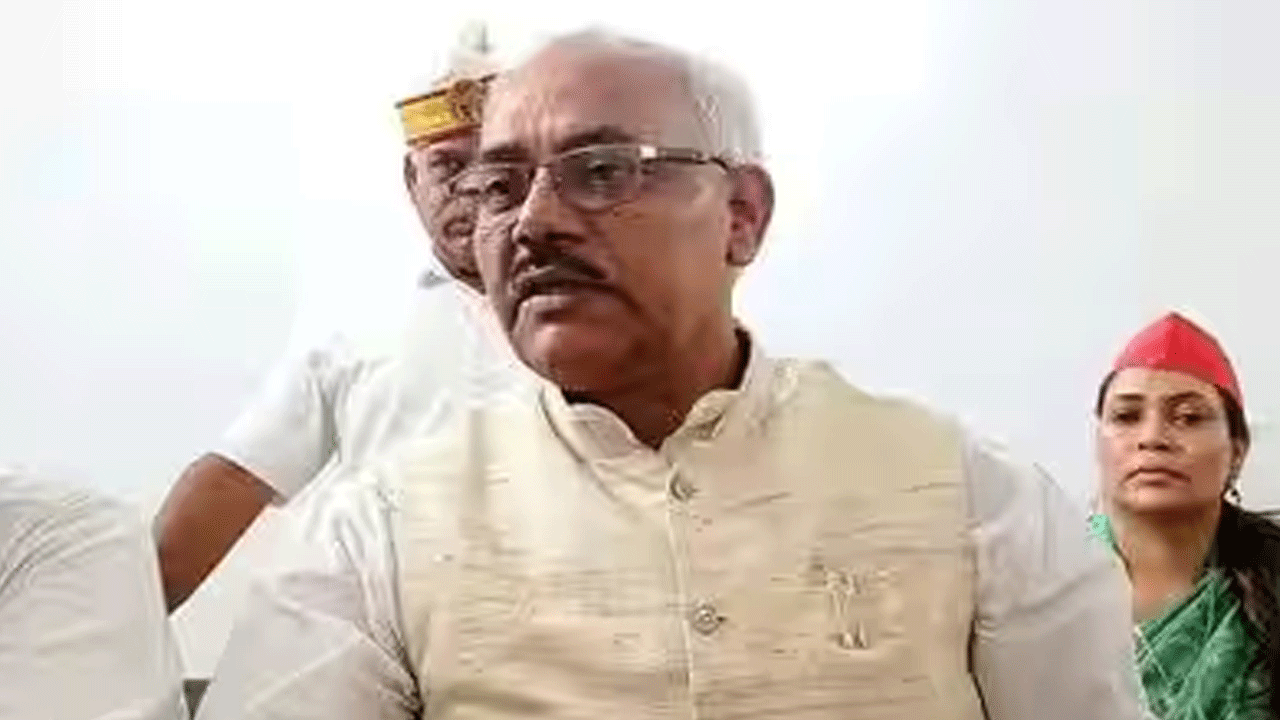
When the final tallies were confirmed on October 28, the arithmetic of the victory was clear, yet the implications were nuanced. The BJP secured a total of 5 seats, maintaining a firm grip on the legislative process. However, the Samajwadi Party managed to clinch 3 seats, a performance that has bolstered their internal confidence and provided a platform for their future legislative maneuvers. This tally—5 to 3—is more than just a score; it represents a tangible pushback against the BJP’s electoral machinery in constituencies that were once considered safe ground.
Perhaps the most stinging development for the BJP was the loss of the Lucknow graduate seat. In the context of Uttar Pradesh politics, Lucknow is not merely a capital city; it is a symbolic seat of power. Losing a graduate constituency—a demographic often characterized by high levels of political engagement and critical analysis—serves as a significant setback for the party’s narrative of total dominance. The loss suggests that the BJP’s appeal among the educated electorate in the capital is facing a period of cooling, a development that will likely be scrutinized by party strategists in the coming months.
This win, alongside their success in the Agrahara Teacher constituency, highlights a strategic shift in how the Samajwadi Party is targeting its campaigns.
Beyond the capital, the electoral map revealed pockets of intense resistance. In Varanasi, a city of immense political weight, the Samajwadi Party secured a victory that has reverberated through the state’s political circles. This win, alongside their success in the Agrahara Teacher constituency, highlights a strategic shift in how the Samajwadi Party is targeting its campaigns. Meanwhile, the BJP found itself in a fierce competition across multiple regions, including Meerut, Bareilly-Moradabad, and the Lucknow Teacher constituency. While the BJP managed to secure victories in several of these areas, the margins of victory—such as the specific tallies of 12,855 and 13,241 votes recorded in certain districts—illustrate just how narrow the path to victory has become.
If Varanasi represented a loss of momentum, Gorakhpur served as a reminder of the BJP’s enduring strength. As the political base associated with Yogi Adityanath, Gorakhpur remains a crucial pillar for the party. The results here were starkly different from the losses in Varanasi and Allahabad, with the BJP demonstrating a resilient performance that kept their overall seat count at 5. This contrast between the party’s success in its traditional heartlands and its struggles in urban graduate and teacher constituencies paints a complex picture of a party that is simultaneously dominant and vulnerable.
As the dust settles on the October 28 elections, the political reality in Uttar Pradesh has shifted. The Samajwadi Party has emerged with a renewed sense of purpose, having proven that they can challenge the BJP in high-stakes environments. For the BJP, the results serve as a wake-up call, highlighting that even in a state where they hold significant power, the electorate is capable of delivering sharp rebukes. The MLC elections have not fundamentally dismantled the existing power structure, but they have certainly introduced a new level of uncertainty, ensuring that the next chapter of Uttar Pradesh’s political story will be defined by a much tighter, more unpredictable competition.

आज के समाचार-पत्रों के माध्यम से! दरभंगा संस्करण - 28/10/2026 #GopalJeeThakur #दरभंगा #मिथिला #Sansad #Darbhanga #MPDarbhanga #सांसद#सेवा_संकल्प_अभियान #SevaSankalpAbhiyan PMO India Narendra Modi Amit Shah Nitin Nabin Samrat Choudhary Bharatiya Janata Party (BJP) BJP Bihar https://t.co/KLcMPRRIkM