For anyone watching the relentless, high-speed expansion of artificial intelligence, a quiet and immense bottleneck has loomed just out of sight. Building modern, capable AI models requires an almost staggering amount of information. Every nuance in a language, every pattern in a medical scan, every trend in a financial transaction must be ingested, analyzed, and learned from. But this insatiable appetite runs headlong into a very human, very justified anxiety: privacy.

How do you feed the sprawling ambitions of AI developers and researchers without stripping away the confidentiality of the citizens whose lives populate those datasets? Entities that hold vast troves of valuable information—hospitals guarding patient histories, banks tracking financial movements, and government agencies managing public records—sit in an impossible position. They are rich in raw material, yet paralyzed by the risks of sharing it. In a world where a single data leak can ruin millions of lives, the safest move has always been to lock the doors and keep the vault closed.
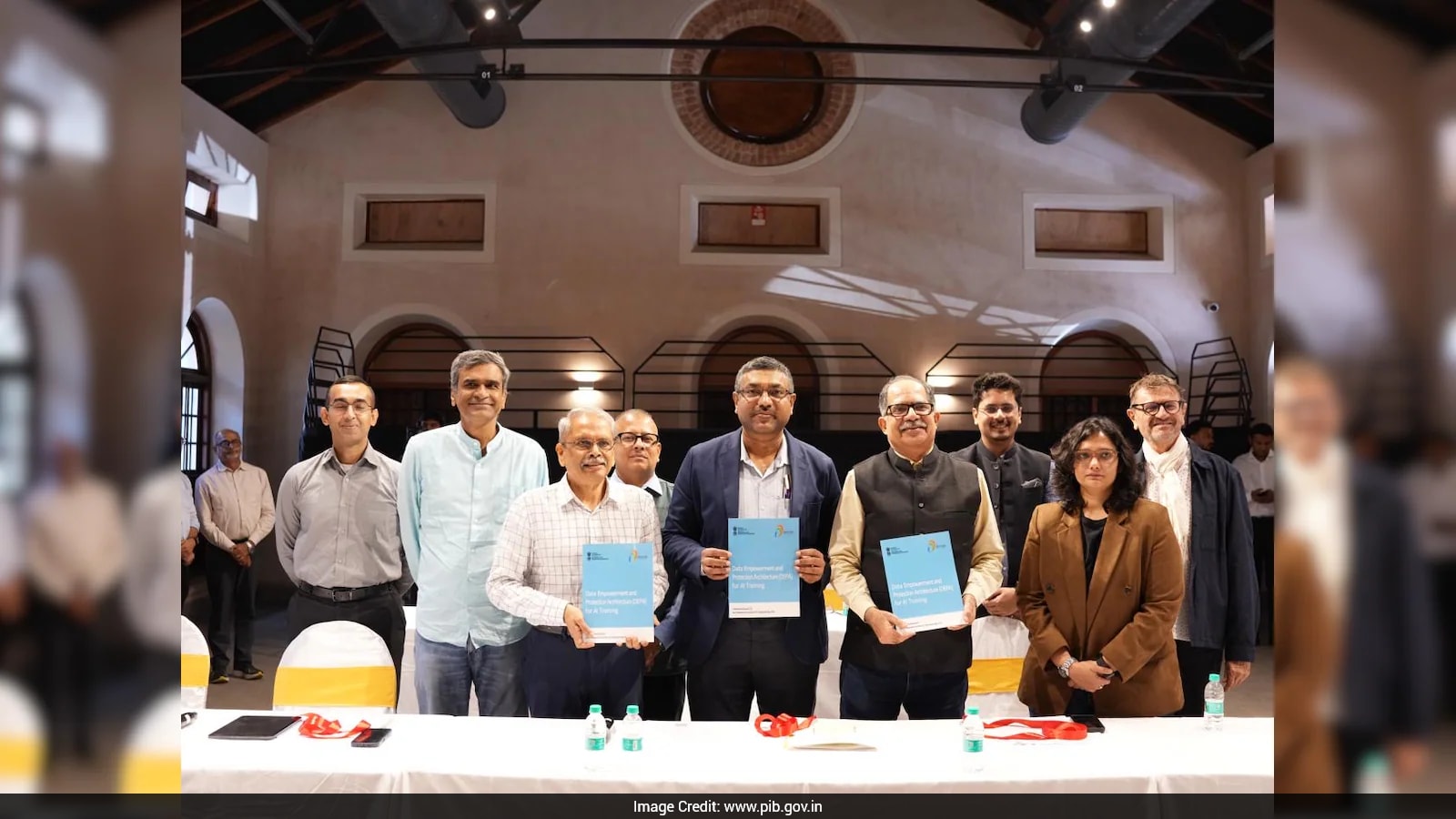
It is into this high-stakes standoff that the government stepped forward with a newly minted proposal designed to rewrite the rules of digital engagement. On October 31, 2023, the Ministry of Electronics and Information Technology, widely known as MeitY, officially launched a structured initiative called the Data Empowerment and Protection Architecture, or DEPA.
The structure relies on four key components designed to cover every possible vulnerability in the data pipeline.
Developed with the backing of the iSPIRT Foundation, DEPA arrives as a meticulously engineered compromise. It is not merely a policy document or a set of guidelines; it is a comprehensive framework built to bridge the chasm between the organizations that own sensitive records and the developers who desperately need them to train the next generation of algorithms. By establishing a common system for collaboration, the framework seeks to calm the fears of data custodians while giving researchers the empirical fuel they require to innovate.
At the heart of the DEPA initiative is a delicate balance of power, engineered to ensure that data providers never truly lose their grip on what they own. Hospitals, banks, and government agencies have long worried that handing over their archives means losing control over their distribution and safety. Under this new framework, however, those providers retain absolute authority over their records.
The system proposes a common architecture where both sides can work together under strictly defined permissions and security controls. It addresses a persistent problem long faced by AI developers and researchers who find themselves stymied by bureaucratic walls and legal liabilities. By putting clear boundaries in place, the initiative aims to make the entire pipeline of data sharing transparent, trackable, and—crucially—safe from unauthorized exploitation.
To turn this ambitious vision into a practical reality, the framework rests on a specific foundation of safeguards. The structure relies on four key components designed to cover every possible vulnerability in the data pipeline.

These four pillars consist of data exchange platforms, electronic contracts, secure data environments, and differential privacy. Each plays a distinct role in maintaining the integrity of the system. Data exchange platforms facilitate the actual movement; electronic contracts lock down the legal boundaries of use; secure environments isolate the process; and differential privacy ensures that individual identities remain obscured even as broader patterns are absorbed by the machine.

Your Instagram photos could be training Meta AI. But can you stop it? Users in the EU and UK have a formal way to object. In India, it's not that simple. NDTV's AI Editor @ramarkosg explains the catch. https://t.co/PUahl0X3KJ
Perhaps the most striking philosophical shift embedded within the DEPA framework is a clever inversion of how digital information traditionally moves across a network. For years, the standard practice has been to pull raw data from its source, bundle it up, and ship it off to wherever a developer wants to run their training models. That journey is fraught with peril, offering countless opportunities for interception, misuse, or accidental exposure.
This framework proposes an entirely different paradigm, beautifully summarized by Ajay Kumar Sood, who captured the core mechanical philosophy of the initiative: "Under DEPA, the model travels to the data, rather than the data travelling to the model."
By reversing the journey, the raw information stays safely locked inside its native vault. Instead of dragging sensitive records out into the open, the incomplete or evolving AI model is sent directly into a secure, isolated enclosure where the data lives. The model learns the necessary lessons inside that protected perimeter and emerges trained, while the underlying records never budge an inch.
As the initiative moved from concept to reality, the rollout was marked by decisive administrative action. On October 31, 2023, MeitY Secretary S Krishnan officially launched the DEPA framework, signaling that the government was ready to move past theoretical debates and into active implementation.
The unveiling on October 31, 2023, brought together months of careful planning alongside the iSPIRT Foundation, which provided crucial support in shaping the technical and structural contours of the project. This formal launch transformed an abstract policy discussion into an active, operational roadmap.
Today, as the digital economy continues to grapple with the dual pressures of technological acceleration and privacy protection, frameworks like DEPA represent a new wave of regulatory thinking. Rather than choosing between innovation and security, the initiative attempts to build a bridge wide enough for both to cross.
By combining robust technological safeguards with a philosophy of strict data sovereignty, the framework offers a glimpse into how modern states might manage the friction of the intelligence age. For hospitals, banks, and researchers alike, the path forward is no longer defined by an impossible choice between locking the vault or risking the contents, but by a structured system designed to let intelligence grow without ever compromising trust.