The 2027 Tour de France route was unveiled on October 22, 2026, by Christian Prudhomme. The Grand Départ would be set in Edinburgh, marking the first time the race has launched from the United Kingdom in thirteen years. The choice of Scotland’s capital not only honors the race’s occasional forays beyond France’s borders but also signals a deliberate return to the British Isles, a region that has long been a fan favorite for its rolling scenery and passionate crowds.
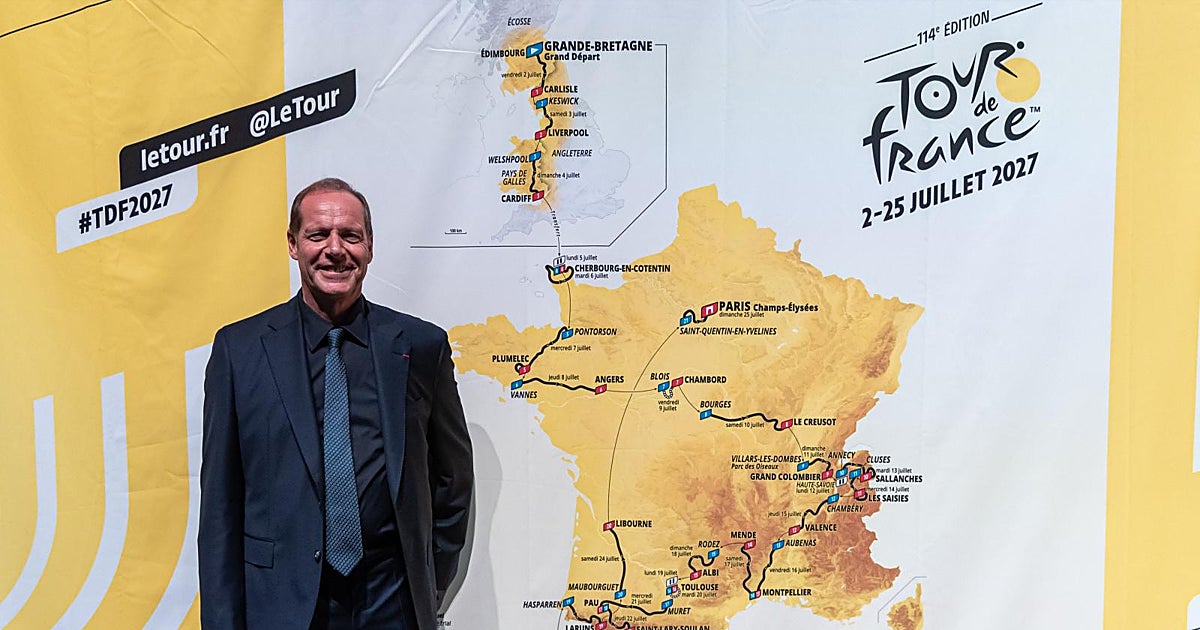
From the opening peloton in Edinburgh, the route threads through the rugged landscapes of Scotland before dipping south into England and then westward across Wales. Each of these three nations contributes a distinct flavor: the Scottish highlands offer early climbs that test the riders’ legs; England’s flatlands provide a chance for sprinters to stretch their legs; and Wales adds a mix of coastal winds and short, punchy ascents. By weaving through all three, the organizers have crafted a narrative that moves from the misty north to the sun-kissed south, before the race finally turns its wheels back toward continental France.

🚩 Edimbourg ➡️ Paris 🏁 🤩 Here is the official route of the #TDF2027! 🤩 Voici le parcours officiel du #TDF2027 ! https://t.co/0EtPvXzEq4
The 2027 itinerary departs from the mountain-heavy scripts of recent editions. Of the twenty-one stages, seven are flat, six are hilly, and six are mountain stages, complemented by two individual time trials. This recalibration toward more flat and hilly terrain is a strategic move to tighten the competition. The balance aims to keep the general classification in flux, preventing any single rider from building an insurmountable lead early on.
Strategically placed midway through the race are two individual time trials, the first in Blois and the second in Toulouse.
When the peloton finally leaves the British coast and re-enters France, the true test of endurance begins. The route climbs into the Alps and later the Pyrenees, delivering classic summit finishes that have defined Tour legends. Though the mountain stages are fewer than in some previous years, the cumulative elevation gain of 53,450 meters ensures that the high-altitude battles will be decisive. The climbs are interspersed with technical descents, demanding not only raw power but also sharp bike handling.

Visma say 'there could have been more' summit finishes on 2027 Tour de France route https://t.co/GkLFjQDxV3
Strategically placed midway through the race are two individual time trials, the first in Blois and the second in Toulouse. Together they cover 71 kilometers, a modest distance compared with the overall 3,479 kilometers of the Tour, yet their impact on the general classification can be profound. The time trials offer a chance for the likes of Tadej Pogacar and Remco Evenepoel to either consolidate or claw back time.
The route has already sparked analysis among the sport’s elite. Mathis Le Berre, a noted commentator, observed, “S'il est autant en forme que cette année, Remco a largement les moyens de tirer son épingle du jeu.” The comment underscores Evenepoel’s reputation for explosive power on both flat and hilly terrain, suggesting that the new balance of stages could play to his strengths. Former champion Chris Froome reflected on Pogacar’s recent dominance in the high mountains: “On a vu ces dernières années les différences faites par Tadej dans la montagne, peut-être que ça va rééquilibrer un peu.” Froome’s words hint at a possible shift, where the added flat and hilly days could dilute the pure climber’s advantage.

🖼️ 🇫🇷 2027 Tour de France (2/7-25/7) map with higher quality | #TDF2027 https://t.co/FtNu8mFlOi
The raw figures of the 2027 Tour paint a picture of scale and ambition. The race spans twenty-one stages and a total distance of 3,479 kilometers, equivalent to a cross-continent drive. Elevation gain totals 53,450 meters, a figure that ensures the high-altitude battles will be decisive. The two time trials together stretch 71 kilometers, while the overall composition—seven flat, six hilly, six mountain, and two time trial stages—reflects a deliberate effort to diversify the challenges. Thirteen years have passed since the last Grand Départ on British soil, a gap that adds a nostalgic resonance to the Edinburgh start.

With the route now public, teams are already calibrating their strategies, and fans are marking their calendars for a summer that promises both spectacle and suspense. The blend of flat sprints, rolling hills, towering Alpine passes, and decisive time trials sets the stage for a Tour where the margins will be razor-thin. As the riders train for the varied terrain, the cycling world watches, aware that the 2027 edition may redefine how the race is contested and, perhaps, how it is remembered.