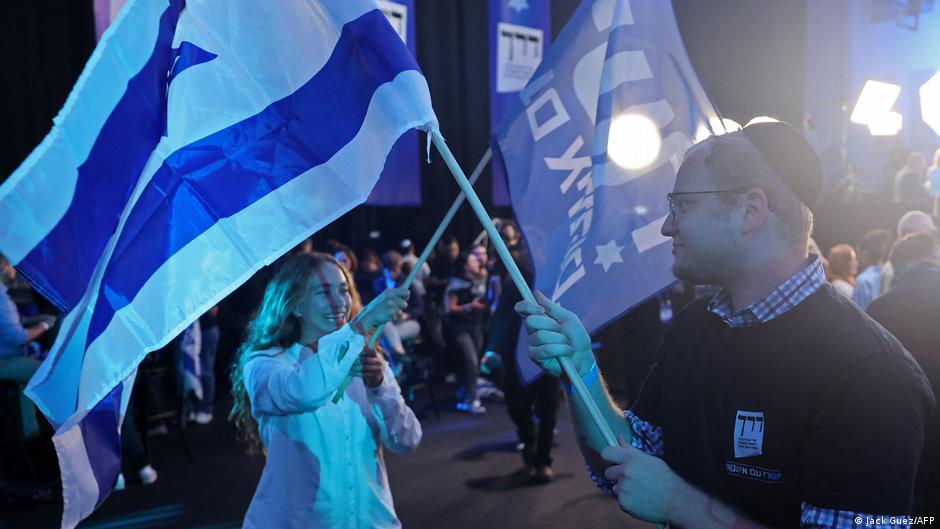
On October 27, 2026, Israel held its parliamentary elections, a day that would set the stage for months of political maneuvering. The election was a test of the country’s fragmented political landscape, where no single party could secure a majority. As the sun set on that fateful day, the race for power was far from over.

As the vote counting began, it became clear that neither Netanyahu’s Likud-led coalition nor Eisenkot’s opposition bloc had reached the 61-seat threshold needed for a majority. By the end of the first day, Netanyahu’s bloc was projected to secure 54 seats, while Eisenkot’s opposition bloc had 49. The Joint Arab List and Ra’am, two Arab-led parties, had received 9.11% and 4.74% of the votes respectively, bringing the total vote count to 84.5%.
The proportional representation system and the fragmented political landscape meant that smaller parties would play a crucial role in determining the next government. Netanyahu’s existing partnership of right-wing nationalist and ultra-Orthodox parties was still short of the 61 seats needed to secure power on its own. This created an opening for negotiations, with smaller parties holding the balance of power.
The Arab-led parties, including the Joint Arab List and Ra’am, had received significant support.
The President of Israel, a largely ceremonial position, would play a pivotal role in the next phase. According to the Israeli Basic Laws, the President has the authority to appoint a candidate for prime minister, who must then form a government within 42 days. This period is critical, as it could determine the direction of Israeli politics for years to come.
Netanyahu, a seasoned politician, called for a strong right-wing government. He warned of security risks from cooperation with Arab-led parties, emphasizing the need for a government that could maintain Israel’s security and stability. His message was clear: any coalition that included Arab-led parties would be met with resistance.
Gadi Eisenkot, the leader of the opposition bloc, had his work cut out for him. With 49 seats, his bloc was just two seats short of the majority. Eisenkot’s strategy was to form a coalition with smaller parties, particularly those that could provide the necessary support to reach the 61-seat threshold. He also emphasized the need for a government that would address the public’s concerns, including economic issues and social justice.
The Arab-led parties, including the Joint Arab List and Ra’am, had received significant support. Yousef Jabareen, a prominent member of the Joint Arab List, issued a statement calling for a genuine alternative to Netanyahu’s government. “Anyone who wants to offer a substantive and genuine alternative to Netanyahu’s blood-soaked government will have to talk to us to secure the path to the change that the public in Israel longs for,” Jabareen said. His words echoed the sentiments of many Israelis who were looking for a government that could address the country’s complex social and economic challenges.
As the vote counting continued, negotiations for a coalition government began. The Likud-led coalition was in talks with smaller parties, including the ultra-Orthodox Shas and Yamina, to secure the necessary support. Meanwhile, Eisenkot’s opposition bloc was also in discussions with various parties, including Meretz and the Labor Party, to form a government that could command a majority.
The clock was ticking. Within 42 days, a government must be formed. Failure to do so would result in a new election, a prospect that neither side was eager to entertain. The political landscape was fluid, with smaller parties holding the key to the next government’s composition. Their support could tip the balance in favor of either Netanyahu or Eisenkot, making the next few weeks critical.
As the final results were still being counted, the path forward was uncertain. The Israeli political system, with its proportional representation and fragmented parties, created a complex web of alliances and negotiations. The next government would not only shape Israel’s domestic policies but also its international relations, particularly with the United States and the Arab world.
The October 27 parliamentary elections in Israel marked the beginning of a new chapter in the country’s political landscape. With neither Netanyahu’s Likud-led coalition nor Eisenkot’s opposition bloc securing a majority, the next government’s composition remains up in the air. As negotiations continue, the smaller parties hold the key to the next government’s formation, setting the stage for a period of political uncertainty and potential change.