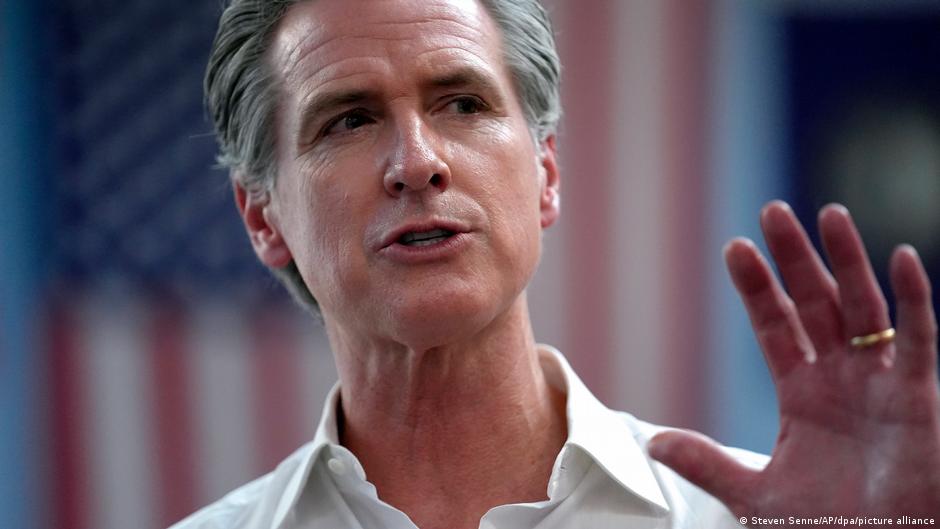
The news arrived on January 19th, 2023, a moment that reverberated through courtrooms and advocacy groups across the country. For decades, California held the dubious distinction of having the largest death row population in the United States. Now, with a single action, Governor Gavin Newsom has effectively ended capital punishment in the state – at least for the 548 individuals currently sentenced to die.

This wasn’t a sudden reversal. Newsom’s opposition to the death penalty is well-documented. He has consistently argued that the practice is flawed, costly, and ultimately fails to deliver justice. In a letter addressed to Californians, Newsom articulated his reasoning with stark clarity. “I take this action because I firmly believe that state-sanctioned killing is incompatible with California's values, undermines the foundations of our legal system, and diminishes each of us,” he wrote. The governor’s stance reflects a growing national conversation about the fairness and efficacy of capital punishment.
California’s death row, housed primarily at San Quentin State Prison, held 548 individuals. Of those, 529 were men and 19 were women. These weren’t simply statistics; each number represented a life, a crime, and a legal battle that often spanned decades. The sheer scale of the commutation – affecting every single inmate – is what makes this action so unprecedented.
The governor’s office anticipates this process will take time, but the intent is clear: to remove the threat of execution for all 548 individuals.

🚨JUST IN🚨 Gavin Newsom has just commuted sentences of ALL California death row prisoners to life in prison without parole. https://t.co/5VV1kJzRKV
However, the process isn’t immediate or entirely within Newsom’s control. While an executive order allows for the immediate commutation of roughly 40% of the sentences, the remaining 382 require approval from the California Supreme Court. This is due to a legal framework established in previous cases that mandates judicial review for certain commutations. The governor’s office anticipates this process will take time, but the intent is clear: to remove the threat of execution for all 548 individuals.
The decision has drawn strong reactions from various groups. The American Civil Liberties Union (ACLU) swiftly applauded the announcement, with Anthony Romero, its executive director, stating that the commutations “reflect what justice demands: an end to a racist, error-prone, and inhumane punishment that has burdened California for far too long.” The ACLU and other advocacy groups have long argued that the death penalty is disproportionately applied to people of color and carries an unacceptable risk of executing innocent individuals. Rev. Jeff Hood, a death penalty abolitionist, described Newsom’s action as “the height of moral leadership.”

Gavin Newsom Commutes Sentences of All 548 Death Row Inmates in California https://t.co/BWLX44RoYu via @TMZ
California’s move isn’t happening in a vacuum. The state has already seen a decline in death sentences in recent years. In 2019, Newsom issued a moratorium on executions, halting all planned lethal injections. This latest action builds on that earlier decision, effectively dismantling the infrastructure of capital punishment in the state. The move could also set a precedent for other states grappling with the complexities and controversies surrounding the death penalty.
The 548 individuals whose death sentences were commuted will now serve life sentences without the possibility of parole. They will remain incarcerated, but the immediate threat to their lives has been removed. The California Supreme Court’s review of the remaining 382 cases is the next critical step. While the future of capital punishment in California remains a subject of debate, Governor Newsom’s action represents a definitive and historic shift in the state’s approach to justice.