Democracy rests upon a foundational, yet often unglamorous, administrative task: the accurate accounting of who is entitled to vote. When election machinery grinds into motion, lists of citizens must be meticulously maintained, ensuring that the deceased are removed, the relocated are updated, and the duplicates are erased. Yet, whenever large-scale purges of voter rolls occur, they inevitably trigger fierce political combat over who is being kept on the rolls and who is being pushed off.
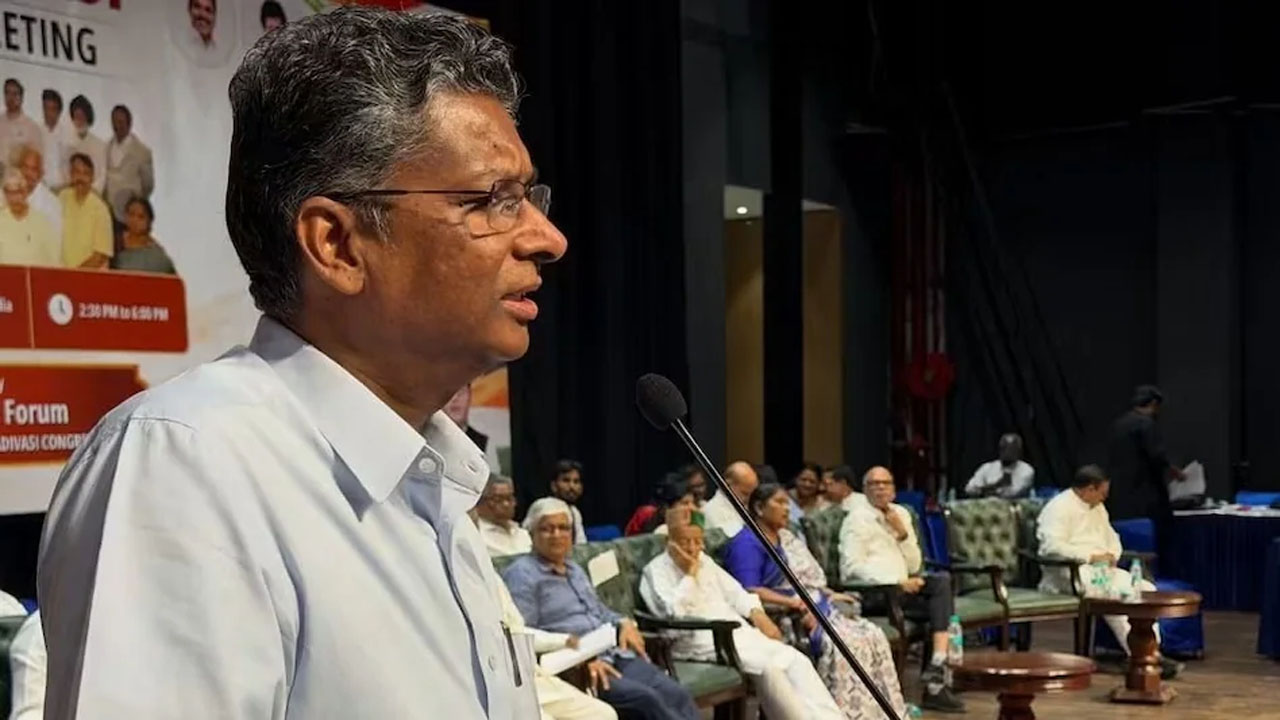
In India, this underlying tension recently burst into public view through an unexpected source within the political establishment itself. Karnataka minister Satish Jarkiholi stepped forward to defend the Special Intensive Revision, known as SIR, of voter lists in his home state. While political battles over electoral rolls usually feature rigid partisan lines, Jarkiholi’s assessment introduced a stark note of pragmatism and acceptance into a landscape more accustomed to blanket outrage.
Speaking plainly about the state-level administrative exercise, Satish Jarkiholi maintained that the process in Karnataka was conducted properly and that the massive removal of names was entirely justified. The numbers associated with the state's electoral cleanup are striking in their scale: approximately one crore voter names were removed from the lists. According to the minister, these deletions were necessary corrections capturing deceased individuals, voters who had relocated, and duplicate entries that threatened the integrity of the ballot.
Across the country, parallel exercises have generated staggering figures, including 59 लाख voters, 90 लाख ID cards printed, an alleged 20 करोड़ scam amount, and 47.
For Jarkiholi, the process in Karnataka was an administrative success story rather than an assault on voting rights. He stated that the SIR in Karnataka was carried out correctly, offering a robust defense of an administrative maneuver that routinely invites skepticism from the public and the opposition alike. Across the country, parallel exercises have generated staggering figures, including 59 लाख voters, 90 लाख ID cards printed, an alleged 20 करोड़ scam amount, and 47.5 लाख names cut in Delhi SIR.

#BREAKING | 'One crore votes deleted in SIR are valid': Karnataka Minister Satish Jarkiholi backs SIR exercise @dpkBopanna Reports. https://t.co/vMS1hxkimA
Yet, Jarkiholi’s endorsement of the system did not mean he viewed every iteration of it as flawless. While he offered a strong defense for Karnataka, he drew a sharp distinction regarding how similar intensive revisions had been handled elsewhere in the country. He maintained that while he did not oppose the SIR framework in Karnataka, legitimate issues and concerns had indeed been raised regarding its implementation in other crucial states, specifically pointing to Bihar, West Bengal, and Maharashtra.
By drawing this geographic boundary, the Karnataka minister tried to thread a difficult political needle: validating the administrative necessity of cleaning up voter rolls at home while acknowledging the contentious nature of how these revisions were deployed in other political theaters. He even went so far as to argue that such rigorous checks should be conducted in other states as well, provided the execution matched his view of how it was managed in Karnataka.
Jarkiholi’s nuanced stance did not exist in a political vacuum. The broader national debate over voter revisions has long seen fierce opposition from prominent political figures, most notably Rahul Gandhi, who has maintained a critical stance toward these electoral exercises. Because voter roll revisions touch directly on democratic legitimacy, any internal divergence from a unified opposition narrative immediately becomes national news.
It did not take long for the ruling party to seize upon the minister’s remarks to highlight internal friction within the opposition ranks. BJP spokesperson Pradeep Bhandari quickly stepped forward to use Jarkiholi’s statement as a weapon against the national leadership, framing the Karnataka minister's endorsement as an accidental dismantling of his own party's posture.

नमस्कार, चलो दिल्ली रामलीला मार्च, लोकतंत्र को बचाने का, वोट चोरी को रोकने का, संविधान को बचाने का मार्च है। यह किसी एक राजनीतिक पार्टी का मार्च नहीं - यह हिंदुस्तान की आत्मा का मार्च है। सब लोग जो नरेंद्र मोदी, अमित शाह, ज्ञानेश कुमार से तंग हैं। सब लोग जो लोकतंत्र को बचाना चाहते हैं, संविधान की रक्षा करना चाहते हैं, आप सब आइए। एक ही protest है - देश का protest है। Don't worry about the police, don't worry about lathis - the BJP will not have the guts to try any of their antics. Come march with us - we will walk together to protect the Constitution, to protect the Indian nation. घबराने की जरूरत नहीं है। I urge all student groups, regardless of your political affiliation - if you feel that India is under attack, if you feel you are under attack, your expression, your ideas, your way of thinking is under attack, come and join us. It will be a fantastic march, and it's a march for the soul of this country. Looking forward to seeing all of you there. 🗓️ 1 नवंबर 📍 रामलीला मैदान, नई दिल्ली #ChaloDilli
Seizing on the moment, the BJP leadership argued that Jarkiholi's frank assessment exposed a widening gap between regional pragmatism and national political posturing. Pradeep Bhandari sharply criticized Rahul Gandhi in the wake of the statement, asserting that opposing the SIR framework fundamentally goes against the principles of democracy itself.
Bhandari captured the ruling party's sentiment by stating that slowly, Congress leaders were themselves exposing Rahul Gandhi's stance on SIR because they knew that opposing it was inherently anti-democratic. As the debate over voter roll purity continues to play out across multiple states, the unexpected commentary from a senior Karnataka minister has laid bare the complex internal politics of how India manages its electoral lists.